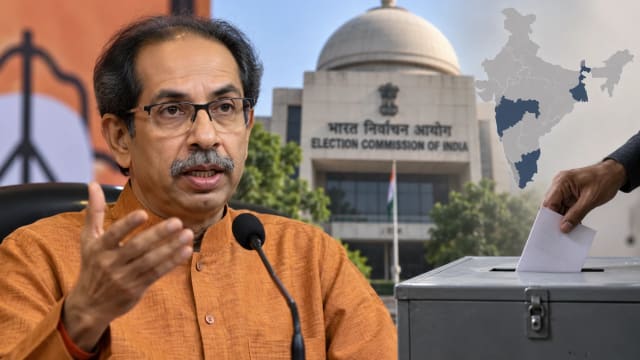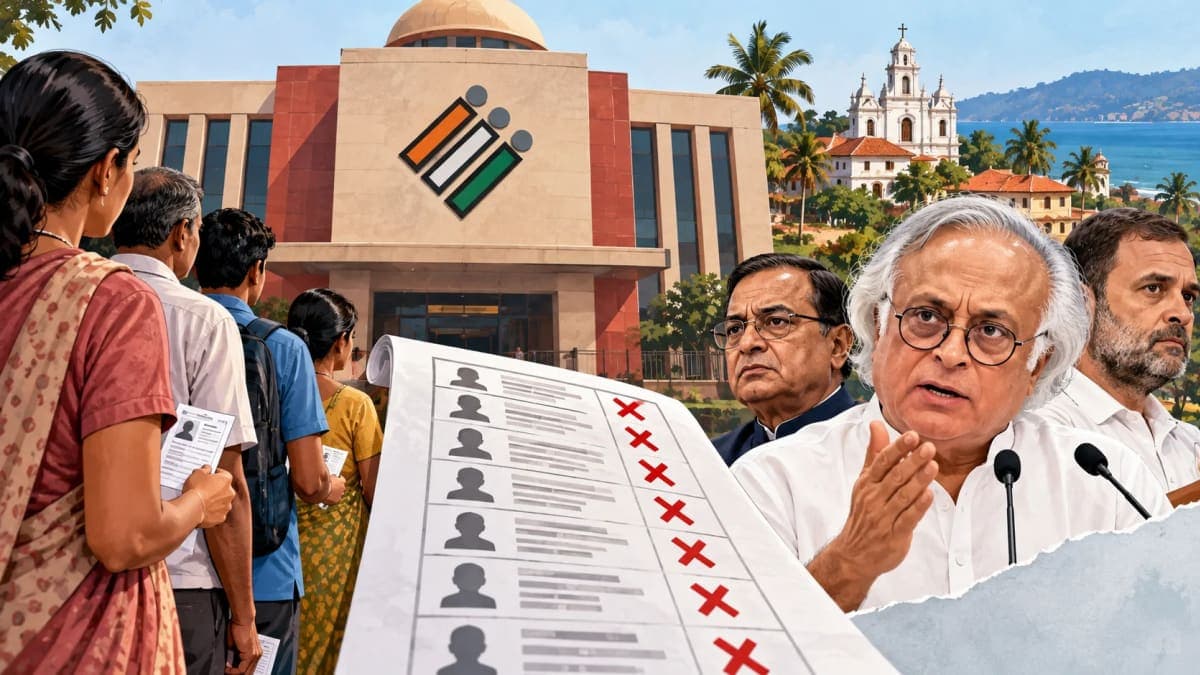
New Delhi, September 24, 2026: The Election Commission of India (ECI) is facing renewed political scrutiny after a report said 97 voters in Goa who had been found eligible by Electoral Registration Officers (EROs) were nevertheless absent from the final electoral roll published after the Special Intensive Revision (SIR).
The report has prompted the Congress to intensify its criticism of Chief Election Commissioner Gyanesh Kumar, with party general secretary Jairam Ramesh renewing the demand for his resignation.
The controversy centres on the functioning of the Election Commission's digital electoral-roll system and whether technical restrictions prevented statutory election officials in Goa from restoring voters whom they had determined were eligible.
The Election Commission has rejected broader suggestions that its decision-making process was improper, saying its official decisions were taken in accordance with law and that differing views during deliberations are part of institutional functioning. However, its broader response to recent reports did not specifically address the case of the 97 Goa voters.
What Happened to the 97 Goa Voters?
According to an investigation by The Indian Express, the 97 electors had been flagged for what the Election Commission describes as "logical discrepancies" during the SIR process.
Such discrepancies can involve issues including mismatches in names, unusual age differences between family members or inconsistencies when information is compared with an earlier electoral roll.
Following Supreme Court directions on handling such cases, affected electors were given an opportunity to submit documents or objections and be heard.
In Goa, 649 electors came forward with documents or objections, according to the reported correspondence. After examining the cases, EROs and Assistant EROs concluded that 97 people were eligible to be included in the final electoral roll and that earlier decisions affecting their inclusion needed to be reversed.
The problem, according to the report, arose when election officials attempted to record those decisions in the digital system.
Eight Emails in Seven Days Seeking a Technical Fix
The report says Goa election officials were unable to reverse the earlier decisions because the required rollback or reversion function was not available to them in the electoral-roll software.
Between February 11 and February 17, the Goa Chief Electoral Officer's office reportedly sent eight emails in seven days seeking the necessary facility.
On February 17 — four days before publication of the final roll — the Goa CEO's office sent Delhi a list of the 97 cases and requested action so the eligible electors could be included.
The issue continued even after intervention from within the Election Commission.
According to the reported correspondence, Deputy Election Commissioner Sanjay Kumar wrote to the Commission's IT division on February 18, stating that EROs and AEROs had powers to take corrective action and that the IT system should not prevent implementation of action required under Supreme Court directions.
The final SIR electoral roll was nevertheless published on February 21, 2026, without the 97 names, according to the investigation. A subsequent check by The Indian Express found that all 97 remained absent as of September 20.
The Goa Chief Electoral Officer's official website confirms that the SIR 2026 final electoral roll was published on February 21, 2026.
Goa CEO Says Cases Had Been Brought to ECI's Attention
Goa Chief Electoral Officer Sanjay Goel, speaking to The Indian Express, said his office had informed the Election Commission about cases involving voters who had been flagged for logical discrepancies.
Goel also indicated that ECINet needed a mechanism allowing ERO-level restoration of voters after their cases had been examined.
In a separate interaction with India Today TV on Thursday, Goel said he did not have information about the matter at that point and would check his report.
Congress Renews Demand for CEC Gyanesh Kumar's Resignation
The report prompted a sharp political response from the Congress.
Jairam Ramesh cited the Goa case while accusing the Election Commission leadership of undermining the electoral process and repeated the party's demand that CEC Gyanesh Kumar resign.
Ramesh alleged that the Goa CEO's repeated requests had been ignored despite the EROs determining that the affected people were valid voters. He also criticised the centralisation of electoral-roll management and alleged that changes to the voter-registration process were making inclusion more difficult.
These allegations are claims made by the Congress and should be distinguished from the confirmed fact that the 97-voter issue and repeated requests for a rollback facility were reported on the basis of election-related correspondence examined by The Indian Express.
Goa Case Comes Amid Wider Dispute Inside Election Commission
The Goa controversy has emerged alongside a broader report concerning disagreements within the three-member Election Commission.
An investigation published on September 23 said Election Commissioners Sukhbir Singh Sandhu and Vivek Joshi recorded objections on at least 14 occasions over 10 months concerning decisions or instructions related to issues including voter registration, deletion and restoration of names and control over electoral-roll systems.
Among the concerns attributed to the two commissioners was the increasing centralisation of control over electoral-roll technology and whether state and constituency-level statutory officials had sufficient access to perform their functions.
The Goa case has consequently drawn particular attention because it provides a concrete example of a situation in which local EROs reportedly reached a decision on voter eligibility but were unable to implement that decision through the available software.
What the Election Commission Has Said
The Election Commission has pushed back against the wider portrayal of its internal functioning.
Responding to reports about disagreements among commissioners, the ECI said differing views, observations, technical suggestions and internal checks are normal features of a multi-member institution. It maintained that its official decisions and administrative directions were legally sanctioned and that decisions were taken unanimously or according to the Commission's established process.
The Commission's reported response, however, did not specifically explain why the 97 Goa voters remained outside the final roll despite ERO findings in their favour.
That distinction remains important: the ECI has contested the broader suggestion of institutional impropriety, while the specific circumstances surrounding the Goa cases remain the subject of scrutiny.
Why the Goa Case Matters Beyond 97 Names
The dispute is significant not simply because of the number of voters involved, but because it raises a procedural question about the relationship between statutory election officials and the technology used to administer electoral rolls.
EROs have responsibility for preparing and maintaining electoral rolls within their constituencies. ECINet, meanwhile, has consolidated numerous Election Commission services, including electoral-roll functions previously associated with ERONet.
The Goa episode therefore raises a practical governance question: when an authorised electoral officer determines that a voter qualifies for inclusion, should the technical system ever prevent that decision from being entered into the roll?
That issue is now at the centre of the political controversy surrounding the 97 voters.
The debate is likely to remain focused on two separate questions — whether the affected Goa voters should have been restored before publication of the final roll, and whether the balance of control between local statutory officials and centrally administered electoral technology provides sufficient safeguards for voter-roll corrections.