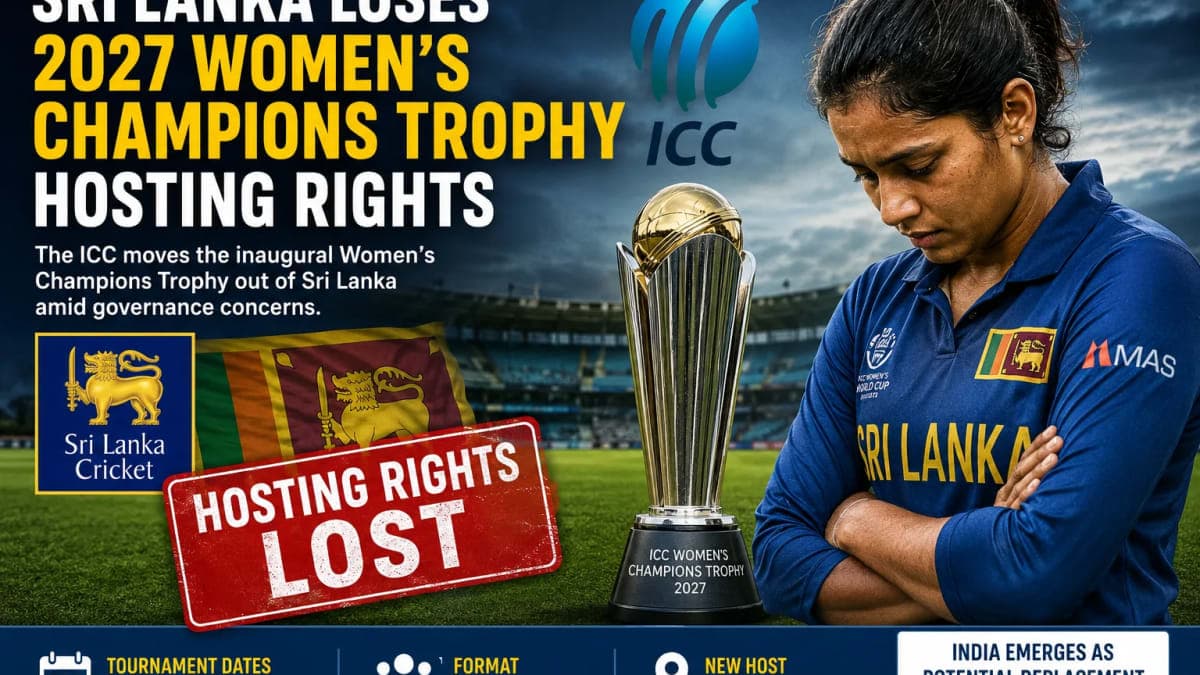
Sri Lanka Set to Lose Landmark ICC Women’s Event
Sri Lanka has lost the hosting rights for the inaugural ICC Women’s Champions Trophy, dealing another major setback to the country’s cricket administration amid an ongoing governance dispute with the International Cricket Council.
The six-team Twenty20 International tournament had been scheduled to take place in Sri Lanka from February 14 to February 28, 2027. However, the event will now be staged in another country.
The decision comes while Sri Lanka Cricket (SLC) is being administered by a government-appointed transition or transformation committee, an arrangement that has raised concerns because of the ICC’s rules requiring member cricket boards to operate independently from government interference.
Prakash Schaffter, secretary of the committee overseeing SLC, confirmed that the ICC had informed the administration that the tournament would be moved out of Sri Lanka.
Why Did Sri Lanka Lose the Hosting Rights?
The central issue is the governance structure currently overseeing Sri Lanka Cricket.
Sri Lanka was originally awarded the tournament while SLC was operating under its previous elected administration, headed by Shammi Silva.
The situation subsequently changed after a government-appointed committee assumed control of the cricket board as part of an effort to reform its governance and constitution.
The ICC has consistently opposed political or government interference in the administration of its member boards and has pushed for cricket bodies to operate through independent and elected structures.
The dispute has therefore moved beyond a domestic administrative issue and is now having direct consequences for Sri Lanka's ability to stage major international cricket events.
What Is the 2027 Women’s Champions Trophy?
The 2027 competition is particularly significant because it will be the inaugural ICC Women’s Champions Trophy.
The tournament is scheduled as a six-team T20I event between February 14 and 28, 2027.
Australia, England, India, New Zealand and South Africa are among the leading teams associated with the qualification picture, while the change of host creates an important question over Sri Lanka’s own place in the competition.
Sri Lanka's original position as host provided it with a pathway into the tournament. Moving the competition elsewhere could therefore affect not only where the matches are played but also the final qualification structure.
The ICC has not yet publicly announced a revised qualification arrangement resulting from the hosting change.
Who Could Replace Sri Lanka as Host?
A replacement country has not yet been officially confirmed.
Reports in India have identified India as a frontrunner to take over the tournament, but this should currently be treated as a reported possibility rather than a confirmed hosting decision.
The final venue is expected to become clearer following further ICC discussions.
Until an official announcement is made, Sri Lanka's removal and the identity of its replacement host should be treated as two separate developments: the tournament's move has been confirmed by Sri Lankan cricket officials, while the next host remains unresolved.
Another Major ICC Event Lost by Sri Lanka
The development is particularly significant because Sri Lanka has faced similar consequences before.
In November 2023, the ICC suspended Sri Lanka Cricket over concerns about government interference in the administration of the sport.
Sri Lanka subsequently lost the hosting rights for the 2024 ICC Men’s Under-19 Cricket World Cup, which was relocated to South Africa.
The latest development therefore represents another example of administrative instability affecting Sri Lanka's position as a host of international cricket tournaments.
Why Losing the Tournament Matters
Losing the Women’s Champions Trophy carries consequences beyond the prestige of staging an inaugural ICC competition.
Hosting an international tournament can generate economic activity through accommodation, transport, tourism, hospitality, ticketing and other services associated with visiting teams, officials, broadcasters and spectators.
For Sri Lanka Cricket, the bigger concern may be institutional.
Repeated disputes over the independence of cricket administration risk affecting the country's credibility when future ICC hosting opportunities are allocated.
There is also a sporting question. If Sri Lanka no longer receives the benefit attached to being the tournament host, its participation could depend on the qualification system ultimately applied by the ICC.
That makes the selection of the replacement host and any subsequent clarification of qualification rules particularly important.
What Happens Next?
Attention will now turn to the ICC's decision on where the inaugural Women's Champions Trophy will be staged.
India has emerged in reports as a potential replacement, but no new host had been officially confirmed as of August 31, 2026.
Sri Lanka, meanwhile, faces a broader challenge: resolving the governance dispute surrounding SLC and restoring an administration that meets the ICC's expectations for independence.
Conclusion
Sri Lanka's loss of the 2027 ICC Women’s Champions Trophy is more than a change of venue for a major cricket tournament. It highlights the practical consequences that governance disputes can have on a country's role within international sport.
For women's cricket, preparations must now continue toward a historic first edition of the Champions Trophy under a different host.
For Sri Lanka, the episode increases the pressure to resolve its cricket administration issues. Until that happens, uncertainty could continue to affect both its international influence and its prospects of securing major ICC tournaments in the future.


