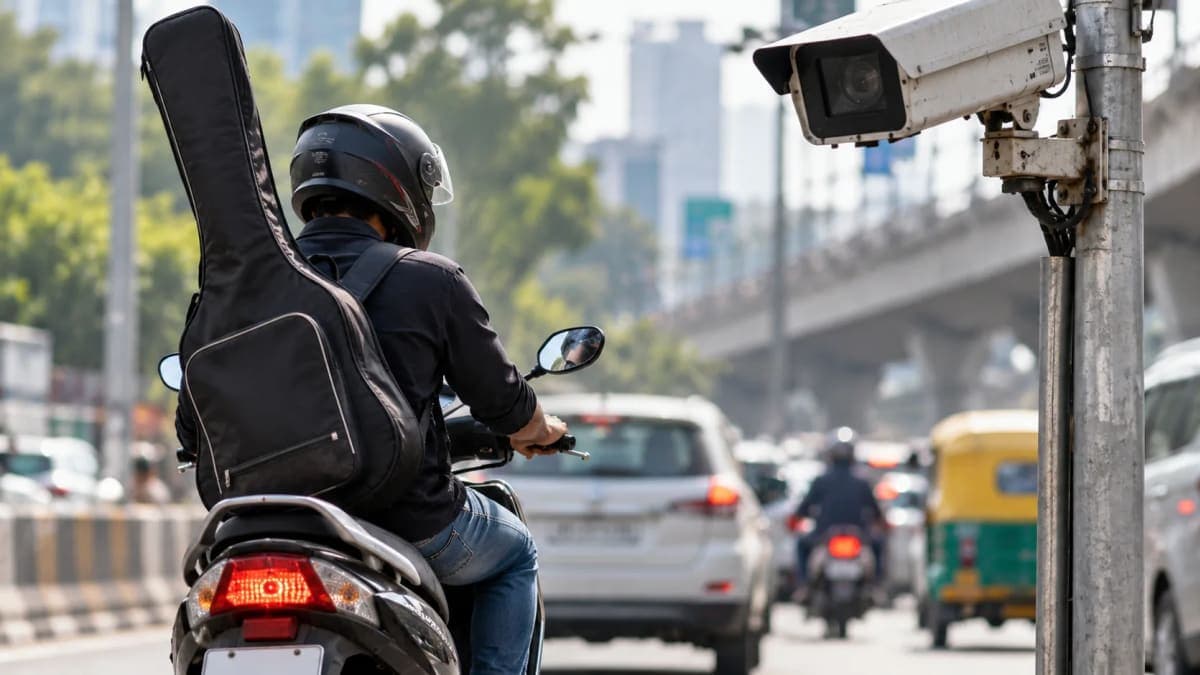
Bengaluru, September 27, 2026: An unusual traffic challan in Bengaluru has drawn attention to the limitations of automated enforcement after a camera system apparently identified a guitar strapped to a scooter rider’s back as a passenger without a helmet.
The rider, Souvik Dutta, said he was travelling alone on his wife’s two-wheeler with his guitar on his back when the vehicle was flagged for “pillion riding without helmet.” A ₹500 challan was subsequently issued to the vehicle owner.
According to the Times of India, the camera captured Dutta on the Outer Ring Road at around noon on September 15, and the challan was generated the following day.
‘So much for AI-based traffic violation detection’
Dutta shared the challan on X and tagged Bengaluru Traffic Police, writing:
“I was riding my wife's two-wheeler alone with my guitar slung on my back in Bangalore.”
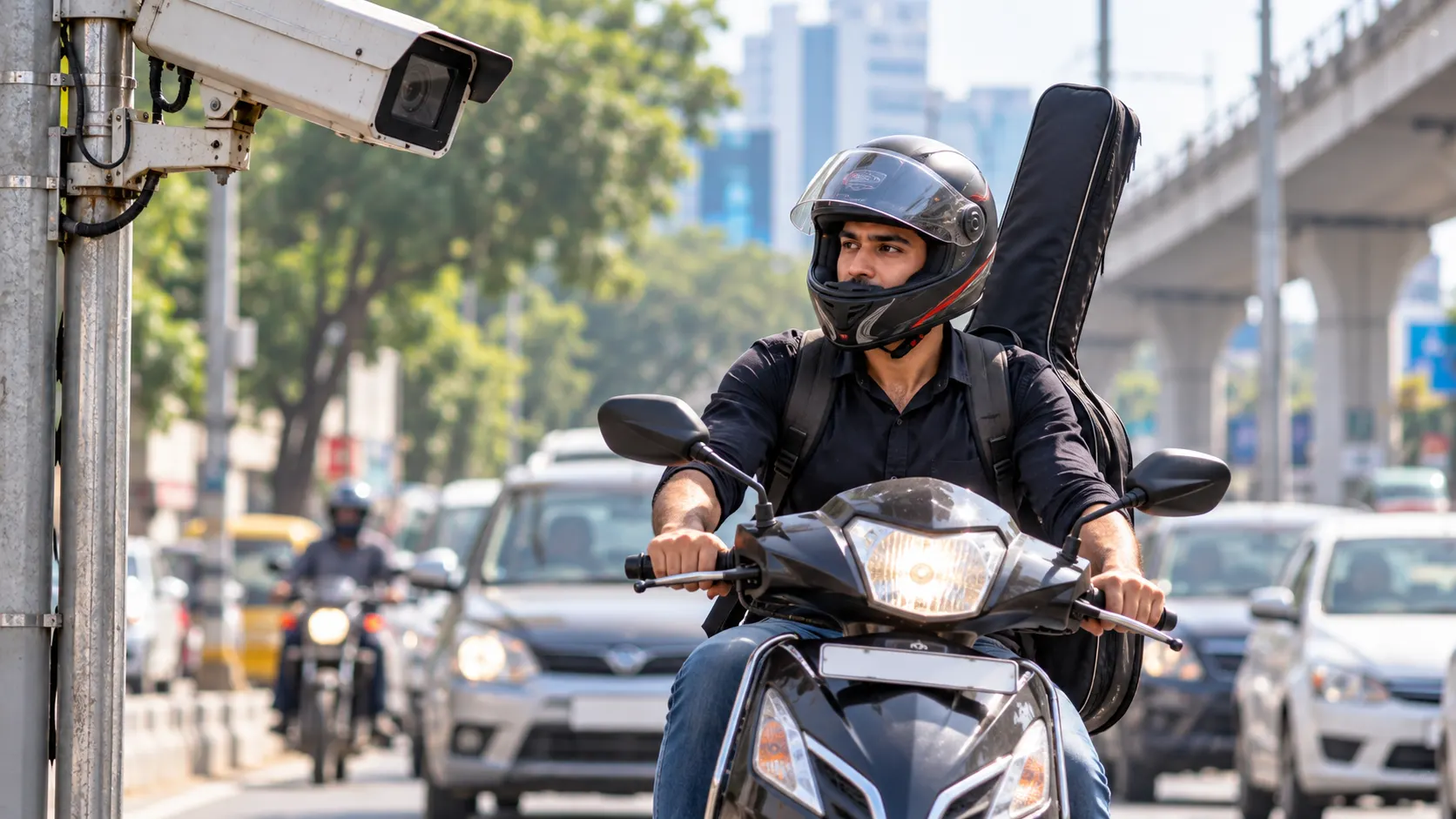
He asked police to revoke the challan and criticised the apparent error in the AI-based detection system. The photograph accompanying the notice showed Dutta wearing a helmet with the guitar behind him, according to reports.
Traffic police acknowledge false flag
Importantly, this is more than just a social-media claim. A senior traffic police officer told The Hindu that the reported violation was a false flag caused by an AI judgement error, adding that such mistakes can occasionally occur and can be verified and corrected.
The Times of India separately reported that Bengaluru Joint Commissioner of Police (Traffic) Karthik Reddy said authorities would examine the case and revoke the violation if the error was confirmed.
Bengaluru Traffic Police introduced AI-based surveillance in December 2022. According to TOI, complaints involving incorrectly read registration plates subsequently led police to introduce manual validation of AI-generated violations.
What the incident highlights
The episode illustrates an important limitation of automated enforcement: computer-vision systems can classify objects incorrectly, while human review remains important before penalties are finalised.
In Dutta’s case, the unusual shape of the guitar appears to have contributed to the erroneous detection. Police have said their systems continue to improve as more data is incorporated, while acknowledging they are not 100% accurate.