Asian Games 2026: India Targets Another 100-Plus Medal Campaign After Historic Hangzhou High
Introduction
India enters the final days before the 2026 Asian Games in Aichi-Nagoya, Japan, carrying a level of expectation created by its own record-breaking performance.
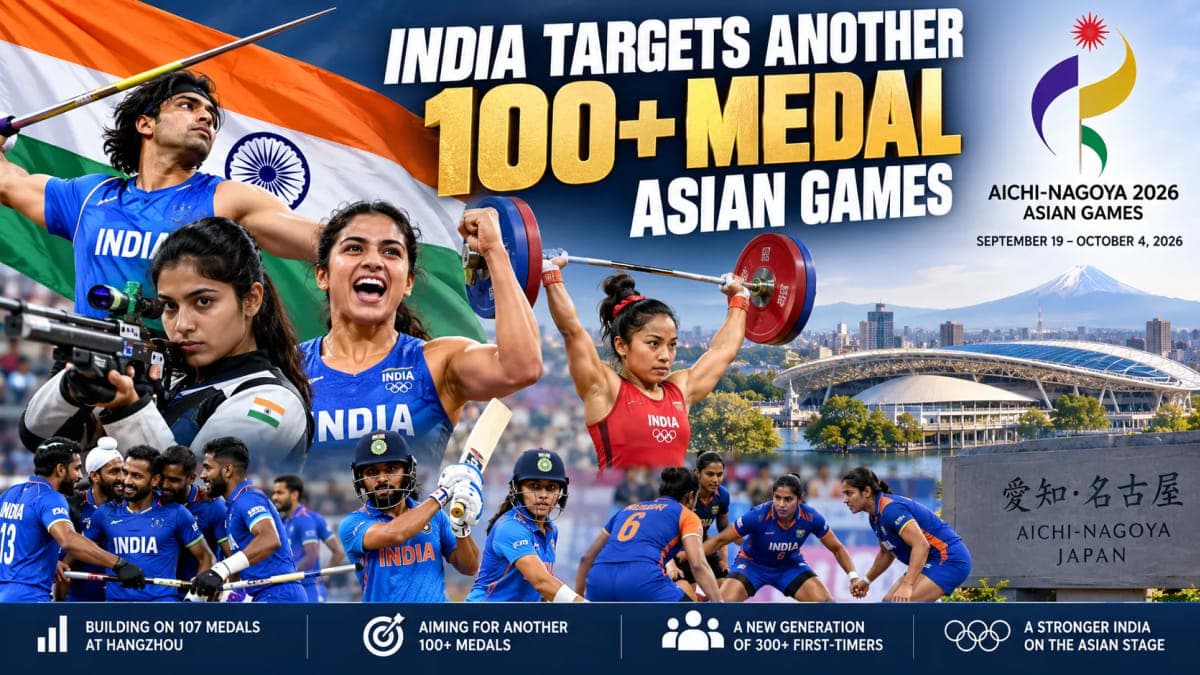
At the previous Asian Games in Hangzhou, India won a historic 107 medals, including 28 gold, finishing fourth in the overall medal standings. It was the first time India had crossed the 100-medal barrier at an Asian Games and represented a major jump from the 70 medals won at Jakarta-Palembang in 2018.
Now the challenge is different: proving that Hangzhou was not an isolated peak.
As the Aichi-Nagoya Games approach, India is aiming to reach the 100-medal mark for a second successive edition and, ideally, improve on its record tally. The 20th Asian Games are scheduled to run from September 19 to October 4, 2026.
From 70 Medals to 107: India's Asian Games Rise
India's recent Asian Games trajectory explains why expectations are so high.
At the 2018 Asian Games in Jakarta and Palembang, India collected 70 medals. Five years later in Hangzhou, the tally climbed to a record 107, putting India into triple digits for the first time.
The Hangzhou campaign also showed that India's medal prospects were no longer dependent on only a handful of disciplines.
Athletics was particularly important, producing 29 medals — six gold, 14 silver and nine bronze — while shooting and archery were also major contributors.
Repeating that breadth of success will be central to India's chances in Japan.
Athletics, Shooting and Archery Could Again Be Crucial
Athletics remains one of India's traditional strengths at the Asian Games, while shooting and archery have developed into increasingly important medal sources.
Shooting will feature established Indian names including Manu Bhaker and Esha Singh, while Jyothi Surekha Vennam is among the prominent medal contenders in archery.
Athletics, meanwhile, faces a significant setback with star javelin thrower Neeraj Chopra missing the Games because of injury, according to current reporting. Despite his absence, India will still look to its wider athletics contingent to deliver a substantial share of the overall medal tally.
That depth could become particularly important if India is to remain above the 100-medal threshold.
Cricket, Hockey and Kabaddi Offer Major Opportunities
India will also carry high expectations into its major team sports.
The country's men's and women's cricket teams and men's and women's kabaddi teams enter Aichi-Nagoya as defending Asian Games champions.
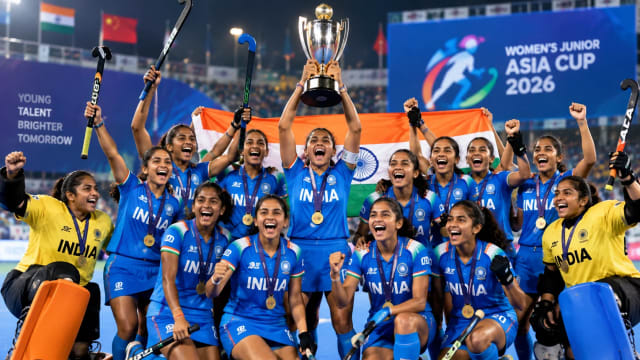
Both Indian hockey teams are also among the sides expected to challenge strongly, with the men's and women's competitions carrying major significance beyond the medal table.
Reuters reported that expectations are high for India in cricket and hockey, while kabaddi, squash, wrestling and weightlifting could also contribute important medals.
Success across these disciplines would reduce the pressure on athletics and shooting to reproduce all of their Hangzhou gains.
Mirabai Chanu Chases an Elusive Asian Games Medal
One of India's most closely watched individual campaigns will be that of Olympic medallist Mirabai Chanu.
The Tokyo Olympics silver medallist has achieved success at the highest levels of international weightlifting but is still chasing her first Asian Games medal.
A podium finish in Aichi-Nagoya would therefore fill one of the notable gaps in her distinguished career. Reuters reported that Chanu regards the level of competition at the Asian Games as comparable in difficulty to the Olympics.
More Than 300 First-Timers Highlight India's New Generation
The 2026 campaign is not simply about established champions.
At the Indian contingent's official send-off on September 8, Union Sports Minister Dr. Mansukh Mandaviya said that more than 300 athletes were first-time Asian Games participants, highlighting the emergence of a new generation of Indian competitors.
Mandaviya expressed confidence in the contingent and urged athletes to convert competitive pressure into performance.
The large number of newcomers gives India's campaign an additional dimension. Reaching another 100-plus total will depend not only on proven medal winners but also on athletes experiencing the Asian Games stage for the first time.
A Stricter Medal-Focused Selection Strategy
India's preparations have also included a more explicitly performance-oriented selection framework.
The Ministry of Youth Affairs and Sports issued selection criteria designed to prioritise athletes and teams considered genuine medal prospects.
For individual events without suitable recent Asian Championships or regular international rankings, athletes generally needed a top-six finish among Asian nations in equivalent international competition. For team sports and team events, the framework generally required a top-eight Asian Championship finish or a top-eight ranking among Asian countries, subject to specified conditions and possible justified relaxations.
The policy reflects a broader emphasis on competitive performance rather than participation alone.
The Bigger Picture: India's 2036 Olympic Ambition
The Asian Games target also sits inside India's longer-term sporting strategy.
At the September 8 send-off, Mandaviya linked India's sporting development to the country's 2036 Olympic ambitions, describing the coming decade as part of a long-term plan to establish India more firmly on the world sporting stage. He also said more than ₹36,000 crore had been allocated toward improving sports infrastructure over that period.
That makes Aichi-Nagoya an important test.
A second consecutive 100-plus Asian Games performance would suggest that India's Hangzhou success is becoming sustainable rather than exceptional. Falling substantially below that benchmark, by contrast, would highlight areas where greater depth is still required.
Can India Break the 107-Medal Record?
Crossing 100 medals again is ambitious but realistic based on India's recent Asian Games performance and the range of disciplines in which it now possesses serious contenders.
Surpassing 107, however, will require several things to go right simultaneously.
India will need athletics to remain productive despite Neeraj Chopra's absence, shooting and archery to convert opportunities into podium finishes, and sports such as wrestling, weightlifting, badminton and squash to add consistently to the tally. Strong results from cricket, hockey and kabaddi could provide another crucial foundation.
The biggest difference from previous editions may be expectation itself.
Hangzhou established that India could cross 100 medals. Aichi-Nagoya will reveal whether the country can make triple-digit Asian Games performances a recurring standard.
With the Games beginning on September 19, the target is clear: another 100-plus campaign — and, if enough medal opportunities are converted, a new Indian Asian Games record.