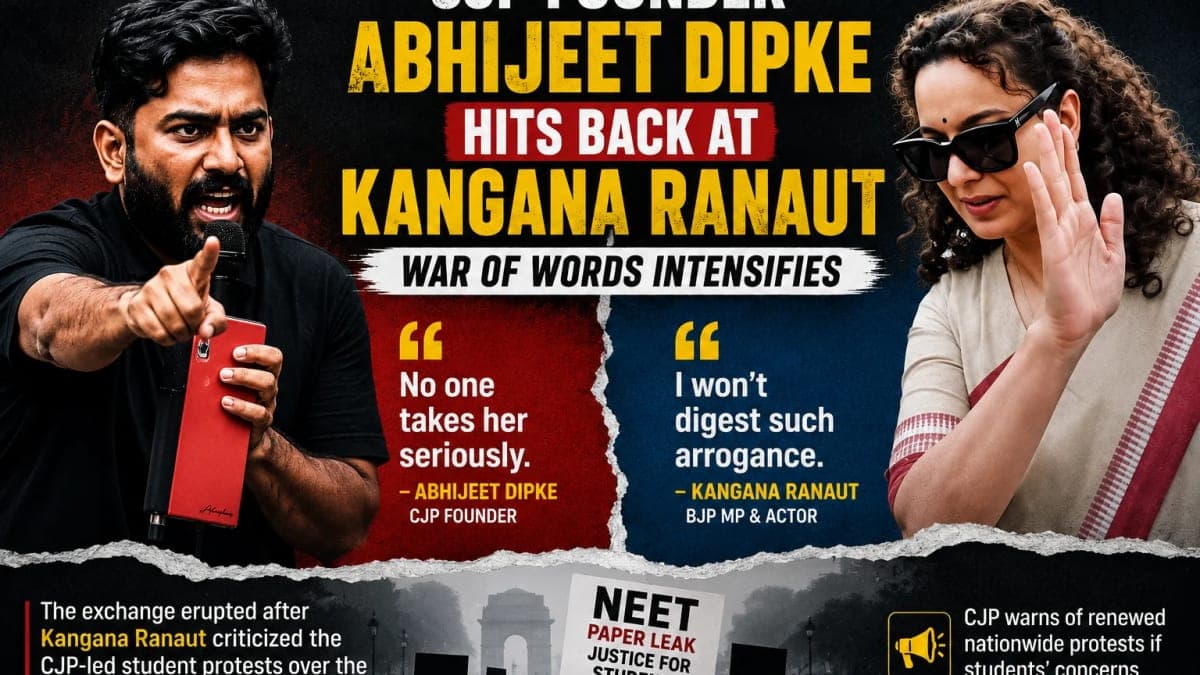
CJP's Abhijeet Dipke Hits Back at Kangana Ranaut, Verbal Clash Deepens
The public confrontation between Cockroach Janta Party (CJP) founder Abhijeet Dipke and BJP MP Kangana Ranaut has intensified, adding another chapter to an increasingly heated political exchange surrounding the nationwide student protests over the alleged NEET-UG 2026 paper leak.
Dipke responded sharply to Ranaut's recent criticism of the protest movement, dismissing her political relevance and arguing that her statements do not carry significant influence. His remarks followed similar criticism from CJP spokesperson Saurav Das, indicating a coordinated response from the party leadership.
Background to the Dispute
The controversy began after Kangana Ranaut criticized the language and conduct of participants involved in the CJP-led demonstrations. She also questioned the tone adopted by sections of the youth movement, prompting strong reactions from CJP leaders.
Saurav Das initially rejected Ranaut's criticism, arguing that she lacks credibility among younger audiences. Ranaut later responded through social media, defending both her political career and professional achievements while criticizing Das personally.
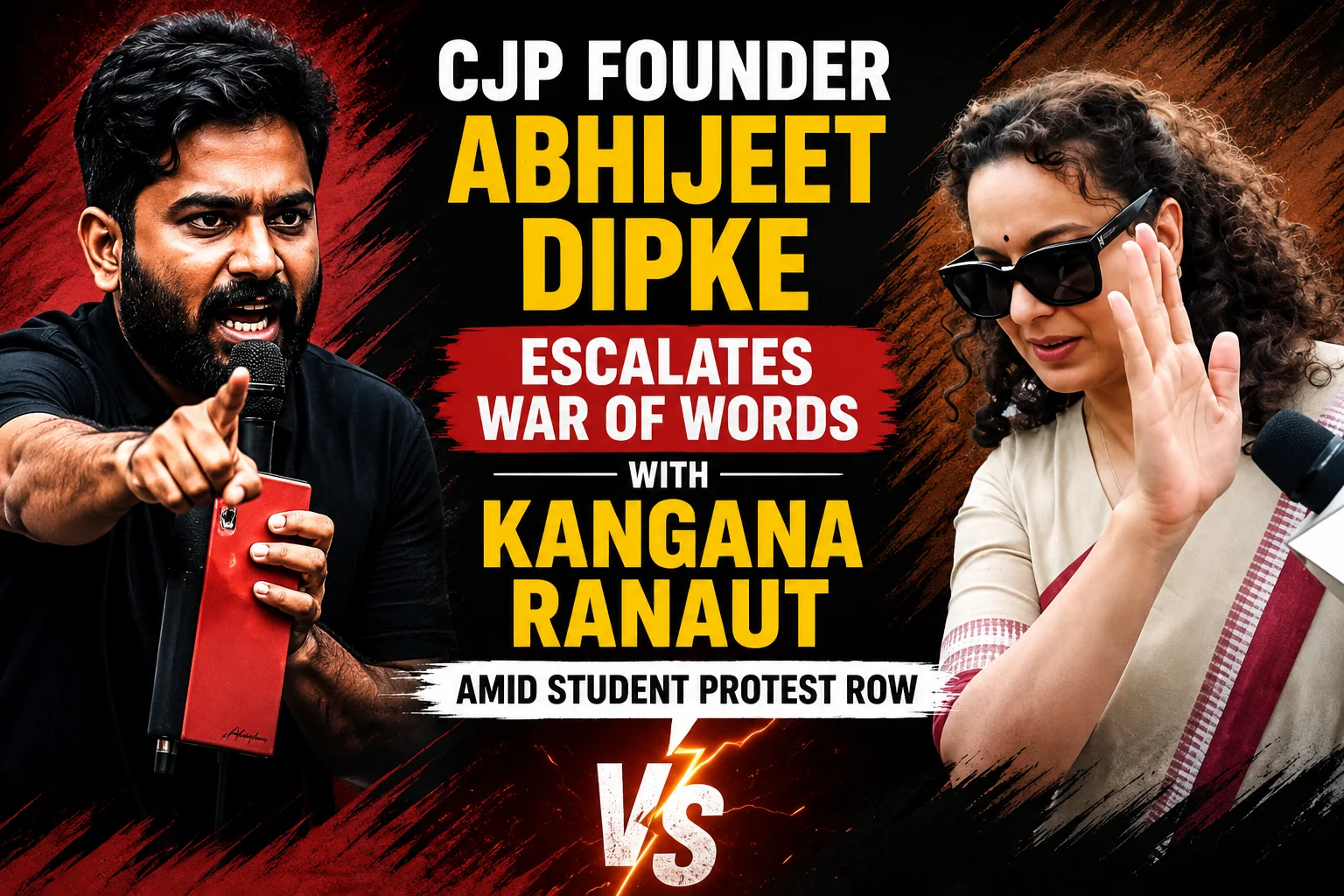
Dipke's latest comments have now expanded the dispute beyond the initial exchange, reinforcing the CJP's position against Ranaut's statements.
Student Protest Remains the Central Issue
Although the verbal exchanges have attracted widespread attention, the larger issue remains the continuing protests over the alleged irregularities in the NEET-UG 2026 examination.
The CJP has been one of the most visible groups backing students demanding accountability, transparency and action regarding the alleged paper leak. The party has also warned of renewed nationwide protests if it believes authorities continue to suppress demonstrations rather than address students' concerns.
Why the Political Exchange Matters
The episode highlights how social media and public statements by prominent political figures can rapidly shift attention from policy debates to personal confrontations.
Supporters of the CJP argue that the focus should remain on students' demands and examination reforms. Meanwhile, Ranaut has defended her criticism, maintaining her stance on the nature of the protests and those participating in them.
The exchange also illustrates the growing role of online platforms in shaping political narratives, where remarks by public personalities often receive as much attention as the underlying policy issues.
Balanced Analysis
The latest confrontation reflects the increasingly polarized political environment surrounding student movements in India.
For the CJP, responding forcefully helps reinforce its image among supporters who view the party as representing student interests. For Kangana Ranaut, her remarks continue to resonate with supporters who believe protest movements should remain disciplined and accountable.
However, repeated personal attacks from either side risk overshadowing the substantive debate on examination integrity, education reforms and public accountability. As the controversy evolves, the long-term public focus is likely to depend less on the exchange of remarks and more on how policymakers respond to the concerns raised by students.


