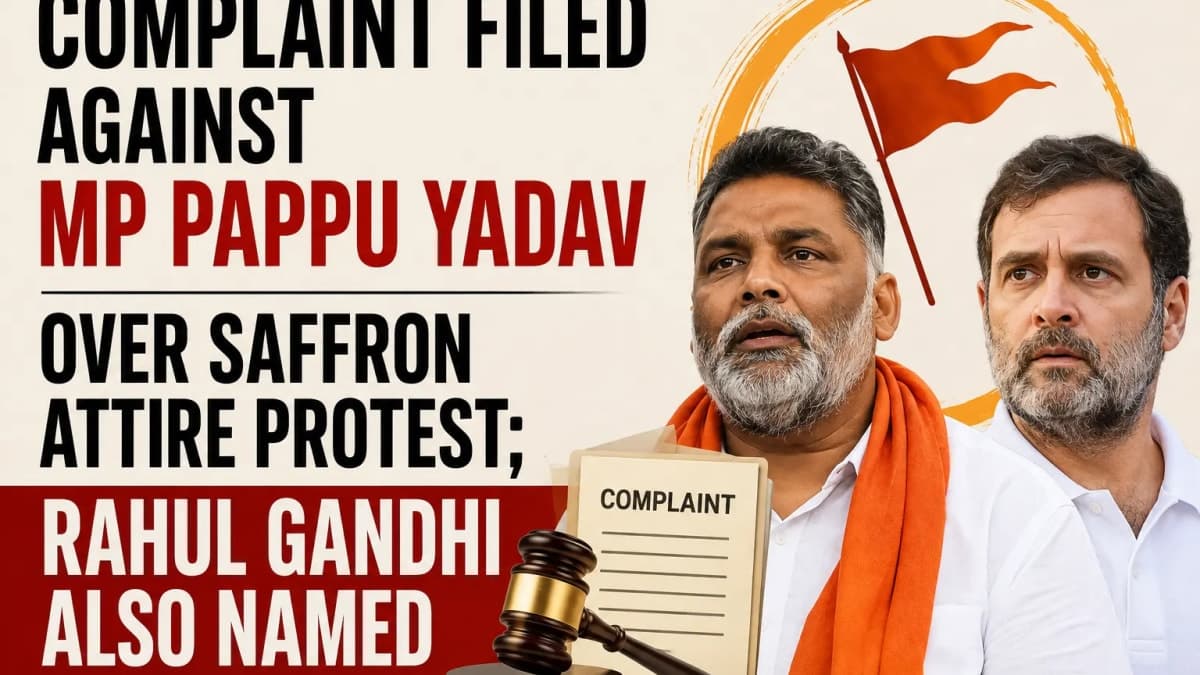
Complaint Against Pappu Yadav Brings Legal Focus to Saffron Attire Protest
A political protest involving MP Pappu Yadav has taken a legal turn after a complaint was filed against him over an episode involving saffron attire. Congress leader Rahul Gandhi has also reportedly been named in the complaint, bringing additional political attention to the matter.
At this stage, the development concerns the filing of a complaint. That distinction is important: a complaint contains allegations and does not, by itself, establish that the people named have committed an offence.
Further legal or investigative action would depend on how the relevant authorities assess the allegations and applicable law.
What Triggered the Complaint?
The complaint stems from a protest associated with saffron attire involving Pappu Yadav.
Saffron carries religious as well as political symbolism in India, meaning disputes involving its use can quickly move beyond an individual protest and become part of a wider political debate.
The controversy has now entered a new phase because of the complaint, shifting attention from political messaging to whether authorities believe any legal provisions were violated.
Rahul Gandhi Reportedly Named
The reported inclusion of Rahul Gandhi significantly increases the political profile of the case.
As a senior Congress leader and Leader of the Opposition in the Lok Sabha, developments involving Gandhi routinely attract national attention.
However, being named in a complaint should not be interpreted as proof of involvement in an offence. The nature of the allegations against each individual, their alleged roles and any evidence presented would need to be examined separately.
Political Protest Meets Legal Scrutiny
Political demonstrations frequently rely on clothing, colours, slogans and symbolic gestures to communicate messages.
Such methods are a longstanding feature of democratic politics. At the same time, disputes can arise when opponents or complainants believe a demonstration has crossed legal boundaries or offended religious or community sentiments.
The crucial issue in this case will therefore be how authorities distinguish protected political expression from conduct that could potentially attract action under applicable law.
That determination cannot be made merely from the existence of a complaint.
Why the Development Matters
The case is significant because it sits at the intersection of political expression, religious symbolism and legal accountability.
India's political parties frequently use symbolic imagery to strengthen their messaging. Saffron, in particular, has acquired multiple layers of meaning because of its historical, religious and contemporary political associations.
When political demonstrations use such symbols, interpretations can differ sharply depending on the context.
The complaint against Pappu Yadav could consequently generate debate not only about the specific protest but also about the limits of symbolic political expression.
Complaint Does Not Mean Guilt
It is particularly important to distinguish allegations from established facts in reporting on legal disputes.
The filing of a complaint represents one party's allegations or request for authorities to examine certain conduct. It does not amount to a judicial finding against Pappu Yadav, Rahul Gandhi or anyone else reportedly named.
Any subsequent investigation, registration of a case, court proceeding or official determination would represent separate stages and should be reported independently if they occur.
This distinction protects both the integrity of the legal process and the rights of those accused.
Political Reactions Could Shape the Controversy
Because prominent opposition politicians are reportedly involved, the dispute could develop into a broader political confrontation.
Supporters may describe the protest as legitimate political expression, while critics may argue that certain forms of symbolism deserve scrutiny.
Those competing interpretations are political positions rather than legal conclusions.
Ultimately, whether the episode results in further action will depend on the allegations contained in the complaint, available evidence and the assessment of the competent authorities.
Balanced Analysis
The controversy demonstrates how quickly symbolic political protests can acquire legal consequences in India's highly polarised political environment.
Those filing complaints have the right to seek legal scrutiny when they believe an offence has occurred. Equally, individuals named in complaints retain the presumption of innocence, and political expression should not automatically be treated as unlawful merely because it is provocative or controversial.
The most important next development will therefore be the response of authorities rather than political claims surrounding the dispute.
Until additional verified information emerges, the complaint should be described precisely for what it currently represents: an allegation requiring examination, not a determination of guilt.


