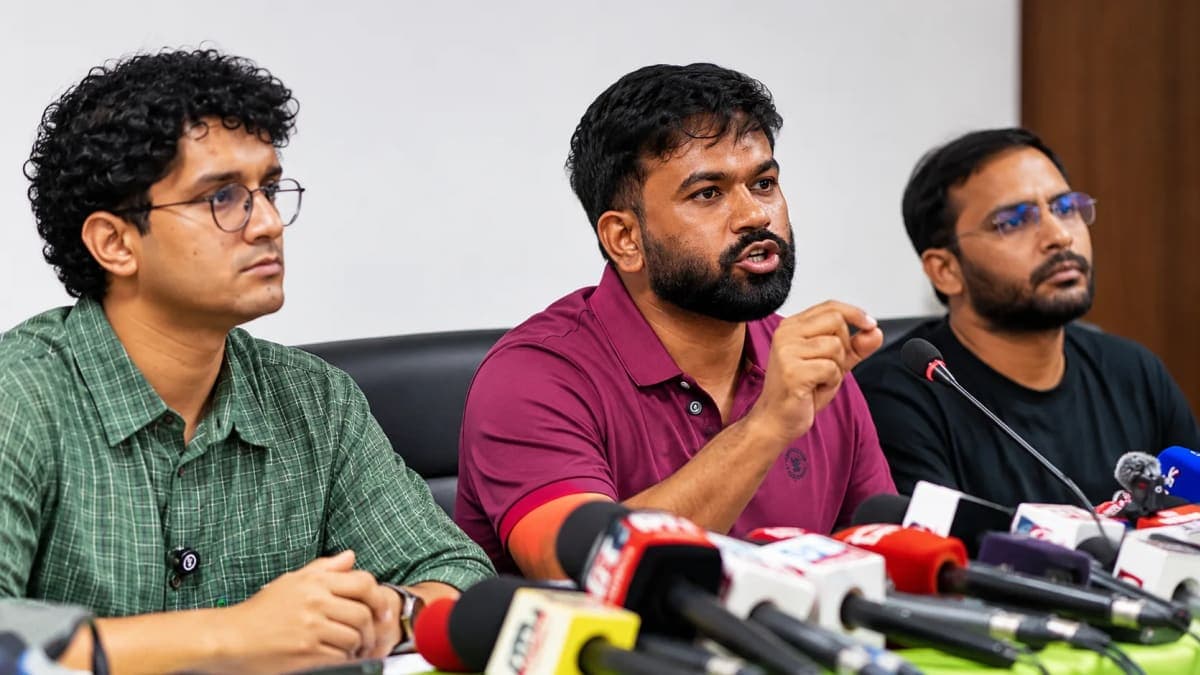
New Delhi, September 24, 2026: The Cockroach Janta Party (CJP) on Thursday intensified pressure on Chief Election Commissioner (CEC) Gyanesh Kumar, demanding that he resign within 48 hours and warning of nationwide protests if he remains in office. The organisation also called for a halt to upcoming elections and changes to the ongoing Special Intensive Revision (SIR) process.
The demands were announced at a press conference in New Delhi by CJP founder and convenor Abhijeet Dipke and other leaders, against the backdrop of a controversy over reported internal objections within the Election Commission of India (ECI).
CJP Sets 48-Hour Deadline
Dipke said the organisation would launch another agitation if Kumar does not resign within the deadline.
“Jantar Mantar 2.0 will definitely happen if CEC Gyanesh Kumar doesn't resign,” Dipke said at the press conference.
According to the CJP, demonstrations would not be confined to Delhi but would be organised across the country. The announcement marks a shift in the group's focus towards electoral administration and the functioning of the Election Commission.
What CJP Is Demanding
CJP co-convenor Saurav Das outlined three principal demands: Kumar's resignation, criminal proceedings against the CEC and those the group alleges directed him, and a freeze on upcoming elections.
The organisation additionally called for the SIR to be rolled back to the 2025 electoral-roll position, for relevant SIR files to be placed in the custody of a Supreme Court-led committee, and for repeal of the law governing the appointment of Election Commissioners.
These are demands made by CJP and should not be read as findings that wrongdoing occurred.
Why Has the Election Commission Controversy Erupted?
The immediate backdrop is an investigation reported by The Indian Express concerning Election Commissioners Sukhbir Singh Sandhu and Vivek Joshi.
According to subsequent reporting on that investigation, the two commissioners recorded objections on at least 14 occasions over a 10-month period. The reported issues included changes to Form 6, voter additions and deletions, appeals involving electoral rolls and control over electoral-roll data and IT systems.
The reported objections have triggered a broader political dispute over how decisions were made within the three-member Election Commission.
Election Commission Rejects Suggestion of a Rift
The ECI has pushed back against the interpretation that the reported objections show its final decisions were divided.
The Commission has said that differing opinions, written observations and internal checks are normal parts of institutional deliberation. It maintains that final decisions — including those concerning the SIR — were taken unanimously with the approval of CEC Gyanesh Kumar and Election Commissioners Sukhbir Singh Sandhu and Vivek Joshi.
The distinction is important: the reporting indicates that objections were raised during the decision-making process, while the ECI's position is that these did not translate into dissent from the Commission's final decisions.
CJP Levels Wider Allegations Against CEC
Dipke also made broader allegations concerning electoral-roll deletions and accused Kumar of favouring the BJP. He further alleged that the CEC was acting under instructions from Union Home Minister Amit Shah.
These allegations have not been established as fact in the material reviewed for this report, and the cited coverage does not provide evidence establishing Dipke's claim about Shah directing the CEC.
The CJP has similarly alleged that the SIR is being used politically to benefit the BJP.
Electoral-Roll Questions at Centre of Dispute
The controversy extends beyond political accusations because the reported objections concern the machinery used to determine voter eligibility and maintain electoral rolls.
According to reporting on the investigation, Joshi raised concerns about changes to Form 6, while questions were also reported over the centralisation of electoral-roll systems, voter-deletion appeals in West Bengal and difficulties adding some eligible voters in Goa.
Sandhu and Joshi also reportedly wrote separately to Cabinet Secretary T V Somanathan about changes relating to the Election Commission's IT operations.
The ECI, however, continues to maintain that the Commission's eventual decisions were unanimous.
What Happens Next?
CJP's 48-hour ultimatum raises the prospect of a fresh protest campaign if Kumar does not resign. The organisation says it intends to mobilise supporters both in Delhi and elsewhere in India.
At the same time, the underlying dispute is likely to remain centred on two separate questions: what objections were raised internally during the electoral-roll process, and whether those objections affected or contradicted the Commission's eventual formal decisions.
For now, the CJP's accusations remain political allegations, while the Election Commission's stated position is that internal observations are part of its deliberative process and that its final decisions were unanimous.