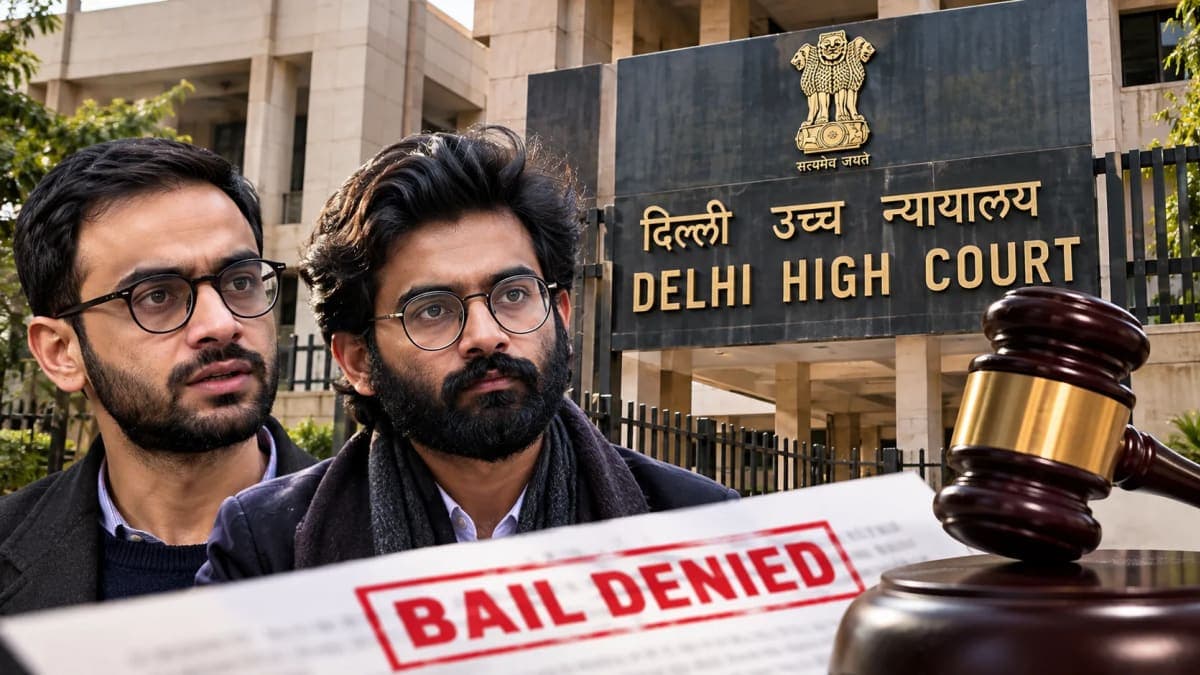
New Delhi, September 30, 2026: The Delhi High Court on Wednesday rejected regular bail appeals filed by Umar Khalid and Sharjeel Imam in the case concerning the alleged larger conspiracy behind the 2020 northeast Delhi riots.
A Division Bench of Justices Prathiba M. Singh and Dinesh Bhatt dismissed their appeals against the trial court's July 4 decision denying them regular bail.
The High Court said it was bound by the conditions laid down by the Supreme Court when the apex court refused bail to Khalid and Imam on January 5, 2026. The Supreme Court had allowed them to renew their bail requests after the examination of protected witnesses or after one year from that order, whichever occurred earlier. The High Court said it could not alter those conditions.
Background of the Case
The case relates to the alleged larger conspiracy behind the communal violence that broke out in northeast Delhi in February 2020. Khalid and Imam are being prosecuted under the Unlawful Activities (Prevention) Act (UAPA) and other legal provisions. The allegations against them remain matters for adjudication at trial.
The February 2020 violence occurred amid protests over the Citizenship (Amendment) Act and related issues. The riots left 53 people dead and more than 700 injured.
Arguments Over Continued Detention
Khalid and Imam have sought bail while raising concerns about their prolonged incarceration and the pace of the proceedings. Delhi Police has opposed their release and has maintained that their alleged roles differ from those of some co-accused who have received bail.
The latest decision does not determine guilt or innocence. It concerns whether the two accused should receive bail at this stage of the proceedings.
Why the Decision Matters
The ruling highlights the interaction between prolonged pre-trial detention, the restrictive bail framework under the UAPA and the requirement for lower courts to follow directions issued by the Supreme Court.
For the defence, the duration of custody and progress of the trial remain important issues. The prosecution, meanwhile, continues to rely on the seriousness of the alleged conspiracy and the accused's alleged roles in opposing bail.


