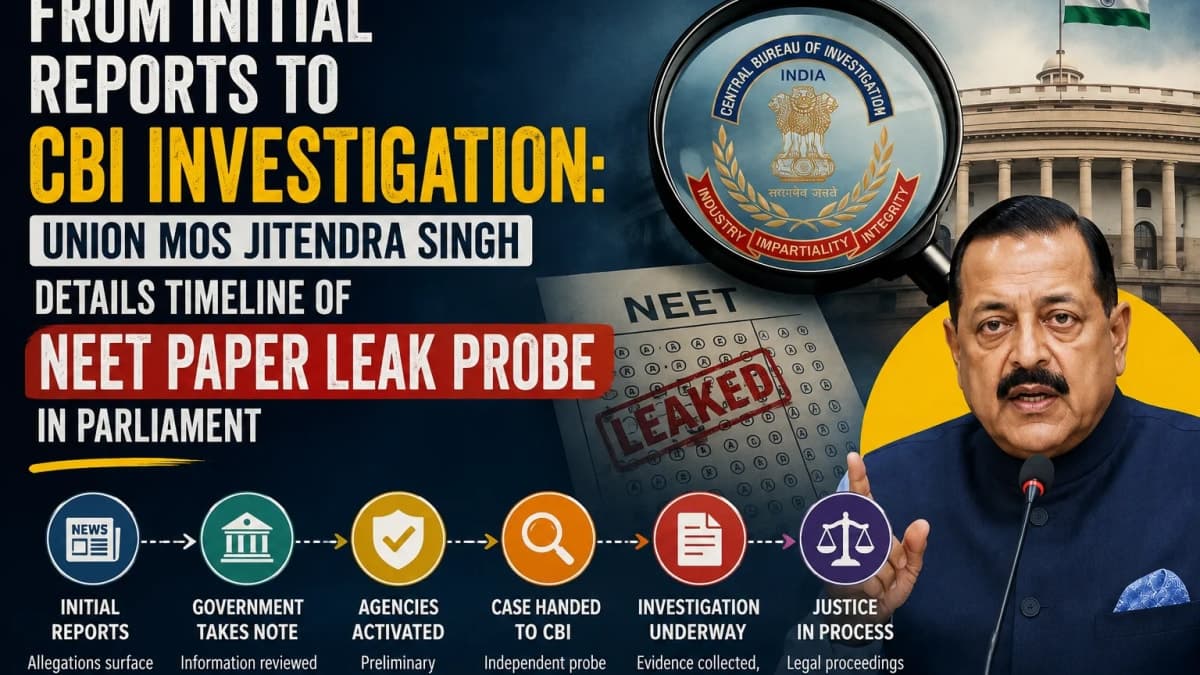
From News Reports to a CBI Probe: Government Explains NEET Investigation Timeline
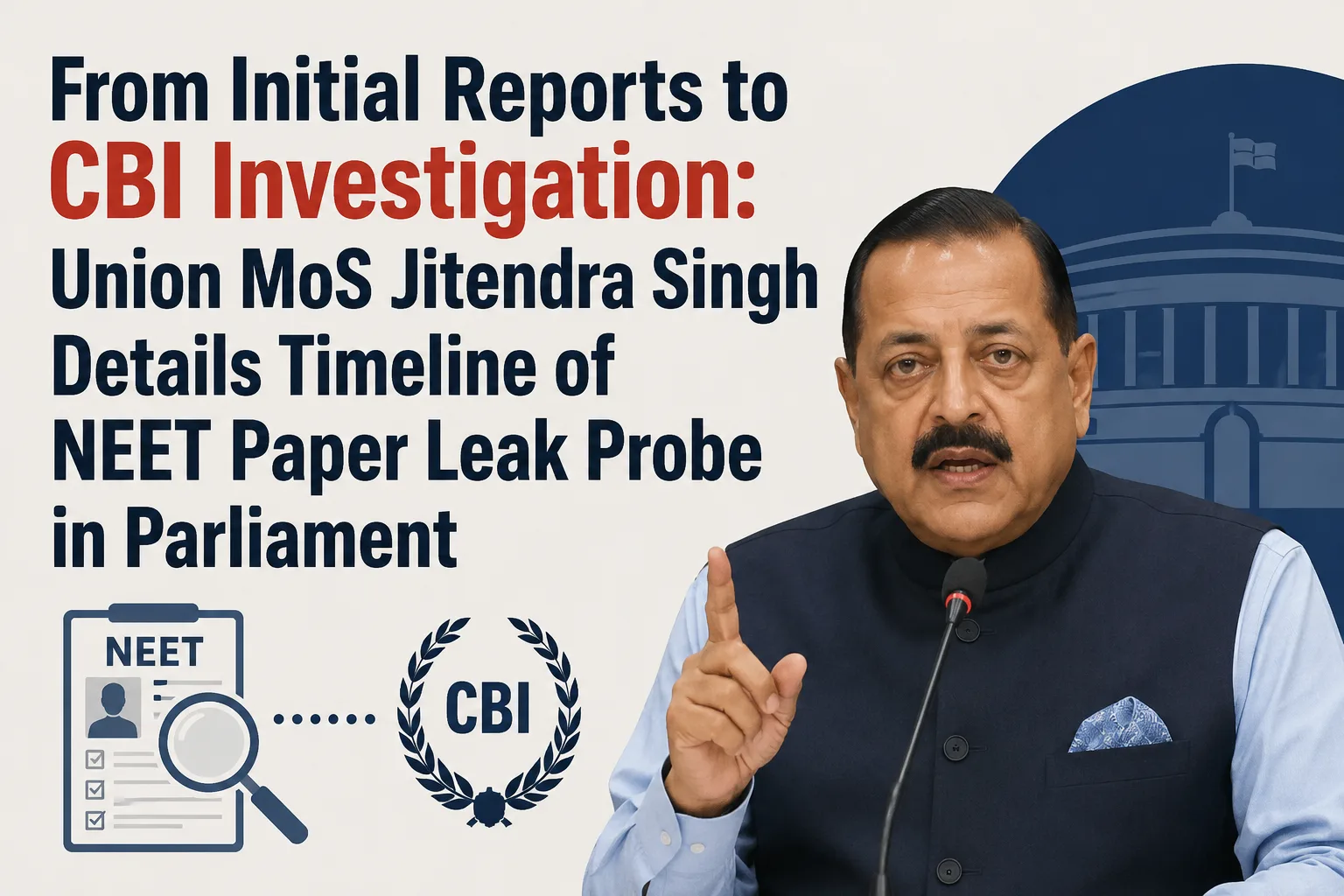
During discussions in the Lok Sabha on examination reforms and the proposed anti-paper leak amendments, Union Minister of State Jitendra Singh defended the Centre's handling of the NEET paper leak controversy. He traced the sequence of events from the emergence of reports about irregularities to the decision to entrust the investigation to the Central Bureau of Investigation (CBI).
According to the minister, the government acted after receiving information regarding the alleged leak and moved the case to the CBI for an independent investigation. He argued that the transfer reflected the Centre's intention to ensure a professional probe into allegations affecting one of India's most competitive entrance examinations.
Government Highlights Steps Taken
While responding to criticism from the Opposition, Jitendra Singh said the Centre initiated a structured response after learning about the alleged malpractice. He emphasized that investigative agencies were brought in promptly and that legal mechanisms were activated to identify those responsible.
The minister also linked the government's response to broader examination reforms, stating that stronger legal safeguards are intended to deter organized paper leak networks and restore confidence in public examinations.
Anti-Paper Leak Bill Forms Part of Larger Reform Push
The discussion took place alongside debate over amendments aimed at strengthening the Public Examinations (Prevention of Unfair Means) framework. The proposed changes seek tougher punishments, faster investigations, and expedited trials for those involved in examination fraud.
The government has argued that stricter penalties and quicker prosecution will make it harder for criminal networks to manipulate recruitment and entrance examinations.
CBI Investigation Continues
The NEET paper leak case remains under investigation by the CBI. Recent developments include the filing of a chargesheet against multiple accused, while courts continue to oversee proceedings related to the case. Investigators are examining evidence and forensic findings as the legal process moves forward.
Why the Issue Matters
The NEET examination determines admission to medical colleges across India and is taken by millions of aspirants each year. Allegations of paper leaks raise serious concerns about fairness, transparency, and equal opportunity in the country's higher education system.
The controversy has also renewed debate over the security of large-scale public examinations, prompting calls for stronger safeguards, technological improvements, and greater accountability from institutions responsible for conducting such tests.
Balanced Analysis
The government's timeline seeks to demonstrate that authorities acted quickly once credible information emerged and that the decision to hand the matter to the CBI underscored its commitment to an impartial investigation. At the same time, opposition parties continue to question whether preventive mechanisms were adequate and whether stronger oversight could have stopped the alleged leak before it affected candidates.
As the investigation progresses and the anti-paper leak amendments move through Parliament, the effectiveness of these measures will likely be judged by whether they reduce future examination fraud while rebuilding public confidence in India's competitive examination system.


