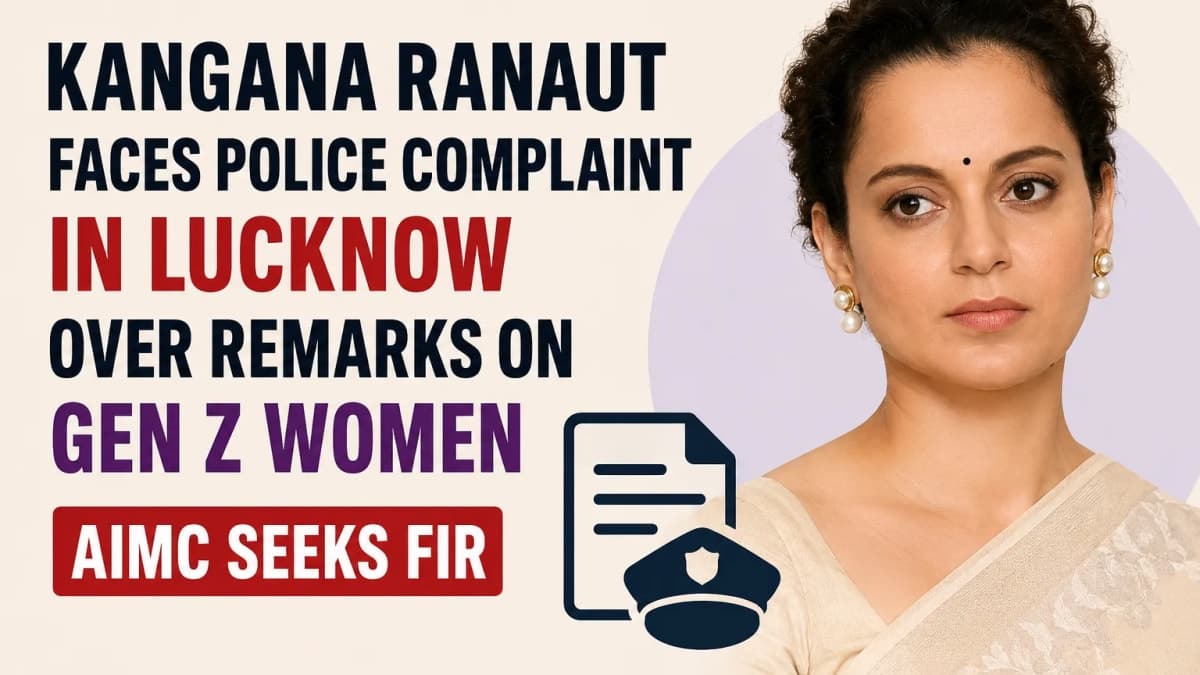
Complaint Filed in Lucknow Over Kangana Ranaut’s Remarks
Actor and politician Kangana Ranaut is facing a police complaint in Lucknow following controversy over remarks attributed to her concerning Gen Z women. The All India Mahila Congress (AIMC) has sought the registration of a First Information Report (FIR) in connection with the matter.
The complaint marks the latest controversy involving comments made in the political and public sphere about women and younger generations. At this stage, the filing of a complaint should not be interpreted as proof of wrongdoing. Any potential criminal proceedings would depend on how the police assess the allegations and whether authorities determine that further legal action is warranted.
AIMC Seeks Registration of FIR
The All India Mahila Congress has approached police seeking formal action against Ranaut over the disputed remarks.
The organisation's demand for an FIR raises the issue from a political disagreement to a potential legal matter. Police authorities would ordinarily examine the contents of a complaint, the context of the statements in question and the relevant provisions of law before deciding whether a case should be formally registered.
The available facts do not establish that an FIR has already been registered or that Ranaut has been found responsible for any offence.
Why the Controversy Matters
The dispute comes at a time when comments made by politicians and other prominent public figures can quickly generate wider debate, particularly when they concern gender, younger generations or social behaviour.
Gen Z generally refers to the generation that followed millennials and includes a large segment of young adults active in education, workplaces, politics and online communities. Broad characterisations of such a diverse group can therefore attract criticism, especially when they involve gender-based observations.
The controversy also illustrates how statements that begin as part of public or political discourse can move into the legal arena when individuals or organisations believe they cross permissible boundaries.
Political Speech and Legal Accountability
India's political environment frequently involves sharp criticism, provocative statements and competing interpretations of public remarks. Freedom of expression provides significant room for political speech, but that freedom operates alongside laws governing potentially unlawful statements and conduct.
Whether Ranaut's alleged remarks meet any threshold for legal action is ultimately a matter for the appropriate authorities and, if proceedings follow, the courts.
A complaint itself represents an allegation or request for investigation rather than a judicial finding.
Balanced Analysis
The development has both political and legal dimensions. AIMC's decision to approach police signals that the organisation considers the alleged remarks serious enough to warrant formal scrutiny. At the same time, Ranaut is entitled to the same legal protections and presumption against wrongdoing that apply to anyone facing a complaint.
The key question is therefore not simply whether the comments generated controversy, but whether police believe the allegations disclose an offence under applicable law.
The episode could also intensify debate over how politicians discuss women and younger citizens. Supporters of stronger accountability may argue that influential figures should exercise greater care when making sweeping statements about social groups. Others may caution against turning contentious or unpopular political speech into criminal disputes unless a clear legal threshold has been crossed.
Further clarity will depend on the response of Lucknow police and any subsequent legal developments.


