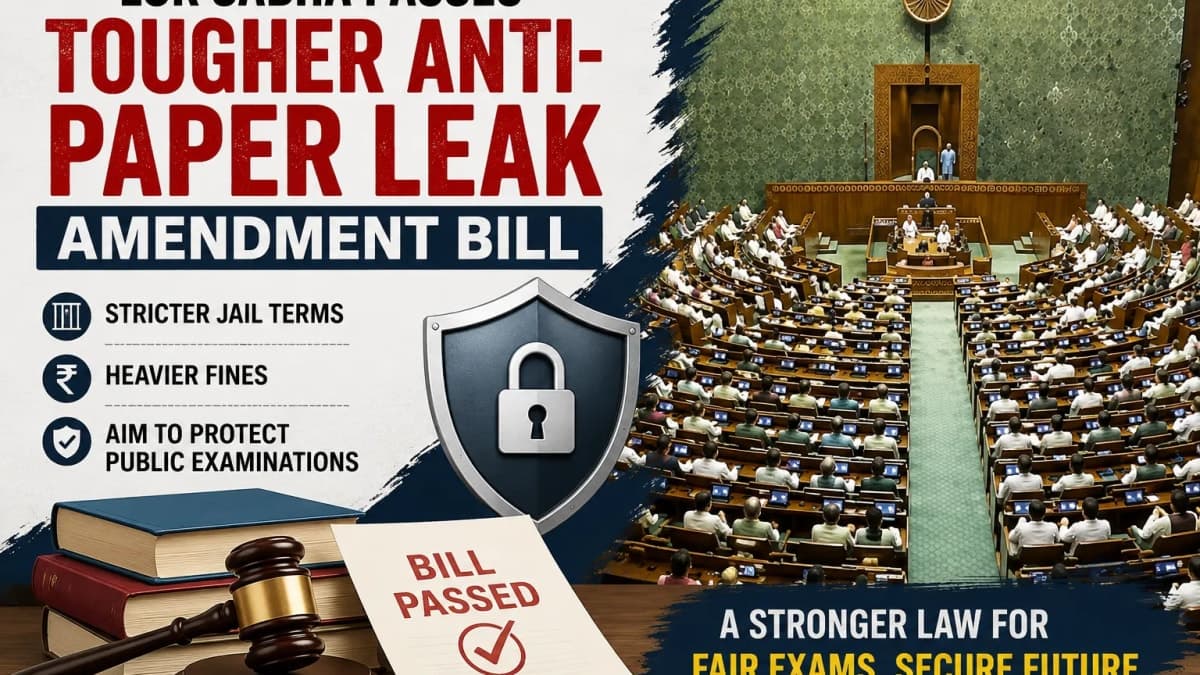
Lok Sabha Clears Tougher Anti-Paper Leak Amendment Bill to Strengthen Exam Integrity
The Lok Sabha on Wednesday approved the Public Examinations (Prevention of Unfair Means) Amendment Bill, 2026, marking a major legislative step to combat question paper leaks and organised examination fraud across India. Passed through a voice vote, the Bill significantly strengthens the existing 2024 law by introducing harsher punishments, quicker investigations, and faster judicial proceedings for offences linked to public examinations.
The move comes after growing public concern over repeated examination irregularities, particularly following major competitive exam controversies that affected millions of students and triggered demands for stronger legal safeguards. The government has argued that the revised law is intended to create a stronger deterrent against organised cheating networks while protecting deserving candidates.
Why the Amendment Was Introduced
The original Public Examinations (Prevention of Unfair Means) Act was enacted in 2024 to curb examination fraud. However, subsequent paper leak cases prompted the Centre to revisit the legislation and introduce stricter provisions aimed at improving enforcement and ensuring faster justice.
According to the government, stronger legal measures became necessary because organised criminal networks were increasingly exploiting weaknesses in the examination system through technology and coordinated fraud.
Eight Key Highlights of the New Law
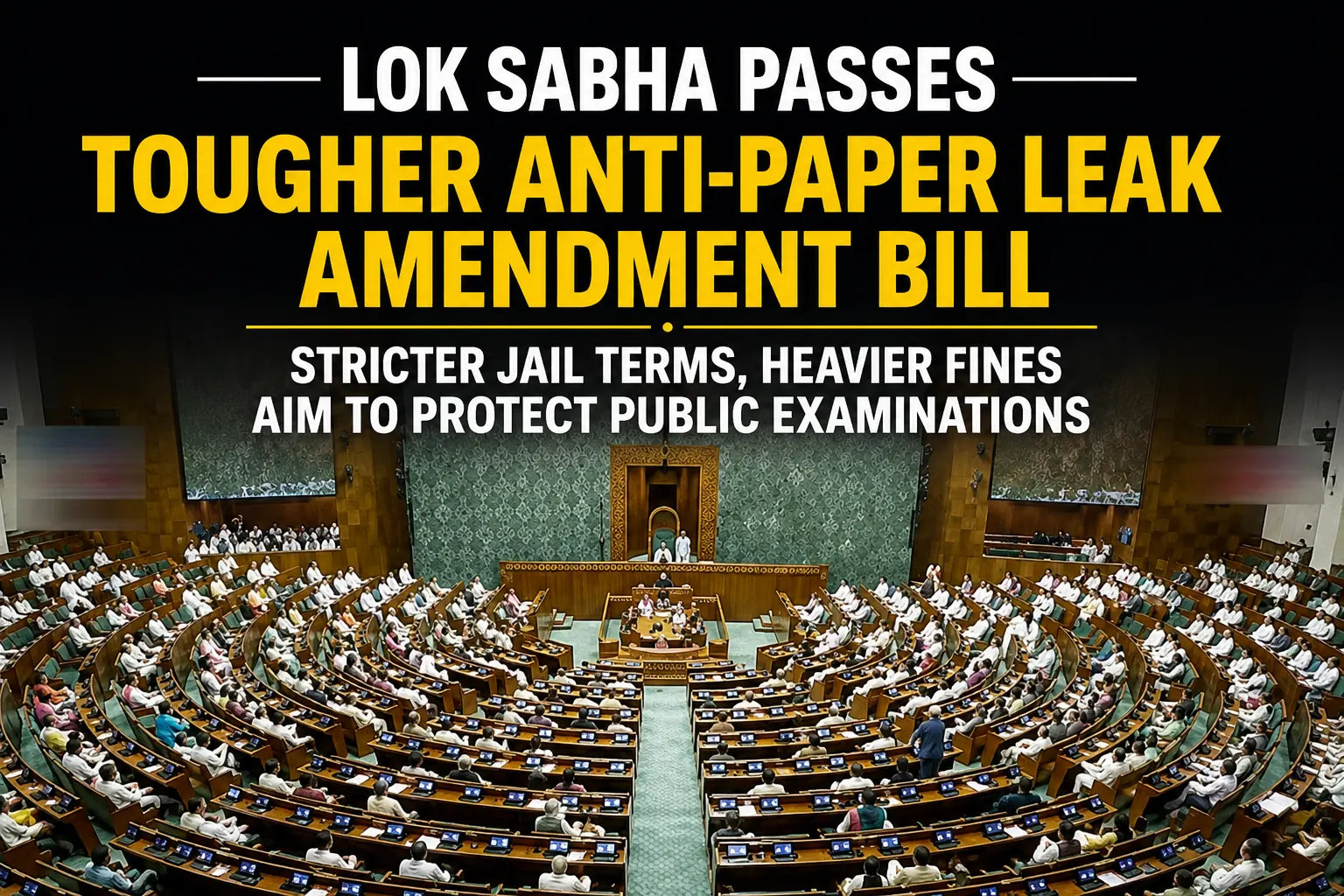
1. Tougher Jail Terms
The amendment substantially increases prison sentences for individuals convicted of paper leak offences, making punishment significantly stricter than under the previous law.
2. Higher Financial Penalties
The Bill sharply raises monetary fines. Individuals convicted of serious offences can face fines of up to ₹50 lakh, while organised criminal groups may be penalised up to ₹10 crore.
3. Stronger Action Against Organised Crime
The legislation specifically targets organised networks involved in examination fraud, introducing tougher minimum punishments for criminal conspiracies behind paper leaks.
4. Faster Investigations
Authorities will be required to complete investigations within a defined time frame, reducing delays in bringing offenders to trial.
5. Special Fast-Track Courts
The amendment enables the establishment of dedicated fast-track courts for paper leak cases, allowing trials to be completed more quickly than under ordinary judicial procedures.
6. Dedicated Prosecution Mechanism
The Bill provides for the appointment of Special Public Prosecutors and a streamlined legal process to improve conviction rates in examination fraud cases.
7. Wider Coverage of Public Examinations
The strengthened law applies to public examinations conducted by both central and state authorities, expanding its reach across major recruitment and entrance examinations.
8. Focus on Prevention and Accountability
Beyond punishment, the amendment seeks to improve coordination among agencies, strengthen oversight, and establish preventive safeguards throughout the examination process.
Government's Position
The Centre has described the amendment as an essential reform to safeguard the credibility of India's examination system. Ministers argued that stronger penalties, quicker investigations, and specialised courts will discourage organised malpractice while ensuring that deserving students compete fairly.
Opposition's Concerns
Although there has been broad agreement on the need to curb paper leaks, Opposition parties questioned whether stricter punishment alone would solve the problem. Several members argued that administrative reforms, improved examination management, and stronger institutional accountability are equally necessary to prevent future leaks. Parliamentary debate also reflected wider political disagreements over the government's handling of recent examination controversies.
Why This Matters
Public examinations determine admissions to universities and recruitment for government jobs, directly affecting millions of students every year. Repeated paper leak incidents have damaged confidence in competitive examinations, leading to protests and legal challenges.
The amended law is expected to strengthen deterrence through tougher penalties. However, experts note that its long-term success will depend not only on stricter punishments but also on effective investigations, timely prosecutions, technological safeguards, and improvements in examination administration.
Balanced Analysis
The passage of the amendment reflects Parliament's recognition that examination fraud has become a significant national concern. Tougher criminal penalties may discourage organised networks, while fast-track investigations and courts could improve enforcement.
At the same time, legal deterrence alone may not eliminate paper leaks. Sustainable reform will also require stronger digital security, transparent examination procedures, institutional accountability, and efficient implementation. The effectiveness of the new law will ultimately depend on how consistently it is enforced and whether preventive mechanisms evolve alongside stricter punishments.


