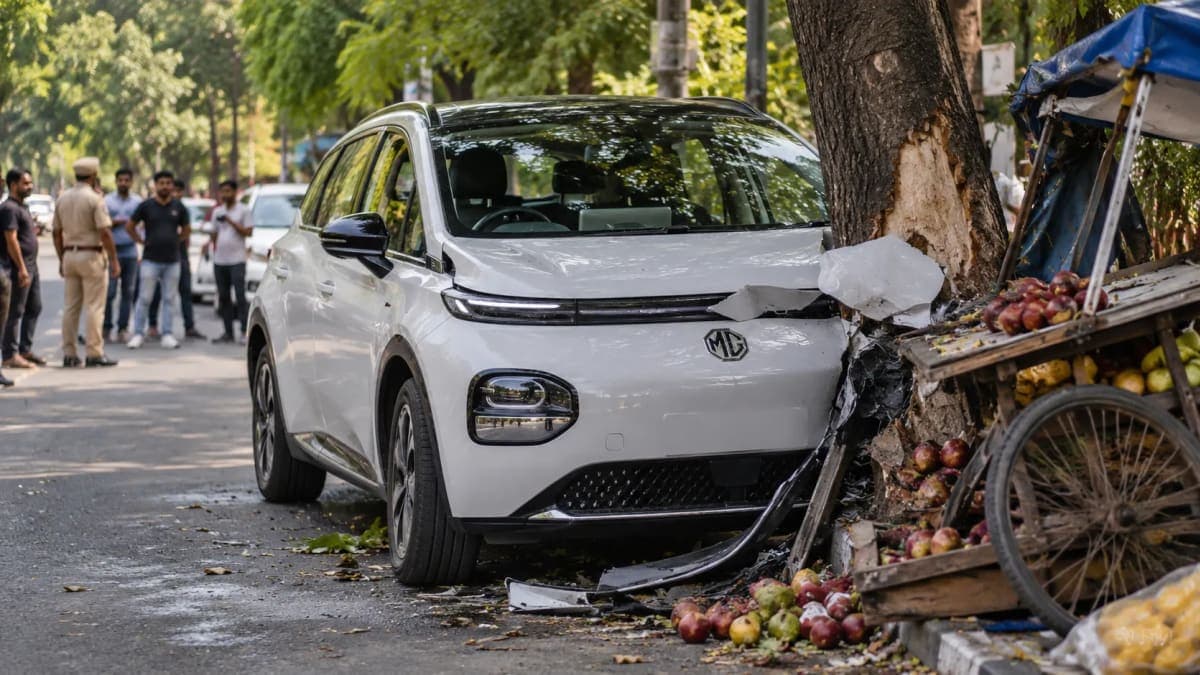
A viral video from Ludhiana, Punjab, showing a white MG Windsor EV moving along a road with no one visibly sitting in the driver’s seat has raised questions about vehicle safety and modern EV technology. The footage shows a man walking alongside the moving car and warning people to clear the way before the vehicle hits a roadside vendor cart and eventually collides with a tree.
However, the incident does not appear to be evidence that the Windsor suddenly became an autonomous or “self-driving” vehicle. JSW MG Motor India subsequently said its examination found that the vehicle had been left in Drive mode, with the driver’s seat belt engaged and the brake not applied. According to the company, these conditions allowed the vehicle’s designed low-speed Creep Mode to move it forward. The company said it found no product-related fault.
What the viral video shows
The incident was reported from Ludhiana’s Sarabha Nagar area. In the roughly 45-second clip circulating online, the Windsor is seen moving slowly while its owner walks beside it. The man can be heard saying that the vehicle is locked and is not under his control.
The car subsequently strikes a roadside fruit vendor’s cart before colliding with a tree. After the collision, footage appears to show a front wheel continuing to rotate and a smoke-like haze near the front of the vehicle. Bystanders are later seen breaking a side window while trying to intervene.
Those images understandably generated speculation online about an electronic malfunction, ADAS or some form of autonomous-driving behaviour. But the video itself does not establish any of those explanations.
What JSW MG says happened
The manufacturer's explanation provides important context missing from many of the initial viral posts.
According to JSW MG's statement reported by The Economic Times, the Windsor was left in Drive mode while the driver's seat belt remained engaged and the brake was not applied. This allowed its low-speed Creep Mode to operate. JSW MG said its assessment found no product-related fault.
The explanation is consistent with the operating principles described in Windsor documentation. The owner's manual says the creep function allows the vehicle to move slowly in Drive or Reverse without accelerator input under specified conditions. It also instructs drivers leaving the seat to engage the electronic parking brake or select P/N for vehicles equipped with the creep function.
This distinction matters. Calling the Windsor a “self-driving car” could give readers the impression that an autonomous-driving system independently decided to drive away. The evidence currently available does not establish that.
Instead, the manufacturer's position is that an ordinary low-speed driving function remained active because of the vehicle's operating state.
Why Creep Mode matters
Creep behaviour is not the same thing as autonomous driving.
In vehicles equipped with the function, releasing the brake while the vehicle is in a drive gear can allow the car to move slowly without the driver pressing the accelerator. The Windsor documentation describes its creep function as allowing slow movement in D or R with the electronic parking brake released.
The manual also describes conditions associated with activating the function, including the driver's door being closed or the seat belt being fastened, alongside other operating requirements.
That context helps explain why a car can appear to be “driving itself” in a short social-media clip even though no autonomous navigation system is actually controlling its journey.
What remains unverified
There is an important difference between a manufacturer's investigation and an independent technical finding.
JantaScope could verify that the viral footage was widely reported as showing the Windsor moving without a driver visibly inside, and multiple reports document the subsequent collision with the vendor cart and tree. JSW MG's explanation about Drive mode, the engaged seat belt and Creep Mode should, however, be presented specifically as the company's finding.
At the time of this review, I did not find a publicly available independent forensic examination or Ludhiana Police technical report confirming the vehicle's precise electronic and mechanical state at the moment it began moving.
Claims circulating on social media that the incident resulted from an ADAS failure, software malfunction or autonomous-driving failure therefore remain unverified.
The episode is ultimately a useful reminder of how quickly dramatic footage can acquire a technical explanation online before the underlying vehicle state is known. In this case, the most important development came after the video went viral: JSW MG says the Windsor's movement resulted from its operating conditions and Creep Mode rather than a product defect.


