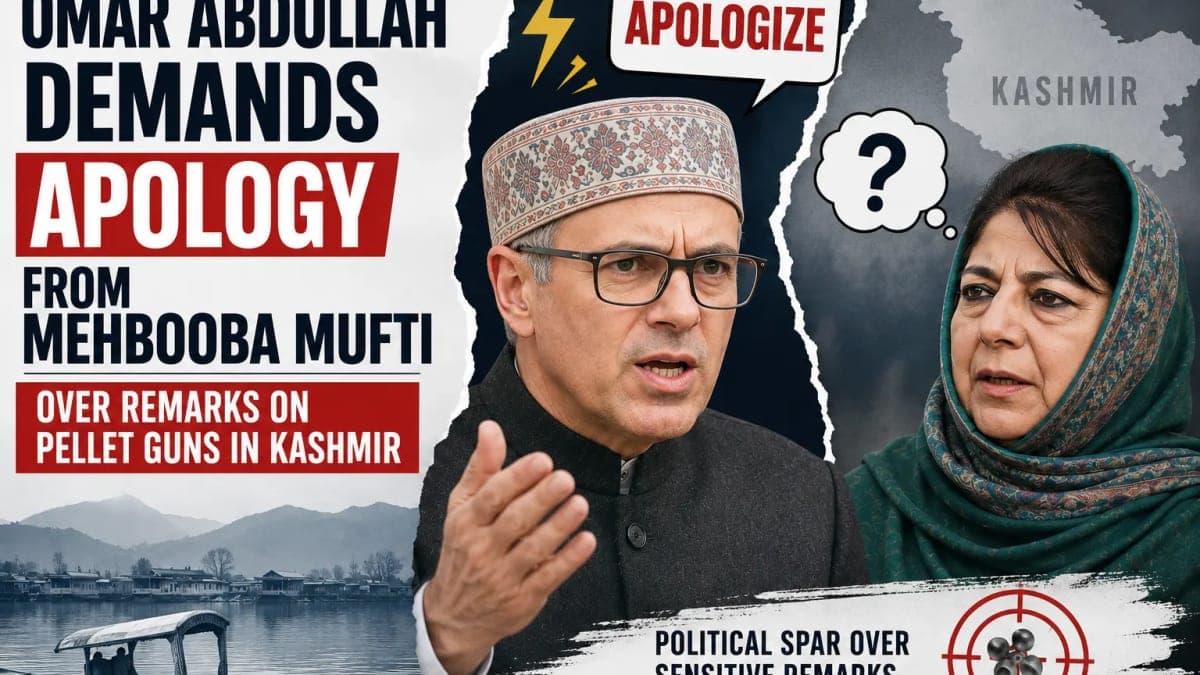
Omar Abdullah Seeks Public Apology From Mehbooba Mufti as Pellet Gun Remarks Trigger Political Row
Fresh Political Clash Over Kashmir Remarks
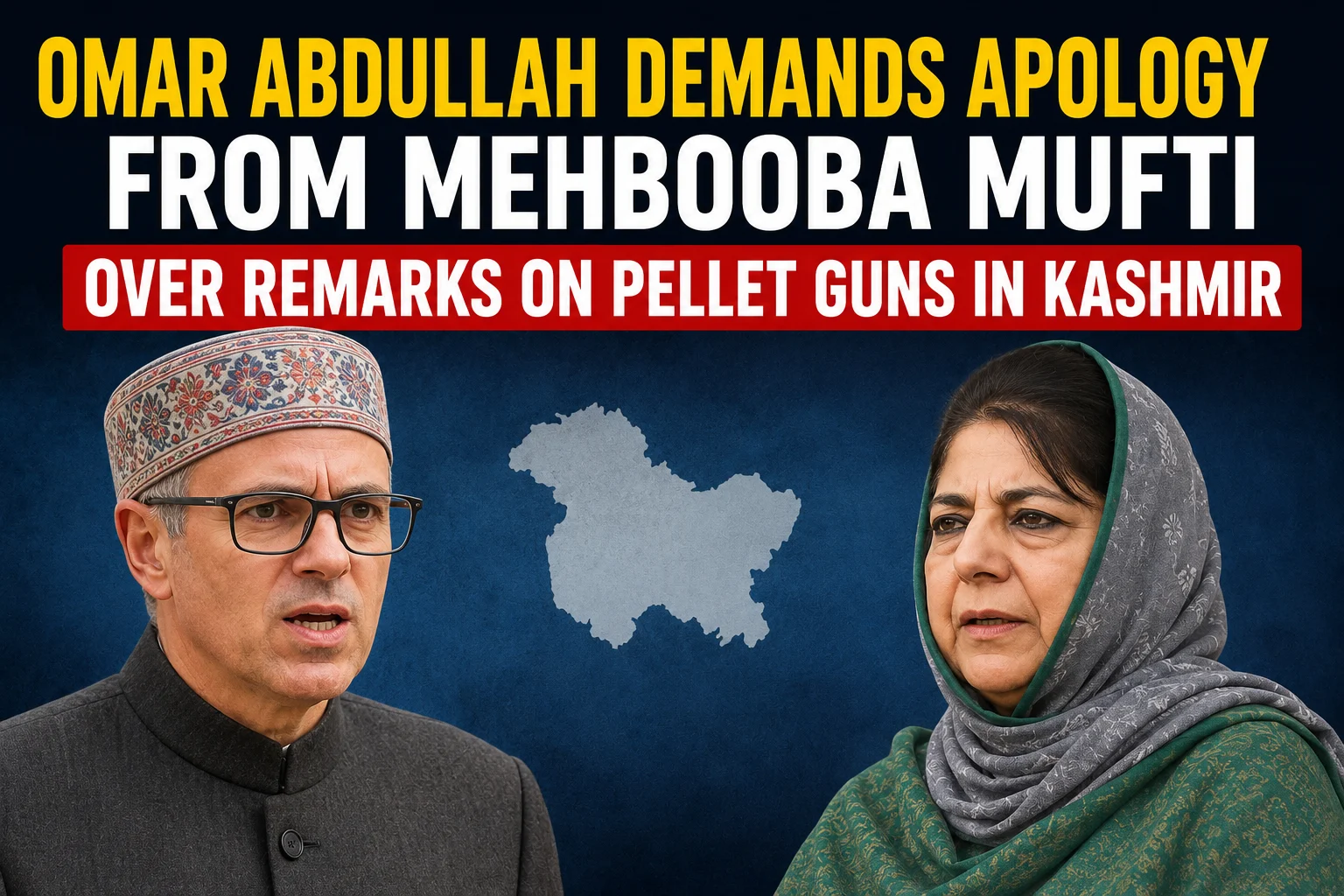
A new political controversy has emerged in Jammu and Kashmir after Chief Minister Omar Abdullah urged People's Democratic Party (PDP) president Mehbooba Mufti to publicly apologize for comments she made during a recent gathering in New Delhi.
The remarks, delivered while she was speaking at a protest in Jantar Mantar, have drawn criticism from several political leaders, with Omar Abdullah arguing that they appeared to justify the past use of force, including pellet guns, in Kashmir. According to him, such statements are insensitive to the experiences of many residents who were affected during years of unrest.
What Triggered the Controversy?
During her address, Mehbooba Mufti criticized police action against student protesters in Delhi. At the same time, she reportedly said that the earlier use of pellet guns in Kashmir had occurred in the context of security forces confronting militancy in the region.
Her remarks quickly attracted criticism from political opponents, who interpreted them as defending controversial security measures that have long remained a subject of debate in Jammu and Kashmir.
Omar Abdullah's Response
Reacting to the comments, Omar Abdullah said a leader who has previously served in high public office should not make statements that could be seen as legitimizing actions that caused suffering to civilians.
He maintained that militancy cannot be used to justify denying justice or constitutional protections to ordinary people. Abdullah said an apology would be a more appropriate response than attempting to defend the remarks.
Political Reactions Intensify
The controversy has widened the political divide between the National Conference (NC) and the People's Democratic Party (PDP), two parties that have frequently differed over governance, security policy, and the political future of Jammu and Kashmir.
Several opposition leaders also criticized the comments, arguing that public representatives should be careful when speaking about issues that remain emotionally and politically sensitive for thousands of families in the region.
Background: Why Pellet Guns Remain a Sensitive Issue
Pellet guns have been used by security forces in Kashmir for crowd-control operations during periods of unrest. Their deployment has remained controversial for years because of concerns raised over civilian injuries, particularly eye injuries and long-term disabilities.
Governments have maintained that such measures were introduced in difficult law-and-order situations involving militant violence, while human rights groups and many political leaders have repeatedly questioned their humanitarian impact.
Because of this history, any political comments concerning pellet guns often generate intense public debate.
Why the Issue Matters
The latest exchange illustrates how discussions surrounding security policies in Jammu and Kashmir continue to shape contemporary politics. Statements made by senior leaders on issues such as crowd-control measures, civil liberties, and militancy are closely scrutinized because they influence public trust and political discourse.
The controversy also reflects the continuing challenge for political parties to balance security concerns with demands for accountability, justice, and protection of civilian rights.
Balanced Analysis
The disagreement between Omar Abdullah and Mehbooba Mufti goes beyond a single political statement. It highlights the enduring sensitivity surrounding Kashmir's security history and the differing narratives advanced by regional parties.
Supporters of stronger security measures argue that governments had to respond to militant threats under difficult circumstances. Critics, however, contend that the impact on civilians should never be overlooked and that political leaders must acknowledge the human cost of such policies.
As political competition intensifies in Jammu and Kashmir, debates over past decisions are likely to remain central to public discourse, with parties seeking to define their positions on governance, accountability, and conflict management.


