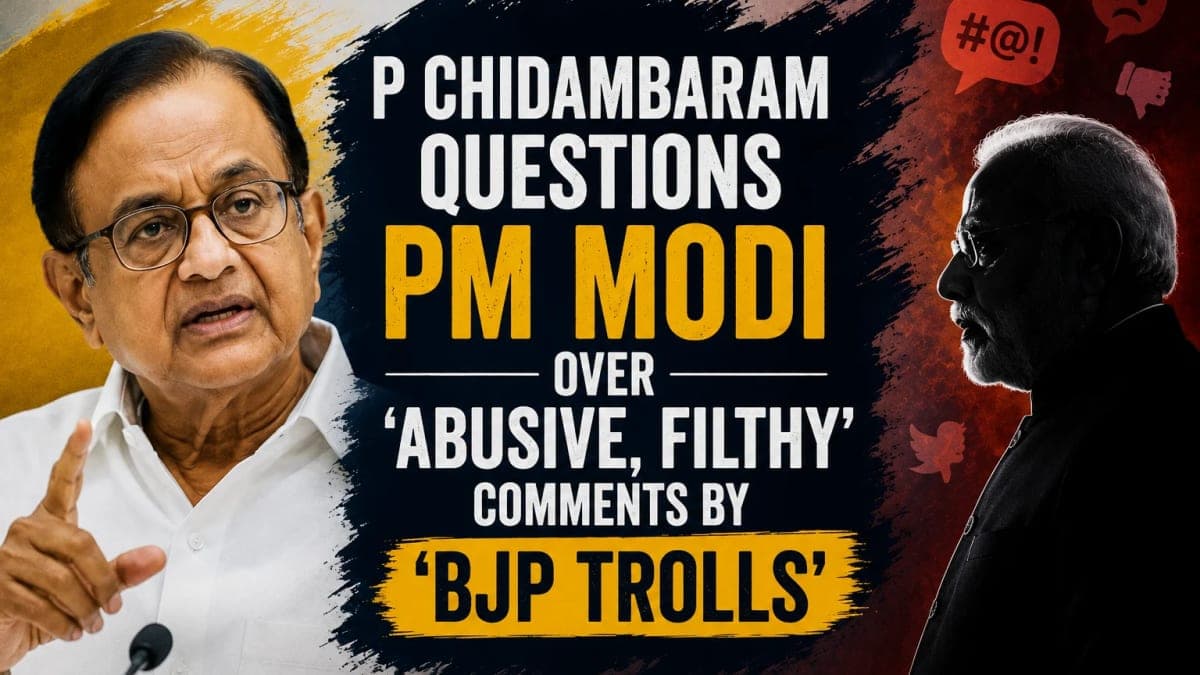
P Chidambaram Questions PM Modi Over Comments by ‘BJP Trolls’
Senior Congress leader P Chidambaram has questioned Prime Minister Narendra Modi over comments that the Congress politician characterised as “abusive” and “filthy” and attributed to people he described as “BJP trolls.”
The criticism has brought attention to the tone of political exchanges and the broader question of responsibility for rhetoric associated with political supporters in public and online discourse.
The available headline does not identify the specific comments Chidambaram was referring to or the individuals who allegedly made them. It also does not establish an official connection between the people described as “BJP trolls” and the Bharatiya Janata Party.
Chidambaram Directs Question at PM Modi
By directing his question toward Prime Minister Modi, Chidambaram has placed the issue within the larger political confrontation between the Congress and BJP.
His choice of the terms “abusive” and “filthy” signals strong criticism of the comments in question. At the same time, without the underlying posts or statements, their content and context cannot be independently assessed from the headline alone.
The episode nevertheless highlights a recurring challenge in modern politics: how leaders and political organisations respond when controversial rhetoric is attributed to people perceived to support them.
Political Background: BJP-Congress Rivalry
The controversy unfolds against the backdrop of the longstanding political rivalry between the BJP and Congress, two of the principal forces in national politics.
Prime Minister Narendra Modi is the BJP’s central national figure, while Chidambaram is a senior Congress politician who has held prominent positions in national public life.
Political disagreements between the two parties extend across governance, economic policy, institutional issues and public discourse. Increasingly, these disagreements also play out through digital platforms, where politicians, supporters and unaffiliated users participate in political debates.
This digital dimension can blur the distinction between official party communication and comments made independently by supporters.
Why the ‘BJP Trolls’ Description Matters
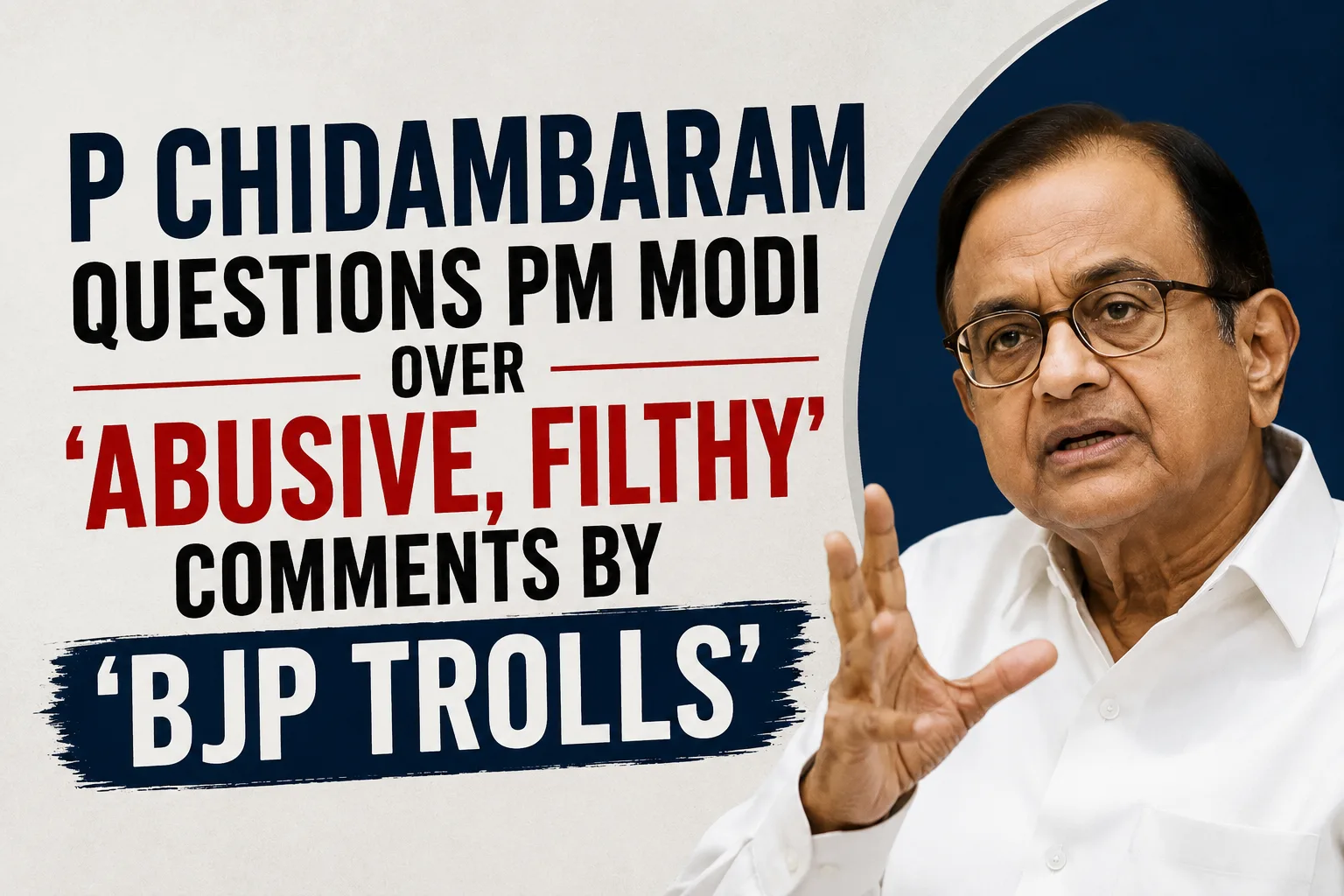
Chidambaram’s reported use of the phrase “BJP trolls” is politically significant because it attributes a political identity to the people behind the comments.
However, that description should be treated as Chidambaram’s characterisation, rather than as independently established evidence of their formal affiliation with the BJP.
Someone expressing support for a political party online is not necessarily an official representative, worker or authorised spokesperson for that organisation.
This distinction becomes particularly important when controversial statements are involved.
Online Political Discourse Under Spotlight
Social and digital platforms have transformed the speed and scale of political communication. Political reactions can circulate almost instantly, allowing individual remarks to become part of wider national debates.
The same environment can encourage highly confrontational exchanges.
When politicians highlight offensive or aggressive comments allegedly coming from supporters of their opponents, the debate often shifts from the original political issue toward questions about civility, accountability and the boundaries of acceptable political criticism.
Chidambaram’s questioning of Modi places those concerns at the centre of this latest exchange.
Does Leadership Carry Responsibility for Supporters?
The controversy raises a broader political question: to what extent should political leaders be expected to respond to statements made by people identified as their supporters?
One argument is that influential political figures can help establish standards for public debate by clearly rejecting abusive rhetoric.
The counterpoint is that political parties and their leaders cannot automatically be held responsible for everything posted by individuals who claim to support them, particularly when there is no demonstrated organisational relationship.
Determining responsibility therefore requires distinguishing official communication from independent online activity.
Balanced Analysis
Chidambaram’s criticism can be viewed as an attempt to demand higher standards in political discourse and to ask whether senior political leadership should speak against rhetoric he considers unacceptable.
At the same time, describing individuals as “BJP trolls” does not by itself prove that their comments were authorised, coordinated or endorsed by the BJP or Prime Minister Modi.
Those are separate factual questions requiring evidence.
Similarly, without the complete comments referenced by Chidambaram, it is not possible to independently determine from the headline alone why he characterised them as “abusive” and “filthy.”
The most accurate way to understand the controversy, therefore, is as a political challenge issued by Chidambaram to Modi rather than as proof that the Prime Minister or BJP was responsible for the disputed comments.
Why the Controversy Matters
Beyond the immediate BJP-Congress confrontation, the episode touches on the changing character of political debate in India.
Political communication no longer comes exclusively from rallies, press conferences or official party statements. Large networks of supporters and commentators now participate in shaping political narratives online.
That creates a complicated accountability question: parties benefit when supporters amplify their messages, but disputes emerge over how much responsibility political organisations should bear when those same voices cross accepted boundaries of public discourse.
Conclusion
P Chidambaram’s questioning of Prime Minister Narendra Modi over what he called “abusive, filthy” comments by “BJP trolls” has turned attention toward political rhetoric, digital discourse and leadership accountability.
However, based solely on the available headline, there is no basis to conclude that the disputed comments were officially connected to, authorised by or endorsed by the BJP or PM Modi.
The controversy therefore represents both another episode in the BJP-Congress political rivalry and a broader debate about where responsibility begins and ends in an increasingly decentralised digital political environment.


