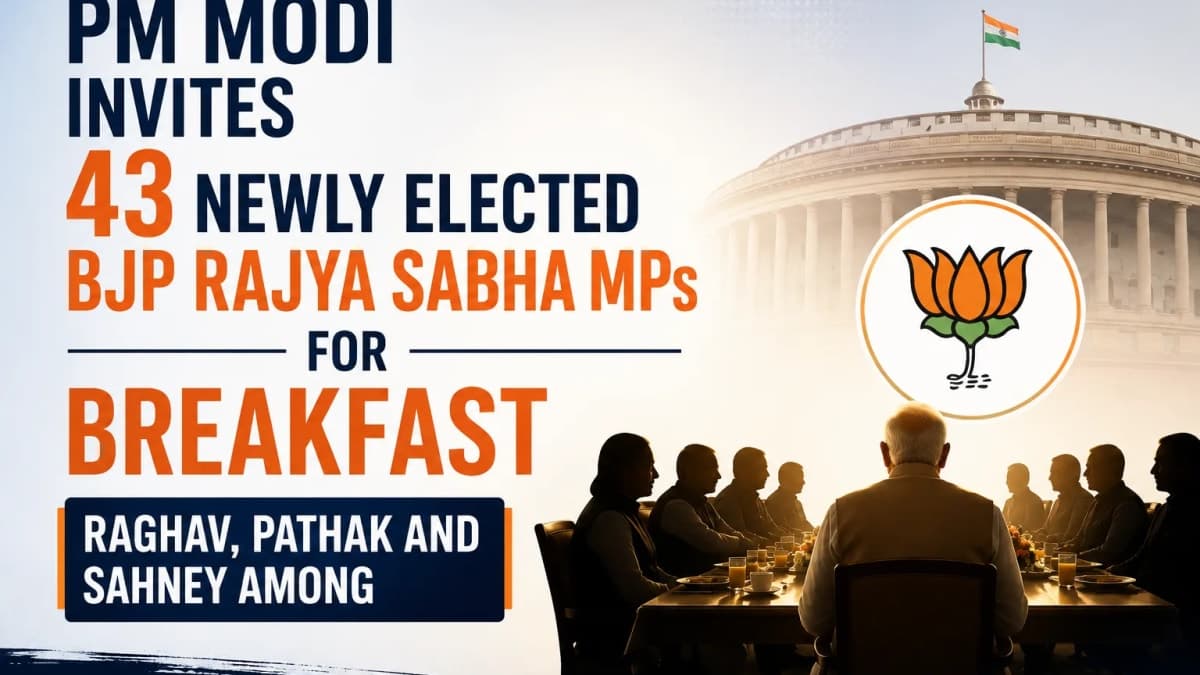
PM Modi to Meet BJP's New Rajya Sabha MPs Over Breakfast
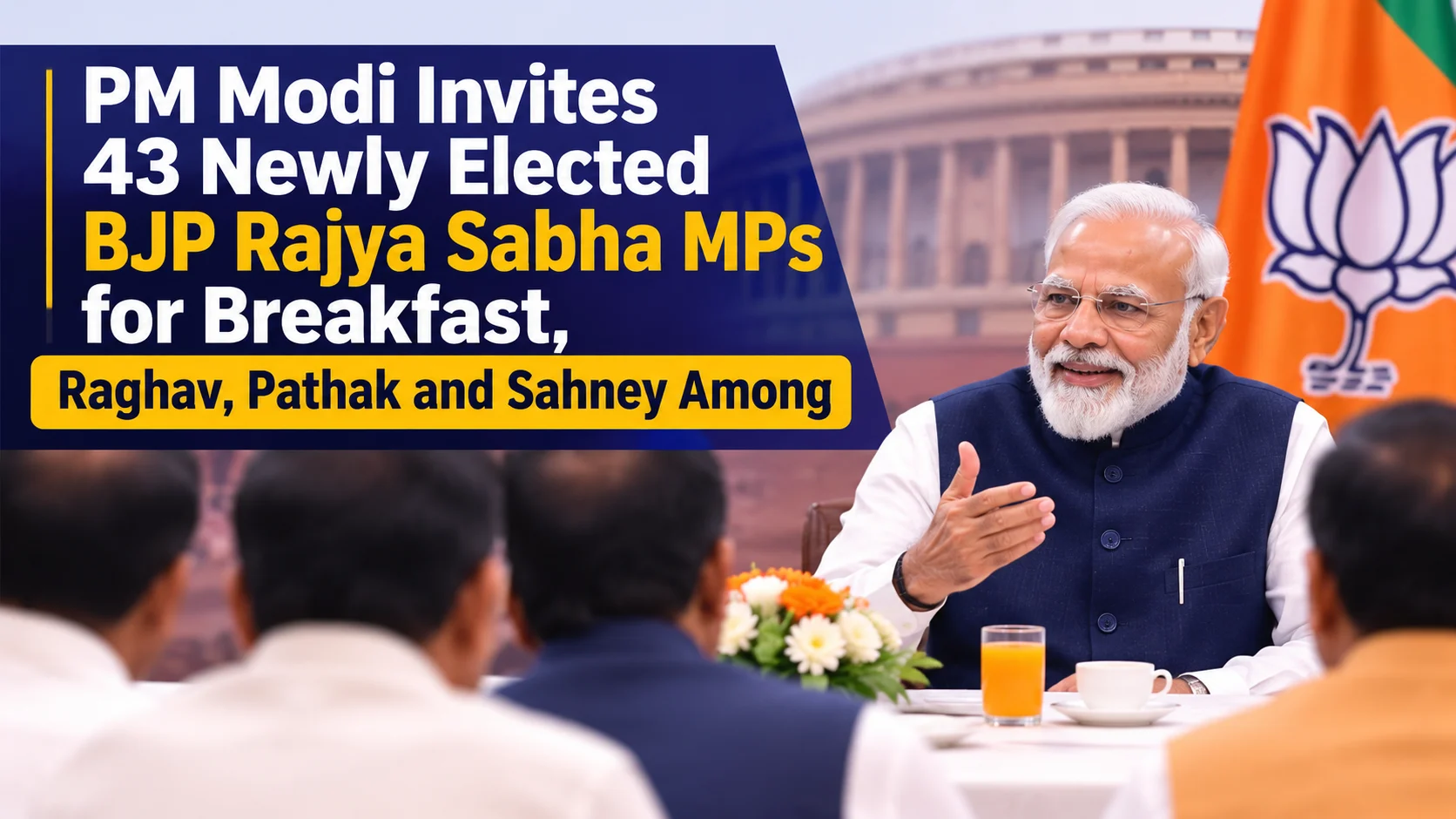
Prime Minister Narendra Modi is set to interact with 43 newly elected Rajya Sabha MPs from the Bharatiya Janata Party (BJP) at a breakfast meeting, offering the party's new members an opportunity for direct engagement with its top leadership.
Raghav, Pathak and Sahney are among the MPs invited to the gathering.
While a breakfast meeting is informal compared with a parliamentary or party strategy session, such interactions can carry political significance. They provide newly elected lawmakers with an opportunity to meet senior leadership and discuss their role as they begin or renew their terms in Parliament.
Focus on BJP's New Parliamentary Contingent
The inclusion of 43 MPs makes the gathering notable for its scale.
Rajya Sabha members play an important role in scrutinising legislation, participating in parliamentary committees, raising matters of public importance and representing the interests of their respective states and regions.
For the BJP, bringing its newly elected MPs together also provides an opportunity to strengthen coordination before they become deeply involved in the legislative calendar.
The interaction could help familiarize members with the party's broader parliamentary priorities, although the specific agenda of the breakfast should not be assumed unless officially disclosed.
Why the Rajya Sabha Matters
The Rajya Sabha, or Council of States, is the Upper House of India's Parliament and occupies an important position in the country's legislative system.
Unlike the Lok Sabha, which can be dissolved and whose members are directly elected, the Rajya Sabha is a continuing chamber. Its members generally serve six-year terms, with a portion of the House retiring periodically.
Most Rajya Sabha MPs are elected by elected members of state legislative assemblies through a system of proportional representation using the single transferable vote.
Because of this structure, changes in the political composition of state assemblies can eventually influence the balance of power in the Upper House.
Breakfast Meeting Carries Political Significance
Interactions between Prime Minister Modi and BJP parliamentarians have frequently served as opportunities for communication beyond formal parliamentary proceedings.
For newly elected MPs, a meeting with the prime minister can help establish expectations surrounding parliamentary participation, public outreach and coordination with the wider party organisation.
It can also give MPs representing different states an opportunity to interact with one another before parliamentary work intensifies.
However, the meeting should primarily be viewed as an internal engagement involving the BJP's newly elected lawmakers unless further details establish specific policy or legislative decisions arising from it.
Expectations From Newly Elected MPs
New Rajya Sabha members enter Parliament at a time when debates in the Upper House can significantly shape national political discussion.
Beyond voting on legislation, MPs participate in debates, ask questions of the government and work through parliamentary committees that examine policies and proposed laws in greater detail.
Experienced politicians joining the chamber may immediately take on prominent parliamentary responsibilities, while first-time members typically have to familiarize themselves with procedures and committee work.
The BJP's leadership will therefore have an interest in ensuring that its new contingent is prepared for both legislative responsibilities and political communication.
What the Meeting Means for BJP's Rajya Sabha Strategy
The gathering also highlights the importance political parties attach to maintaining coordination among their MPs.
The Rajya Sabha can become particularly significant when the government needs to build sufficient support for legislation. The numerical balance within the House determines whether a party can advance proposals independently or needs backing from allies and other parties.
As a result, attendance, coordination and floor management remain important components of parliamentary strategy.
The arrival of 43 newly elected BJP members therefore adds a fresh group of lawmakers to the party's parliamentary operation.
Balanced Analysis
The breakfast interaction can be interpreted as an effort by the BJP leadership to establish early communication with its newly elected Rajya Sabha MPs.
From the party's perspective, bringing members together can improve coordination and provide clarity about parliamentary responsibilities. Direct interaction with the prime minister may also help MPs understand the government's broader priorities.
At the same time, the effectiveness of the new members will ultimately be judged by their performance in Parliament rather than by internal political meetings. Their participation in debates, committees, legislative scrutiny and issues affecting their states will determine their contribution to the Upper House.
The meeting is therefore politically noteworthy, but its longer-term importance will depend on how the new MPs perform once regular parliamentary business gets underway.
What Happens Next?
Attention will now turn toward the new MPs' participation in the Rajya Sabha and the responsibilities assigned to them within the BJP's parliamentary structure.
Any substantive policy, legislative or organisational directions emerging from the breakfast meeting would provide a clearer indication of its significance.
For now, the gathering signals an early effort by the BJP's senior leadership to engage collectively with its new Rajya Sabha contingent.


