Original News Article
Priyanka Gandhi Targets Government During Parliamentary Debate
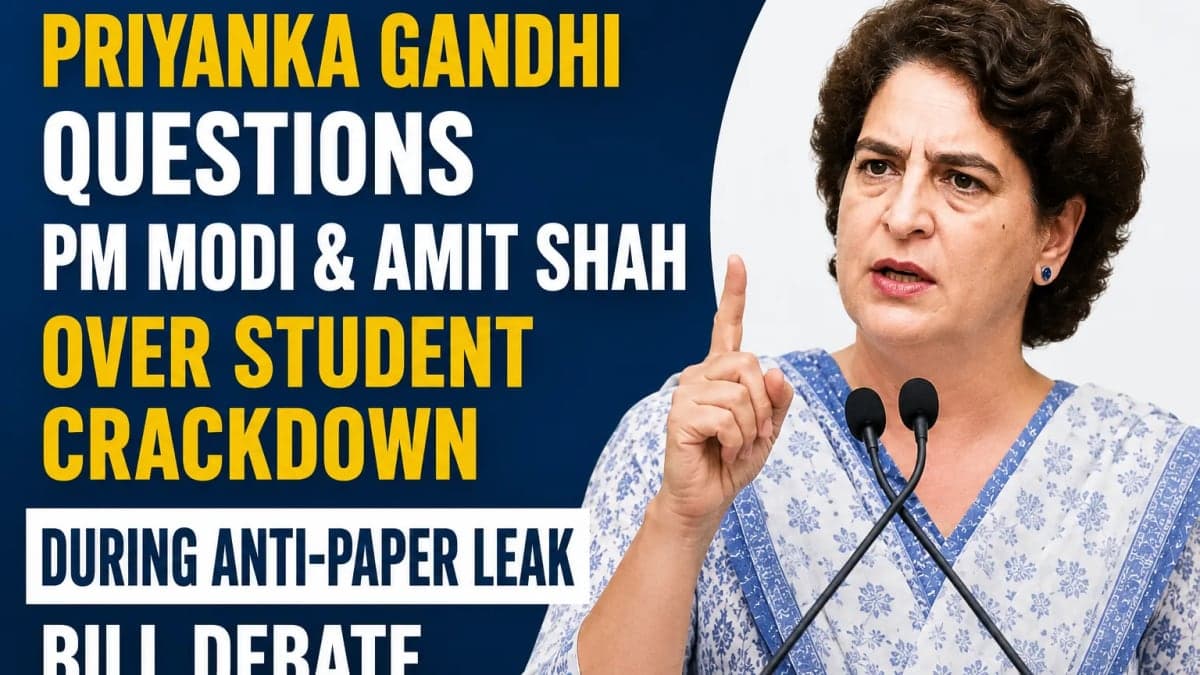
Congress MP Priyanka Gandhi sharply criticized the Union government while speaking during the debate on the Anti-Paper Leak Bill in Parliament. Raising concerns over the handling of student protests linked to examination controversies, she questioned Prime Minister Narendra Modi and Union Home Minister Amit Shah, asking whether students were being treated "like terrorists" for demanding accountability.
Her remarks came as Parliament discussed legislation aimed at preventing paper leaks and strengthening the integrity of competitive examinations. Instead of limiting her criticism to the proposed law, Gandhi focused on the government's response to widespread protests that followed major examination controversies in recent years.
Questions Over the Treatment of Students
During the debate, Priyanka Gandhi argued that many young people who took to the streets were seeking fairness and transparency in the examination process rather than creating unrest. She criticized what she described as a heavy-handed response to student demonstrations, suggesting that those demanding justice should not face harsh action.
According to her argument, the concerns raised by students reflected frustration over repeated examination irregularities and deserved a constructive response rather than strict enforcement measures.
Debate Extends Beyond the Bill
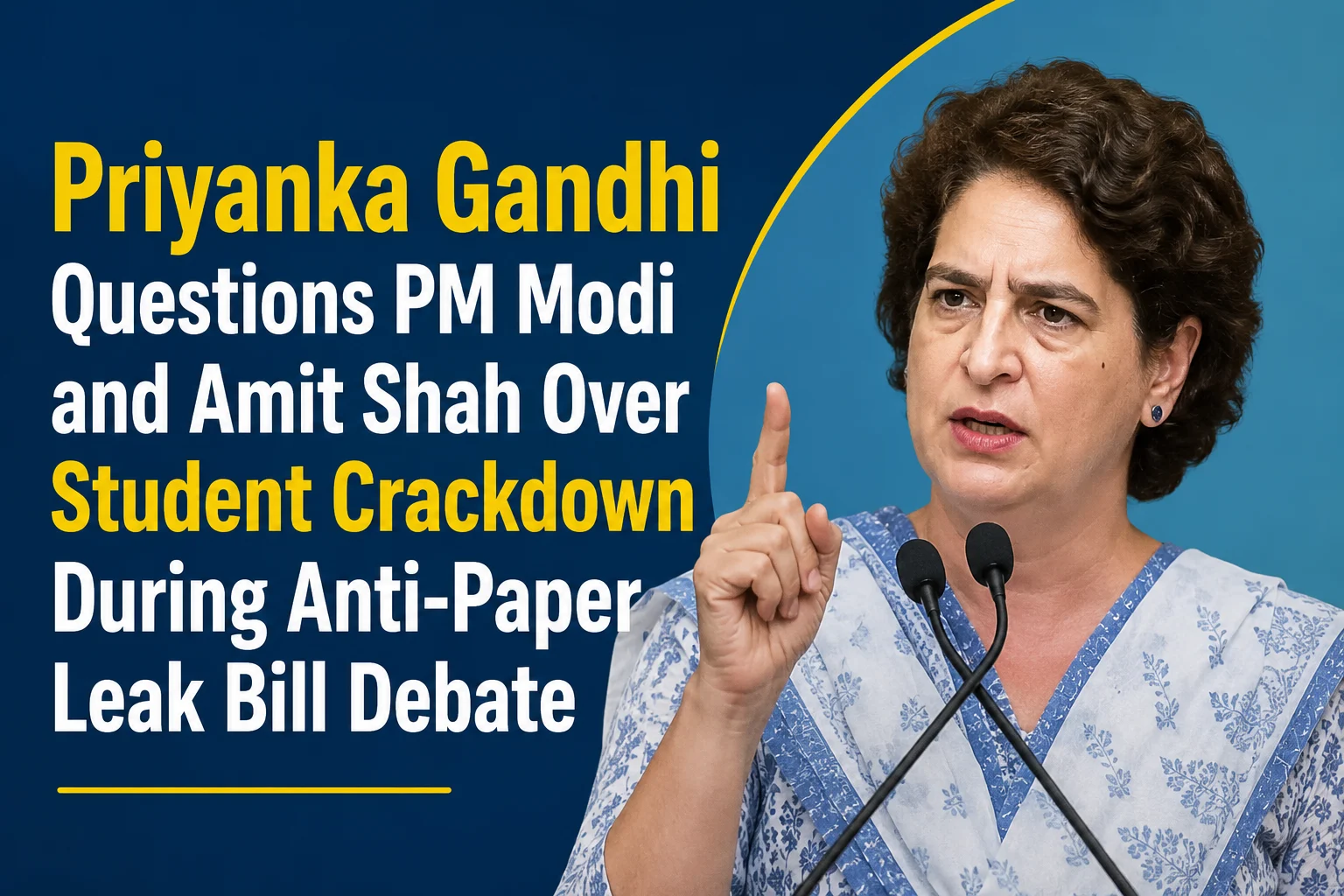
While the Anti-Paper Leak Bill is intended to introduce stronger legal safeguards against examination fraud, opposition members used the discussion to question the government's broader handling of the issue.
The debate highlighted two competing perspectives. Supporters of the legislation emphasized that stronger laws are necessary to deter organized paper leak networks and restore confidence in competitive examinations. Opposition leaders, meanwhile, argued that legal reforms should be accompanied by greater administrative accountability, transparency, and protection of students' rights during protests.
Background: Why Paper Leaks Became a National Concern
Examination paper leaks have emerged as a major public issue in India over the past several years, affecting recruitment exams and entrance tests that determine educational and career opportunities for millions of candidates.
Repeated allegations of irregularities have led to protests, demands for fresh examinations, and calls for tougher action against those involved in cheating networks. The issue has also fueled political debate over the effectiveness of examination authorities and the need for systemic reforms.
The Anti-Paper Leak Bill seeks to strengthen the legal framework for preventing such offences by introducing stricter penalties and improving enforcement mechanisms.
Why the Issue Matters
Competitive examinations are often viewed as one of the most important pathways for education and employment in India. Any compromise in their credibility directly affects public trust and the aspirations of millions of students.
The parliamentary debate reflects a broader national conversation—not only about preventing examination fraud but also about balancing law enforcement with democratic rights, ensuring accountability, and maintaining confidence in public institutions.
Balanced Analysis
Priyanka Gandhi's intervention shifted the focus from legislative provisions to the government's handling of student protests, highlighting concerns about civil liberties and administrative accountability.
On the other hand, the government has consistently maintained that strong legal measures are essential to dismantle organized paper leak networks and safeguard the integrity of examinations. The debate illustrates that addressing examination fraud requires both effective enforcement against offenders and sustained efforts to restore students' confidence in the examination system.


