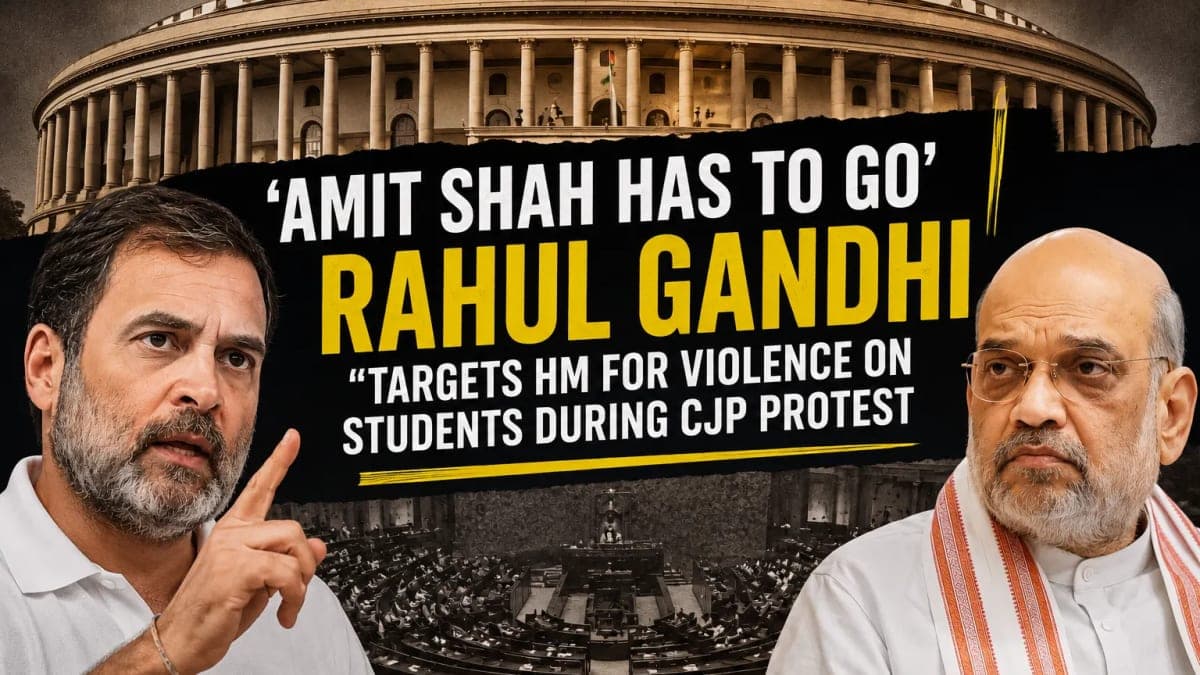
Rahul Gandhi Targets Amit Shah Over Student Protest Crackdown, Calls for Accountability
Leader of the Opposition Rahul Gandhi escalated the political confrontation over the police response to the recent CJP-led student protest by directly accusing Union Home Minister Amit Shah of responsibility for the alleged violence against demonstrators. Speaking during a heated discussion in Parliament, Gandhi asserted that the Home Minister should step down, arguing that accountability must extend to those overseeing law enforcement.
The controversy stems from the July 20 student demonstration in Delhi, where protesters gathered to demand action over alleged irregularities in the NEET examination process. The protest later became a major political flashpoint after allegations surfaced that security personnel used excessive force to disperse demonstrators. Opposition leaders have claimed that many students were injured during the operation and have sought an independent inquiry into the incident.
Rahul Gandhi Links Political Responsibility to Home Ministry
During his address, Gandhi argued that the Delhi Police and central security agencies ultimately function under the administrative control of the Union Home Ministry. Based on that chain of responsibility, he maintained that Amit Shah should answer questions regarding the decisions taken during the protest and accept political responsibility for the alleged actions of security personnel.
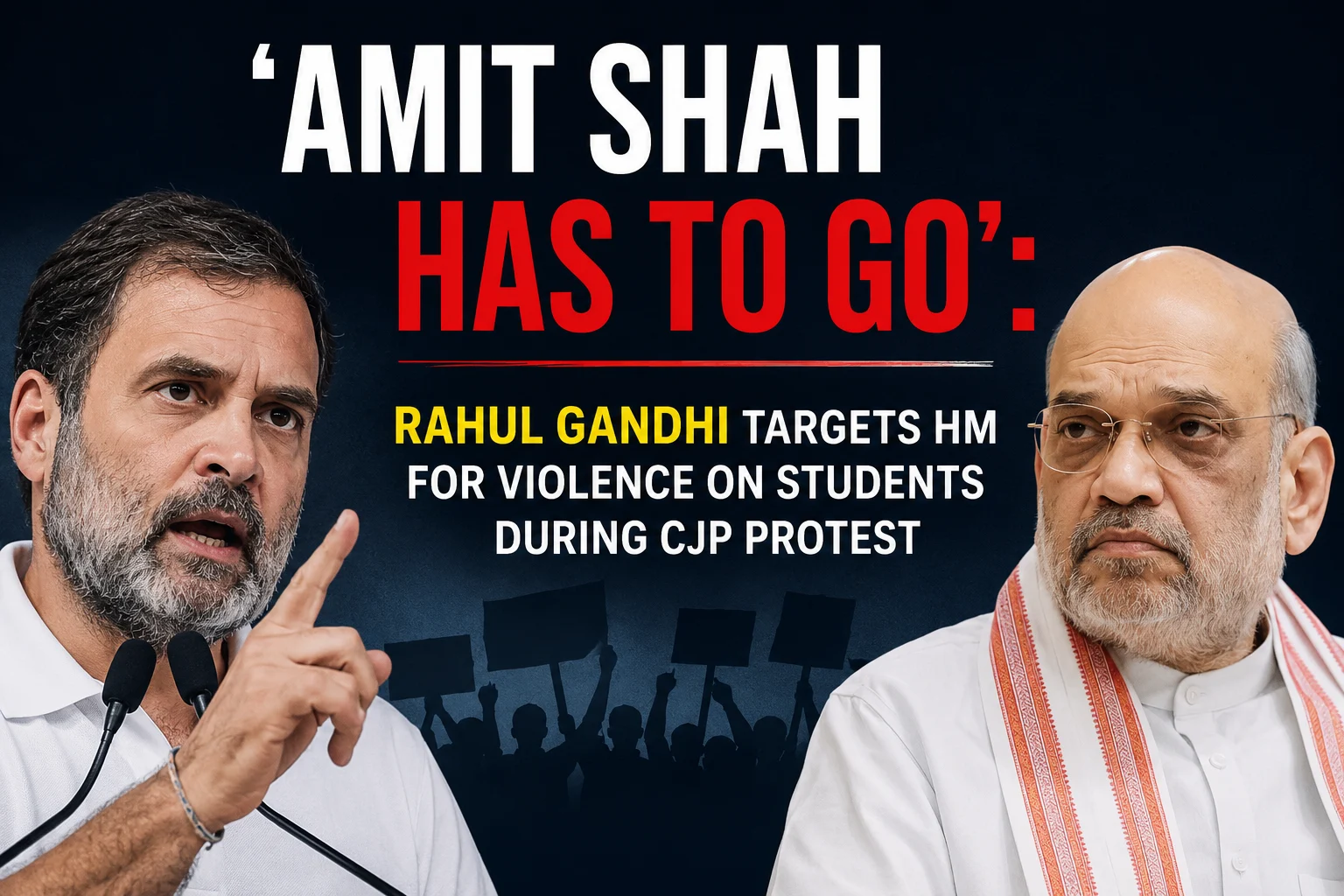
The Congress leader also reiterated his demand for justice for injured students and called for those responsible for any alleged excesses to be identified and held accountable.
Centre Rejects Allegations
The Union government strongly disputed Gandhi's accusations. Government representatives stated that law enforcement acted only to maintain public order and denied allegations that firearms were used during the operation. According to the Centre, police relied on permitted crowd-control measures, including tear gas, and rejected claims of unlawful or disproportionate force. Officials also demanded that Gandhi withdraw what they described as inaccurate allegations against the Home Minister and security agencies.
The exchange further intensified tensions between the government and the Opposition during the parliamentary session.
Political Context
The confrontation comes against the backdrop of widespread political debate surrounding the NEET examination controversy and student-led protests demanding greater transparency and accountability in public examinations. The issue has evolved beyond education policy, becoming a broader discussion about policing, democratic protest, and government accountability.
Opposition parties have repeatedly argued that peaceful demonstrations should be protected in a democracy, while the government has maintained that public order must be preserved whenever protests become disruptive.
Why This Matters
The dispute highlights two significant national debates. The first concerns public confidence in examination systems and demands for reform following allegations of irregularities. The second relates to the balance between maintaining law and order and safeguarding citizens' right to peaceful protest.
As Parliament continues to debate the matter, the issue is likely to remain politically significant, with both sides presenting sharply different interpretations of the events and the responsibilities of the authorities involved.
Balanced Analysis
Rahul Gandhi's remarks have intensified pressure on the government by framing the controversy as one of ministerial accountability rather than only operational policing. From the Opposition's perspective, the Home Minister bears responsibility for agencies under his ministry and must answer questions regarding the conduct of security personnel.
The government, however, rejects this interpretation, insisting that security forces acted within the law to manage the situation and denying allegations of excessive or unlawful force. It has argued that claims made by the Opposition are inaccurate and politically motivated.
With legal proceedings and political scrutiny continuing, the episode is expected to remain a central issue in discussions about public examinations, policing, and democratic rights.


