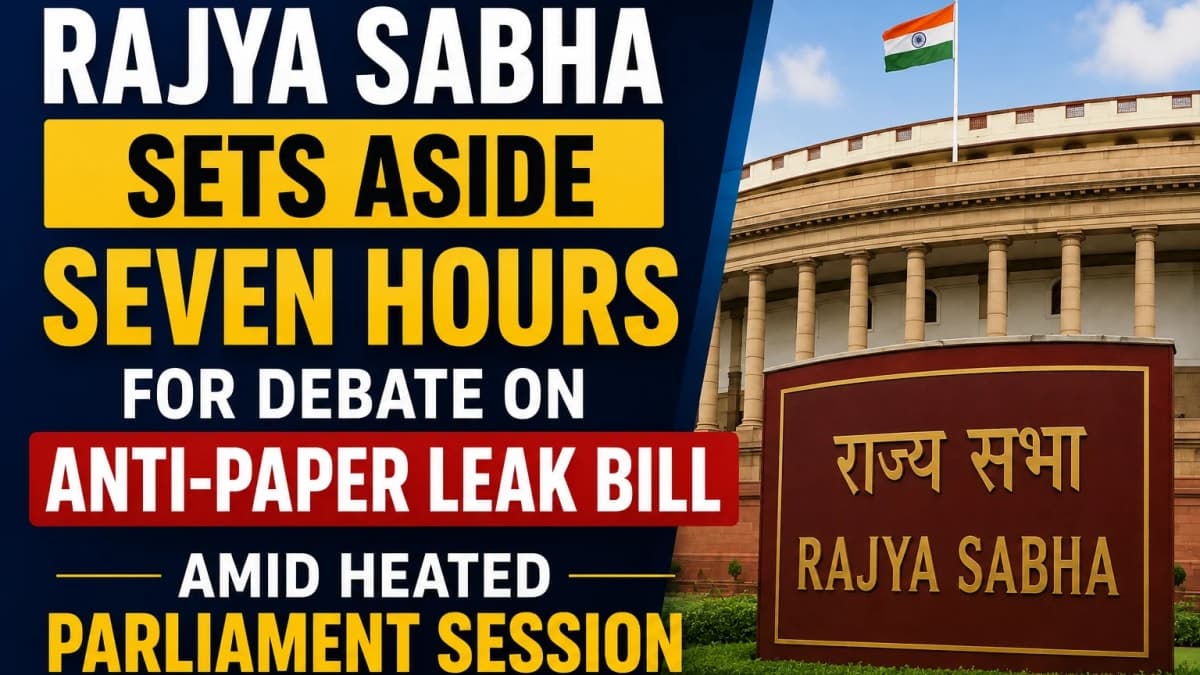
Rajya Sabha Allots Seven-Hour Debate for Anti-Paper Leak Bill as Parliament Balances Reform and Political Tensions
Upper House Prepares for Lengthy Discussion
The Rajya Sabha is set to devote seven hours to debating the Public Examinations (Prevention of Unfair Means) Amendment Bill, 2026, once the legislation clears the Lok Sabha. The extended discussion reflects the importance attached to strengthening India's legal framework against examination-related fraud and paper leaks.
The proposed debate comes at a time when Parliament has witnessed repeated disruptions over issues unrelated to the legislation, with Opposition parties seeking discussion on alleged police action against student protesters and demanding a response from the Union Home Minister.
Focus of the Amendment Bill
The amendment seeks to reinforce the existing anti-paper leak law by introducing stricter measures against individuals and networks involved in compromising public examinations.
Among the reported provisions are:
Tougher punishments for those involved in examination paper leaks.
Special Task Forces to investigate major cases.
Time-bound investigations.
Fast-track courts to ensure quicker trials and judgments.
The proposed changes are intended to strengthen confidence in recruitment and entrance examinations that affect millions of students and job aspirants across the country.
Parliamentary Proceedings Marked by Disruptions
Although legislative business is scheduled to continue, proceedings in both Houses have faced repeated interruptions. Opposition members have pressed for discussions on alleged force used against protesting students, while the Chair has maintained that certain procedural rules allowing immediate discussions apply only under exceptional circumstances.
The resulting disruptions led to multiple adjournments, delaying regular business before the House.
Why the Bill Matters
Paper leaks have repeatedly disrupted major competitive and recruitment examinations in recent years, leading to cancelled tests, delayed recruitment, legal disputes, and anxiety among millions of candidates.
The proposed amendments aim to:
Protect the credibility of public examinations.
Discourage organized cheating networks.
Ensure faster investigations and prosecutions.
Improve transparency and accountability in examination systems.
If implemented effectively, the legislation could reduce uncertainty for students while strengthening public confidence in competitive examinations.
Political Context
While there appears to be broad agreement that examination malpractice must be addressed, Parliament has also become the venue for wider political disagreements over issues linked to recent student protests.
The government's position has been to proceed with legislative business, whereas Opposition parties have argued that concerns relating to alleged police action deserve priority discussion before other proceedings continue.
Balanced Analysis
The allocation of seven hours indicates that lawmakers recognize the significance of reforming India's examination system. A detailed parliamentary debate provides an opportunity for members from different parties to examine the proposed amendments, suggest improvements, and ensure that the legislation addresses both prevention and enforcement.
At the same time, the ongoing political standoff highlights how important legislation can become intertwined with broader parliamentary disagreements. The effectiveness of the Bill will ultimately depend not only on stronger legal provisions but also on transparent implementation, efficient investigations, and sustained efforts to secure examination systems.


