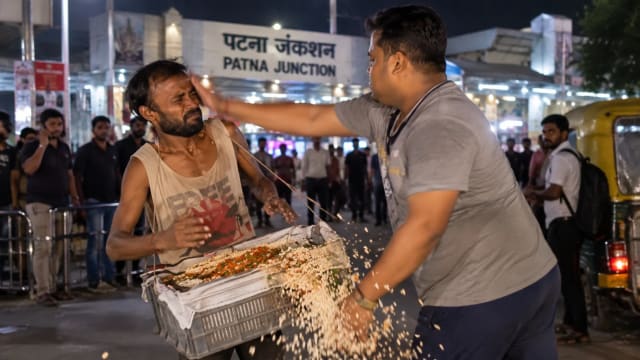
Five years after one of India's most memorable viral street-fight videos turned a local chaat seller into an unlikely internet celebrity, “Einstein Chacha” is back in the social-media spotlight.
Harendra Singh, the Baghpat man instantly recognisable from the chaotic 2021 clash popularly christened the “Battle of Baghpat” by the internet, has appeared in a new video circulating online. There is no dramatic confrontation this time. No sticks, no flying blows and no crowd of rival chaat sellers.
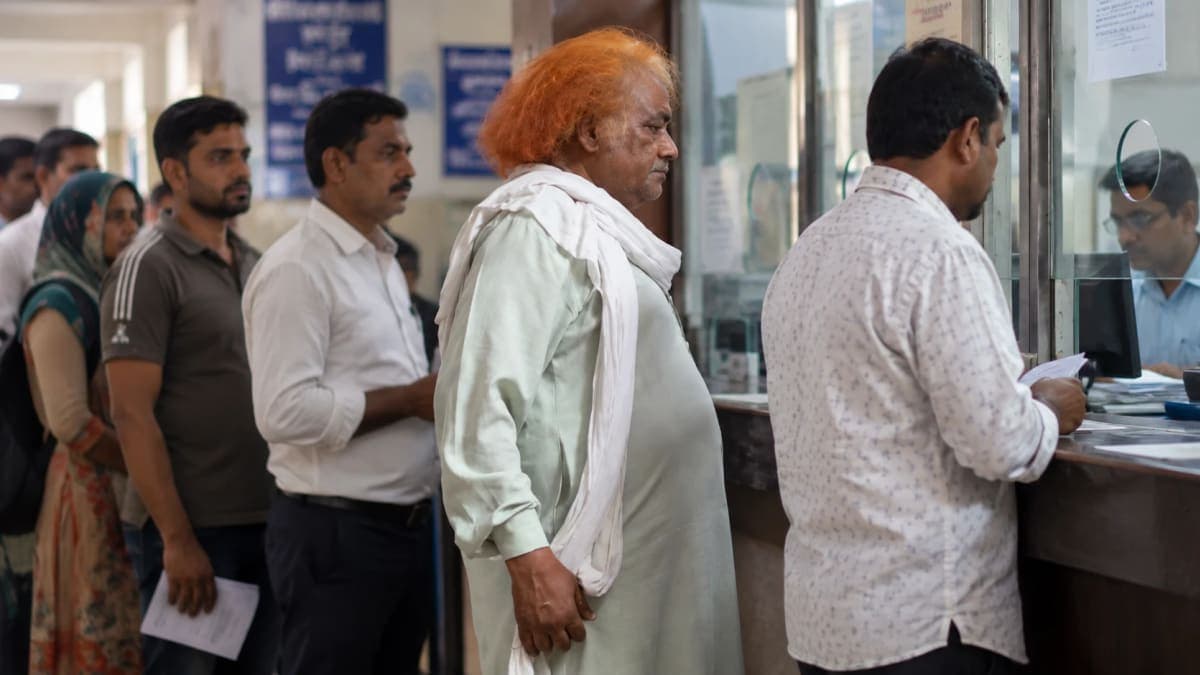
Instead, Singh appears to be doing something remarkably ordinary: waiting patiently in a queue.
The short clip, shared on X on September 15 with the caption “Albert Einstein is back on planet earth guys”, shows a man identified across multiple reports as Singh standing behind other people at what appears to be an office or public-service counter. He eventually reaches the counter and appears to make an enquiry. The precise location and purpose of his visit have not been independently established.
Yet the mundane scene was enough to send social media back to February 2021, when Singh's distinctive henna-coloured hair and his role in an extraordinary street brawl made him one of India's most recognisable meme characters.
The contrast is almost the entire joke: the man remembered for standing in the middle of an explosive street fight is now going viral for quietly standing in line.
Before the memes, there was a real fight
The “Battle of Baghpat” was never its official name. That label was created by social-media users after footage of the clash began spreading online.
The actual incident happened on February 22, 2021, in Baraut town in Uttar Pradesh's Baghpat district.
According to Baghpat Police at the time, two groups associated with rival chaat shops got into an argument over attracting customers. The dispute escalated into a street fight in which men could be seen attacking one another with sticks and rods. Police arrested eight people from the two sides.
Contemporary reporting by The Indian Express identified the businesses as Shiv Chaat Bhandar and Nav Durga Chaat Bhandar. Both operated in the same market, offered similar food at similar prices and competed for the same customers.
The fight was more serious than the memes that followed might suggest.
Baraut Kotwali's then in-charge Ajay Kumar Sharma told The Indian Express that five people, including a local journalist, suffered injuries. Ten people were booked on charges that included Section 307 of the Indian Penal Code, then dealing with attempt to murder, and eight had been arrested at that stage.
NDTV, citing police, reported a higher overall injury count of 12 while saying none of those injuries was serious. Because contemporary reports differ on the number injured, the safest conclusion is that multiple people were hurt and eight people were arrested; a precise injury total should not be stated without qualification.
How Harendra became ‘Einstein Chacha’
Among all the people visible in the melee, Singh stood out almost immediately.
He was dressed in a greenish kurta and had large, henna-coloured hair. Internet users thought the hairstyle resembled photographs of physicist Albert Einstein. Soon “Chacha” had become “Einstein Chacha”, and the nickname travelled much further than his real name.
The resemblance was only the beginning.
Screenshots of Singh were inserted into film scenes, wrestling jokes and fictional battles. The chaotic footage itself was edited with dramatic music and compared with everything from WWE matches to historical warfare.
That is how an argument between neighbouring food businesses acquired the grandiose internet title “Battle of Baghpat.”
But behind the meme was a dispute between real families.
At the time, Singh alleged that competitors had been telling customers his chaat was stale and diverting them away from his shop. Speaking before his arrest, he claimed this had happened repeatedly. That was Singh's account of the dispute, not an independently established finding about the rival business.
Police were more restrained: their stated explanation was that the two groups had clashed over attracting customers.
The economic story hidden behind the viral fight
Looking back five years later, one element of the original story is easy to miss.
The confrontation happened less than a year after India's first COVID-19 lockdown, when small food businesses had suffered enormous disruption.
The Indian Express reported at the time that people familiar with the families described severe financial pressure on local food sellers after months of lost business. A local resident said eateries had been among the businesses hit hardest because they depended heavily on daily sales.
That does not excuse violence, nor does it prove financial stress caused the clash.
It does, however, add context that disappeared as the event was converted into comedy. What millions of internet users experienced as a bizarre piece of entertainment was, for the families involved, a business dispute that led to injuries, arrests, criminal cases and temporary closure of their shops.
One member of Singh's family told The Indian Express the day after the fight that while the country was laughing, several male members of the family were in jail.
The internet remembered Einstein Chacha. The families had to deal with what happened after the cameras stopped.
Harendra never completely disappeared
Descriptions of Singh's latest appearance as his first return in five years are also misleading.
He had already spoken publicly about the incident after his initial viral fame faded.
On the third anniversary in February 2024, Singh spoke to India Today about life after the “chaat battle”. He said people still visited him and his shop because they remembered the viral video. He also discussed the criminal case, saying at the time that it was continuing.
That interview also cleared up one of the internet's longest-running curiosities: his hair.
Singh said he was a devotee of Sai Baba and tended to keep his hair long, cutting it only every couple of years. He said he had once shortened it after receiving so much attention, only for people to ask why he had changed the look.
So the 2026 clip is better described as a new viral sighting, rather than proof that Singh literally disappeared for five years.
Why is a man standing in a queue going viral?
That question says more about internet culture than it does about Harendra Singh.
The new clip contains little that would normally qualify as viral material. According to India Today and The Indian Express, Singh simply appears to wait in a queue before reaching a counter.
Its entertainment value depends almost entirely on viewers already knowing what happened in 2021.
The humour comes from contrast.
In the original footage, Singh is remembered as an energetic participant in a chaotic street fight. In 2026, viewers see someone who appears calm, patient and completely ordinary.
That gap between the internet character and the real person is what allows a few seconds of routine footage to become a meme again.
It also demonstrates something distinctive about online fame: viral characters can survive long after the event that created them has disappeared from the news cycle.
Singh did not need another fight to become relevant. People merely needed to recognise him.
The ‘Battle’ has become an annual internet ritual
The latest resurgence did not come completely out of nowhere.
On February 22, 2026, exactly five years after the original incident, social-media users again circulated the old video, memes and anniversary posts. Moneycontrol documented how users were treating the date almost like an unofficial anniversary of the “Battle of Baghpat”.
The original event has therefore evolved from a one-time viral clip into a recurring piece of Indian internet folklore.
That is unusual.
Most viral videos have extremely short lives. They dominate feeds for hours or days and then vanish when the next trend arrives. The Baghpat video survived partly because it contained several elements that meme culture could repeatedly reuse: an instantly recognisable character, visually chaotic action, a simple backstory and an absurdly dramatic nickname.
The internet effectively transformed a local market dispute into its own fictional mythology.