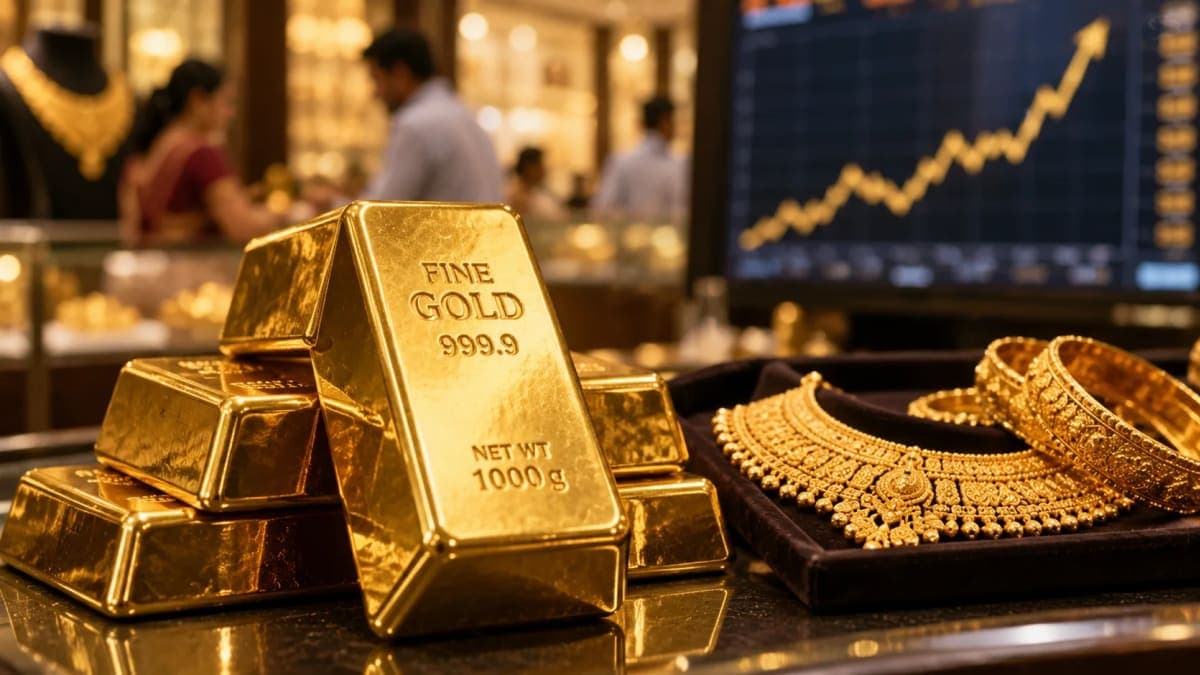
September 18, 2026, 9:12 AM IST: Gold prices in India remain near historically high levels on Friday morning, with indicative retail rates for 24-carat gold hovering around ₹1.53 lakh per 10 grams.
Early market data based on Bullion.in showed 24-carat gold at around ₹1,53,710 per 10 grams and 22-carat gold at approximately ₹1,40,901 per 10 grams at around 6:45 AM. Prices differed slightly across major cities.
But the headline price does not tell the whole story.
Gold has gone through a volatile 24 hours. The precious metal initially faced pressure following the US Federal Reserve's latest interest-rate increase, only to stage a sharp recovery in international trading as the dollar and US Treasury yields retreated.
For Indian consumers, another factor is adding to the equation: the rupee remains weak against the US dollar.
Gold Price Today: 24K and 22K Rates on September 18
Indicative early retail-market data showed 24-carat gold at ₹1,53,710 per 10 grams nationally, while 22-carat gold was quoted around ₹1,40,901.
City-level rates showed some variation.
In Mumbai, 24-carat gold was around ₹1,53,430 per 10 grams, while Delhi was at approximately ₹1,53,170.
Chennai was higher at around ₹1,53,880, followed by Hyderabad at ₹1,53,670, Bengaluru at ₹1,53,550 and Kolkata at ₹1,53,230 per 10 grams.
For 22-carat gold, Mumbai was around ₹1,40,644 per 10 grams and Delhi around ₹1,40,406. Chennai was at approximately ₹1,41,057, Kolkata ₹1,40,461, Bengaluru ₹1,40,754 and Hyderabad ₹1,40,864.
These are indicative market rates rather than guaranteed jewellery-store prices.
That distinction becomes particularly important when gold is trading above ₹1.5 lakh per 10 grams.
What Does the Latest IBJA Benchmark Show?
The India Bullion and Jewellers Association, or IBJA, publishes widely followed benchmark gold prices in India.
As of 9:12 AM on September 18, the latest complete daily benchmark available on its website was for September 17.
IBJA data showed 999-purity gold at ₹1,51,233 per 10 grams in the morning of September 17, before rising to ₹1,51,849 in the evening.
For 916-purity gold, which broadly corresponds to 22-carat purity, the evening benchmark stood at ₹1,39,094 per 10 grams.
There is an important reason why these figures differ from retail prices.
IBJA states that its benchmark rates are quoted before 3% GST and making charges. A consumer buying jewellery therefore should not expect the IBJA benchmark to equal the final amount appearing on a jewellery bill.
Gold Fell First — Then Came a Sharp Rebound
The last 24 hours provide a useful example of how quickly the bullion market can change.
On September 17, the IBJA morning rate for 999-purity gold was ₹1,51,233 per 10 grams, down ₹661 from the September 16 morning level of ₹1,51,894.
By the evening, however, the benchmark had recovered to ₹1,51,849.
The international move was even more dramatic.
Reuters reported that spot gold climbed more than 2% on Thursday to around $4,360.36 an ounce. US December gold futures settled at $4,399.70 an ounce.
In Asian trading on Friday, spot gold was around $4,361 an ounce, up roughly 0.5%.
The recovery is notable because it followed a Federal Reserve decision that would normally be considered challenging for gold.
Fed Raised Rates. Why Did Gold Rise Anyway?
The US Federal Reserve raised its benchmark interest-rate target by 25 basis points to 3.75%-4.00% this week, its first rate increase since 2023.
Higher interest rates can work against gold.
Gold does not generate regular interest income, so when yields available on government bonds increase, holding the precious metal can become relatively less attractive.
The initial market reaction reflected that logic.
But several conditions subsequently moved in gold's favour.
The US dollar weakened and the 10-year Treasury yield retreated. A softer dollar makes dollar-denominated gold less expensive for buyers using other currencies, while falling bond yields reduce the opportunity cost associated with owning a non-yielding asset.
Oil prices also eased, reducing some immediate inflation concerns.
The result was a strong rebound in bullion despite the Fed's rate increase.
It is a useful reminder that gold does not respond to interest rates in isolation. Investors simultaneously evaluate inflation, real yields, currency movements, economic risks and expectations about what central banks may do next.
Why the Rupee Matters for Indian Gold Buyers
For Indian consumers, the international gold price is only part of the calculation.
Gold is primarily traded internationally in US dollars. Indian importers ultimately have to convert those dollar-denominated prices into rupees.
That means a weaker rupee can make gold more expensive in India even if the international bullion price does not rise.
The rupee weakened to around ₹96.08 per US dollar at one stage on September 17, its lowest level in more than a month, before closing around ₹95.93.
It was expected to open around ₹95.75-₹95.80 on Friday.
This currency effect helps explain why domestic gold prices do not always move in exactly the same percentage terms as international spot gold.
For anyone following gold prices in India, watching the USD/INR exchange rate alongside international bullion prices can therefore provide a clearer picture.
₹1.53 Lakh Is Not Necessarily What You Pay at the Jewellery Store
This is perhaps the most important practical distinction for consumers.
A headline saying 24-carat gold costs approximately ₹1.53 lakh per 10 grams does not mean a finished piece of jewellery containing 10 grams of gold will cost exactly ₹1.53 lakh.
First, most jewellery is made from 22-carat or lower-purity gold rather than 24-carat gold.
Second, benchmark bullion rates generally exclude the full cost of turning raw gold into jewellery.
IBJA specifically states that its published rates exclude 3% GST and making charges.
The final bill can therefore depend on gold purity, weight, making charges, design, applicable taxes and the jeweller's pricing policy.
Consumers comparing rates online should ask for the total payable price before making a purchase rather than comparing only the headline gold rate.
Gold Is Down Over One Month, But the One-Year Picture Is Very Different
The ₹1.53 lakh headline also needs longer-term context.
Early September 18 market data showed gold down roughly 3% over the previous month, even as it remained more than 40% higher over one year.
That distinction matters.
A short-term correction does not necessarily mean gold has become inexpensive when compared with historical levels. The metal remains near exceptionally high nominal prices despite its recent pullback.
For buyers, especially those purchasing jewellery rather than trading bullion, separating daily price movements from the longer-term trend can prevent a relatively small decline from looking larger than it really is.
What Could Move Gold Prices Next?
Several indicators now deserve attention.
The first is the Federal Reserve.
The latest increase shows that US policymakers remain concerned about inflation. Reuters reported that 16 of 18 Fed policymakers projected at least one more rate increase before the end of 2026.
The second factor is the dollar and US Treasury yields. A renewed rise in either could create fresh pressure on bullion, while further weakness could provide support.
Oil is another variable. Brent crude was around $104 per barrel on Friday after easing from higher levels.
For Indian buyers, the rupee adds another layer. Further depreciation against the dollar could keep domestic gold expensive even if international bullion pauses.
That makes today's ₹1.53 lakh level important, but not sufficient on its own to determine where Indian gold prices go next.
For the next few trading sessions, international bullion prices, the US dollar, Treasury yields, crude oil and the rupee will collectively matter more than any single headline number.


