India Beat Afghanistan Again to Seal T20I Series as Sanju Samson Powers Rapid Chase
India have wrapped up the T20I series against Afghanistan with a match to spare, completing a seven-wicket victory in the second game at Delhi's Arun Jaitley Stadium.
Afghanistan made 159 for eight after batting first, but the target never looked imposing once India's top order accelerated.
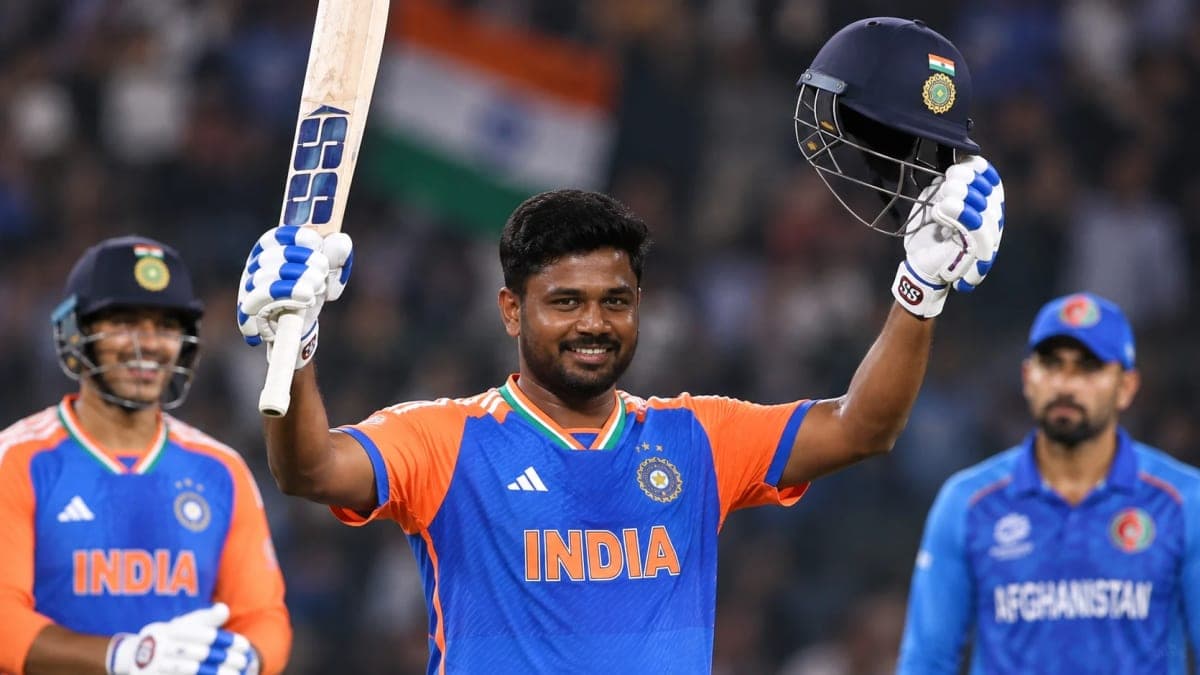
Sanju Samson struck a rapid 57 from 22 balls, while Abhishek Sharma added 39 from 19 deliveries. India raced to 163 for three in only 14.5 overs, completing the chase with 31 balls remaining.
The result gives India an unassailable 2-0 lead in the three-match series, with the final T20I scheduled for September 17 at the same venue.
More importantly for India, the performance offered answers to questions extending beyond this bilateral series — particularly Sanju Samson's position at the top of the order and Nitish Kumar Reddy's potential value as a genuine bowling option.
Afghanistan reach 159, but India keep taking wickets
Afghanistan's innings never fully escaped India's control.
Rahmanullah Gurbaz fell early to Arshdeep Singh, while captain Ibrahim Zadran attempted to stabilise the innings with 37 from 33 balls.
India continued to break partnerships through the middle overs, preventing Afghanistan from building the sort of platform required for a substantially bigger total.
Nitish Kumar Reddy emerged as India's most successful bowler with three wickets.
Afghanistan eventually reached 159/8 from their 20 overs — competitive enough to require a proper chase, but on a Delhi surface offering scoring opportunities, India had considerable batting depth available.
Samson and Abhishek turn the chase into a sprint
India's response quickly changed the complexion of the match.
Sanju Samson and Abhishek Sharma attacked Afghanistan's bowlers from the opening phase, ensuring the required run rate never became a factor.
Samson was particularly destructive.
He made 57 from just 22 deliveries, an innings that combined boundary hitting with aggressive intent against both pace and spin.
Abhishek contributed 39 from 19 balls, giving India another high-tempo innings at the top of the order.
By the time Afghanistan separated the openers, much of the required work had already been done.
India eventually finished on 163/3 in 14.5 overs, winning by seven wickets with more than five overs unused.
Why Samson's innings matters beyond 57 runs
The score itself was impressive, but the context makes Samson's performance more significant.
India have spent considerable time experimenting with combinations at the top of their T20I batting order.
Samson has also spent much of his international career moving between roles rather than owning a permanent position.
Against Afghanistan, he was given the opportunity to open — and responded by attacking from the beginning.
The innings therefore strengthens his case as an aggressive opening option rather than simply adding another half-century to his international record.
It would still be premature to declare India's long-term opening combination settled on the basis of one innings.
But Samson's performance gives the selectors another credible option in a batting group already containing several players capable of operating at very high strike rates.
Abhishek Sharma's series is becoming equally important
Samson produced the headline innings in the second match, but Abhishek Sharma's contribution should not be overlooked.
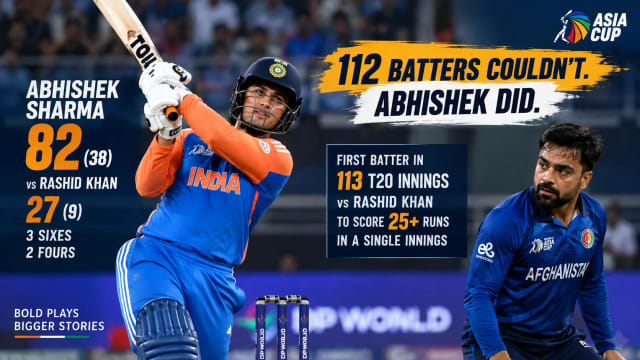
Abhishek followed his explosive performance in the opening T20I with another aggressive 39.
He had scored 82 from 32 balls in the first match, helping India chase 157 with 38 deliveries remaining.
Across the opening two matches, Abhishek has therefore been one of the central reasons Afghanistan have struggled to create meaningful scoreboard pressure.
The pattern is important.
India are not merely chasing successfully — their opening batters are attempting to reduce the game rapidly during the powerplay and early middle overs.
That aggressive philosophy makes even totals around 160 difficult to defend unless the opposition can take early wickets.
Nitish Kumar Reddy gives India another encouraging sign
If Samson provided the decisive batting contribution, Nitish Kumar Reddy supplied one of the more interesting bowling performances.
Reddy claimed three wickets and helped prevent Afghanistan from accelerating through the middle and later stages of their innings.
For India's team management, his bowling development potentially carries significant strategic value.
A batter capable of contributing meaningful overs gives a T20 side considerably more flexibility in constructing its XI.
It can create space for an additional specialist batter or bowler while providing the captain with another matchup option.
One performance does not establish Reddy as a finished international all-rounder, but three wickets against Afghanistan provided another indication of the balance he could potentially offer India.
Bumrah's return adds another layer to India's attack
Jasprit Bumrah also featured in the second T20I and began with a maiden over.
His spell added control even when wickets did not immediately follow.
The Indian Express noted that Bumrah's opening over repeatedly challenged Afghanistan's batters, while Arshdeep Singh provided the early breakthrough.
For India, Bumrah's presence matters beyond his individual figures.
A bowling attack containing Bumrah and Arshdeep with the new ball, while also having additional options through players such as Reddy and India's spinners, gives the captain multiple ways of attacking different phases of an innings.
Afghanistan's problem has been bigger than one bad innings
Afghanistan have now lost both matches, but the two defeats reveal a broader pattern.
In the first T20I, they were reduced to 41 for four before Azmatullah Omarzai's 64 helped them recover to 156.
India still chased the target comfortably, winning by seven wickets with 38 balls remaining.
The second game followed a different route but produced a similar result.
Afghanistan reached 159 this time, yet India's chase was again overwhelmingly comfortable.
That suggests Afghanistan's challenge has not simply been finding another 10 or 15 runs.
They have struggled to simultaneously achieve two things: produce a sufficiently large total against India's bowling attack and then take enough early wickets to prevent India's aggressive top order from controlling the chase.
Against a batting lineup capable of maintaining a high scoring rate deep into the innings, totals around 155-160 leave very little margin for error.
An unusual 'home' series for Afghanistan
There is an important scheduling detail behind the series.
Although the matches are taking place at the Arun Jaitley Stadium in New Delhi, this is officially an Afghanistan-hosted bilateral series.
The Afghanistan Cricket Board announced in August that it would host India for three T20Is in Delhi from September 13 to 17.
The ICC likewise described Afghanistan as the host, with all three matches being staged at the same Delhi venue.
The series is part of the teams' Future Tours Programme and represents their first bilateral T20I series against each other since January 2024.
That distinction matters when describing the series statistically and editorially: India are playing in their own country geographically, but Afghanistan are the designated hosts.
India have now won the series — but there is still something at stake
With victories in the first two matches, India cannot lose the series.
The third and final T20I will be played at the Arun Jaitley Stadium on September 17.
For India, it offers another opportunity to test combinations and potentially complete a 3-0 sweep.
For Afghanistan, the objective is more immediate: prevent a clean sweep and find a formula capable of slowing India's aggressive batting approach.
Selection decisions could also become important now that the series result is settled.
India have the opportunity to give game time to other squad members, although any claim about planned changes would remain speculation until the team announces its XI.
JantaScope Analysis: India's biggest positive isn't simply the 2-0 scoreline
The straightforward headline is that India have won another T20I series.
The more useful takeaway is how they have done it.
India won the first match while chasing 157 with 38 balls remaining.
They followed that by chasing 160 with 31 balls remaining.
Across two games, Afghanistan have therefore failed to make India bat beyond the 15th over while defending totals in the mid-150s.
That illustrates the pressure created by India's current top-order approach.
Abhishek Sharma scored 82 from 32 balls in the opener. Samson then struck 57 from 22 in the second match.
Rather than relying on one established star to control a chase, India have received match-shaping contributions from different aggressive batters.
At the same time, Arshdeep Singh's new-ball wickets, Bumrah's control and Reddy's three-wicket performance in the second match suggest India are also developing multiple bowling combinations.
That depth is arguably the more meaningful outcome of the series than the 2-0 scoreline itself.
Afghanistan can still change the tone of the tour by winning the final match.
But after two games, India have already achieved the one result that cannot now change:
the T20I series belongs to them.