Indo-MIM Steals the Spotlight Despite Muted Market Trading
India's equity benchmarks witnessed a relatively quiet trading session, with the Sensex and Nifty showing limited movement as investors remained cautious amid mixed domestic and global market signals. However, the primary market emerged as the day's biggest attraction after Indo-MIM made an impressive stock market debut.
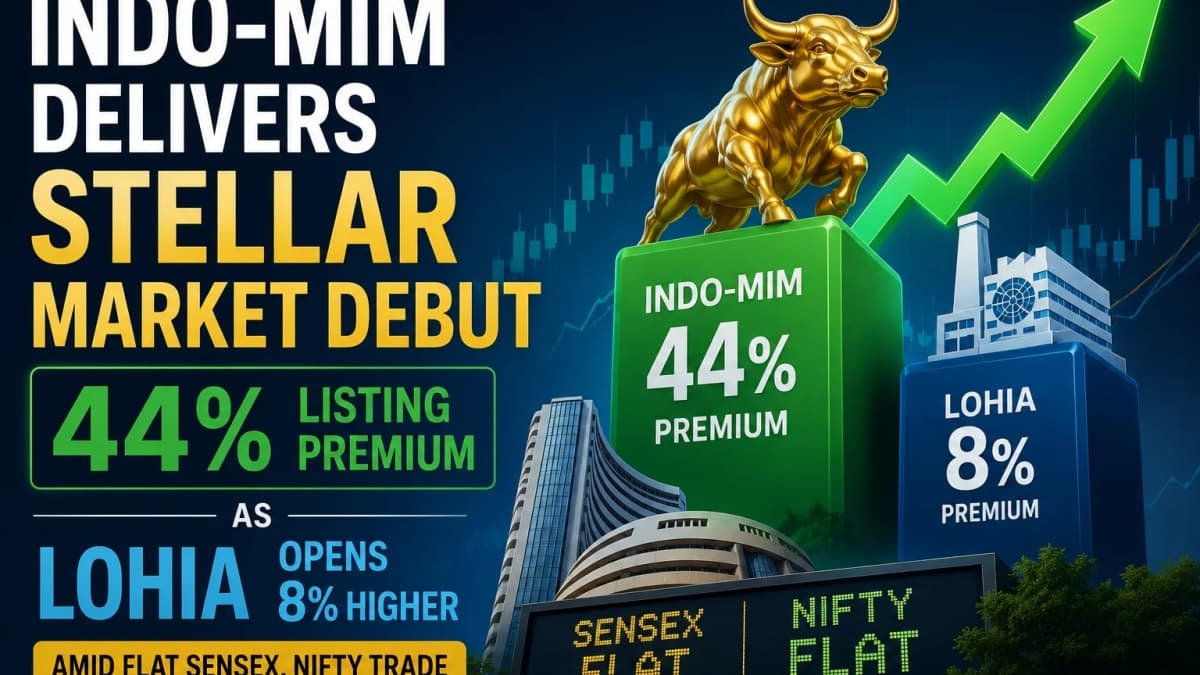
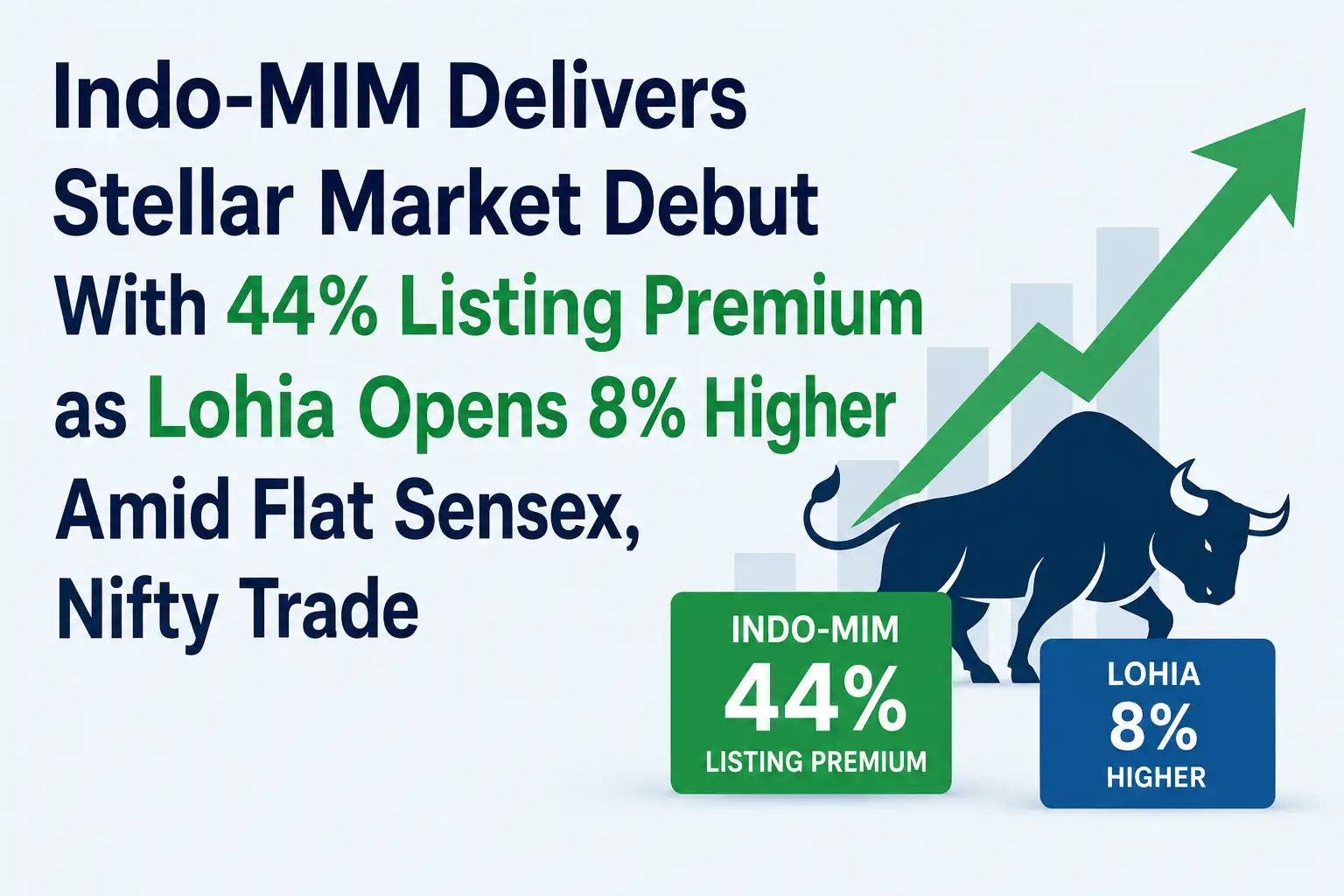
The company's shares listed at a 44% premium over the IPO issue price, reflecting strong investor demand and continued optimism toward quality public offerings. The listing significantly outperformed expectations for many market participants and highlighted sustained interest in companies with promising business fundamentals.
At the same time, Lohia also entered the secondary market on a positive note, beginning trading at an 8% premium to its issue price. While its gains were more modest than Indo-MIM's, the listing still represented a positive outcome for IPO investors.
Benchmark Indices Remain Range-Bound
Unlike the excitement seen in newly listed shares, the broader equity market displayed limited momentum.
Both the Sensex and Nifty traded within a narrow range as investors balanced earnings announcements, valuation concerns, global market developments, and domestic economic indicators. The lack of sharp movement suggested that market participants preferred a cautious approach while awaiting stronger directional triggers.
Such sessions often indicate consolidation after periods of heightened volatility or strong rallies, with traders focusing on company-specific developments rather than broad market trends.
Indo-MIM's Strong Debut Reflects Healthy IPO Demand
A listing premium of 44% is generally viewed as a sign of substantial investor confidence. Strong subscription levels during the IPO process are often rewarded when demand continues into the first day of trading.
For investors who received allotments, the debut translated into immediate gains, while market observers interpreted the performance as evidence that investor appetite for fundamentally strong IPOs remains healthy despite broader market uncertainty.
Successful listings also encourage other companies preparing to access public markets, particularly during periods when benchmark indices are not delivering significant returns.
Lohia Posts Positive Listing Gains
Lohia's 8% listing premium may not have matched Indo-MIM's spectacular performance, but it still represented a successful market debut.
Moderate listing gains often indicate balanced investor expectations, where demand remains healthy without excessive speculative activity. Such performances can also contribute to more stable post-listing trading if investors continue to evaluate the company's long-term growth prospects.
Why These Listings Matter
IPO performance serves as an important indicator of market sentiment. Strong debuts suggest that investors remain willing to deploy capital into new opportunities even when benchmark indices are moving sideways.
Positive listings can also strengthen confidence among companies considering public offerings, helping sustain momentum in India's active primary market. However, listing-day gains alone should not be viewed as a measure of long-term business performance, as future stock movement will depend on earnings growth, execution, industry trends, and broader economic conditions.
Balanced Analysis
The contrasting picture of a quiet secondary market and strong IPO listings illustrates the selective nature of current investor sentiment. While broader indices remain cautious, investors continue rewarding companies that inspire confidence through their business models and growth potential.
Nevertheless, experts generally advise investors not to base investment decisions solely on listing-day performance. Sustained returns depend on long-term fundamentals rather than initial market enthusiasm. As market conditions evolve, newly listed companies will need to demonstrate consistent financial performance to justify their valuations.
Conclusion
The trading session underscored two different narratives within India's capital markets. The Sensex and Nifty remained largely unchanged, reflecting cautious sentiment, while the IPO market produced encouraging results. Indo-MIM's impressive 44% listing premium stood out as the session's defining event, with Lohia also delivering positive gains for investors. Together, the listings reinforce the resilience of India's primary market even during periods of subdued benchmark index movement.