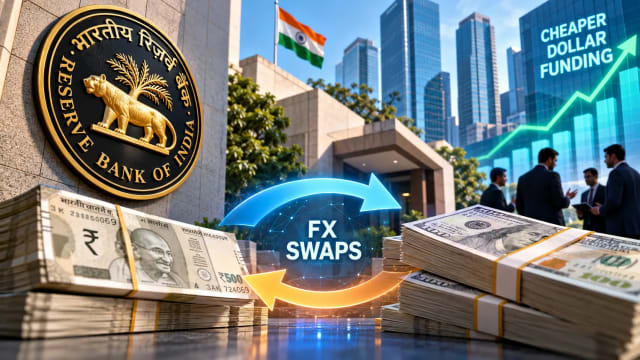
The scramble by Indian banks to raise foreign-currency funds ahead of the Reserve Bank of India's August deadline is giving way to a different challenge: deciding how to fund those positions over a longer period.
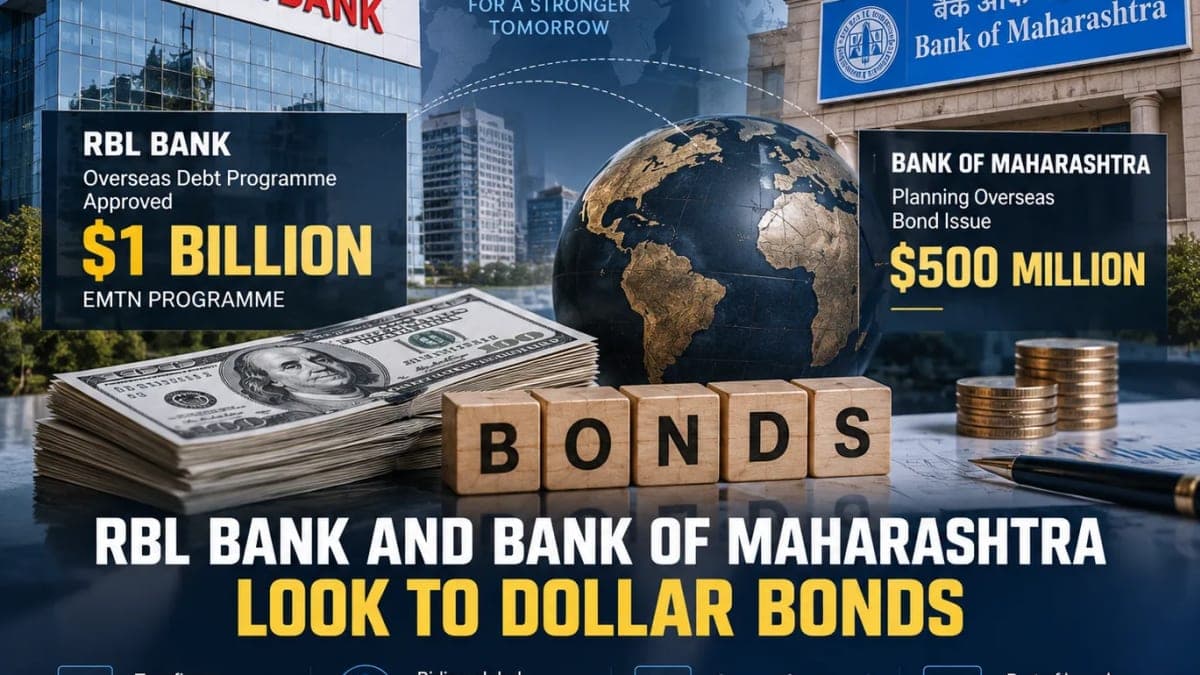
RBL Bank and Bank of Maharashtra are among the lenders looking at dollar-denominated bonds as they consider refinancing short-term borrowing linked to their FCNR(B) mobilisation, according to people familiar with the plans cited in market reports.
The shift is less about raising fresh money for immediate expansion than about managing maturities. Several banks used shorter-tenure loans when volatile markets and a tight deadline made longer-term bond issuance difficult. With that deadline now behind them, some are returning to the international debt market.
RBL has already established the framework needed to do so. Bank of Maharashtra, meanwhile, has been preparing what could become its debut international bond transaction.
Neither reported bond sale should be considered complete until pricing and final issuance are formally announced.
RBL Creates Room for Overseas Borrowing
RBL Bank's board on September 7 approved a Euro Medium Term Note programme of up to $1 billion, giving the private-sector lender a platform for raising foreign-currency debt internationally.
The programme allows RBL to issue bonds, notes and other permitted debt securities in one or more transactions, subject to regulatory requirements and market conditions.
It is being established under Regulation S of the US Securities Act of 1933, with securities issued through the programme not intended for sale to investors in India.
The $1 billion figure represents the programme's maximum size, not an immediate borrowing commitment. That gives RBL the option to approach investors when pricing is favourable rather than having to raise the entire amount at once.
That flexibility could prove useful after the bank's experience in August.
An Earlier $500 Million Plan Was Put on Hold
RBL had previously considered raising about $500 million through an overseas bond sale. It did not proceed with the transaction after investors sought higher yields and banks found themselves working against the approaching closure of the RBI's FCNR(B) swap facility.
Yes Bank and Federal Bank also held back planned dollar issues during the period.
Rather than force a bond transaction through difficult market conditions, lenders could use short-term financing to meet their immediate foreign-currency requirements and revisit longer-tenure borrowing later.
RBL nevertheless raised substantial deposits through the special window.
By August 31, the bank said it had mobilised $3.40 billion, or approximately ₹32,472 crore, in FCNR(B) deposits under the RBI facility. Its international banking unit had extended roughly $1.08 billion, equivalent to about ₹10,309 crore, in loans against those deposits.
The bank also said its mobilisation benefited from support from promoter Emirates NBD and its subsidiaries and affiliates through the India-UAE financial corridor.
A subsequent bond issue would therefore sit within a broader funding strategy rather than function as an isolated overseas borrowing.
Bank of Maharashtra Prepares Its Own Dollar Issue
Bank of Maharashtra is approaching the international market from a different position.
The state-owned lender had received board approval in April to raise up to $500 million through foreign-currency bonds during FY27. Recent reports indicate that preparations for the transaction have progressed, with the bank considering overseas dollar debt.
The lender could opt for three-year or five-year bonds, according to reported plans.
A successful transaction would give Bank of Maharashtra access to a broader pool of international investors and could mark its debut in the offshore bond market.
It is part of a wider pipeline among Indian state-owned lenders. Canara Bank has also been preparing for a potential $500 million dollar-denominated issue, while other banks have examined international borrowing as part of their funding plans.
Whether all those transactions reach the market will depend heavily on pricing.
Why Banks Used Short-Term Money First
The unusual sequence of borrowing dates back to the RBI's efforts to attract foreign-currency inflows.
Banks mobilised FCNR(B) deposits from non-resident Indians while using a concessional swap facility provided by the central bank. The structure helped lenders manage currency risk on eligible deposit principal and encouraged a sharp increase in foreign-currency mobilisation.
The RBI subsequently set August 31 as the closing date for the special FCNR(B) swap window.
That created a hard deadline.
Banks considering dollar bonds had to weigh the benefit of longer-term funding against the yields being demanded by overseas investors. When the cost became unattractive, short-term loans offered a quicker way to secure the required funding without locking in expensive bond pricing.
The trade-off was maturity.
Short-term borrowing can solve an immediate funding requirement, but it becomes less suitable when the underlying assets or liabilities have longer tenures. Refinancing through bonds can reduce that mismatch by extending the maturity of the funding.
FCNR(B) Mobilisation Reached $127.22 Billion
The scale of the deposit inflows explains why refinancing has become a broader issue for the banking sector.
Provisional RBI figures showed banks had mobilised $127.22 billion in FCNR(B) deposits by August 31. Overall foreign-currency mobilisation was approximately $136.4 billion.
A striking portion arrived immediately before the facility closed.
FCNR(B) deposits stood at about $65.4 billion on August 21. Over the following 10 days, banks raised roughly another $61.8 billion, taking the total beyond $127 billion.
That last-minute acceleration helped bring foreign currency into the banking system, but it also concentrated funding activity into a relatively short period. Banks now have to manage the resulting liabilities without the deadline that shaped their initial decisions.
There is also an ongoing currency consideration.
The RBI's swap mechanism protects participating banks against foreign-exchange risk on the principal of eligible FCNR(B) deposits. Interest-related currency exposure, however, remains something lenders must manage themselves.
Reports have indicated that a significant share of those future interest obligations has not yet been hedged, in part because hedging carries its own cost. If the rupee weakens, banks with uncovered positions could eventually need additional dollars to meet those obligations.
Investor Pricing Remains the Key Test
The logic behind replacing short-term loans with longer-term bonds is relatively straightforward. The economics of doing so are less certain.
International investors had already pushed for higher yields when Indian banks explored dollar issuance in August. A crowded pipeline can strengthen buyers' negotiating position, particularly when several lenders approach the same market within a short period.
RBL's EMTN structure gives it some protection against that pressure because the bank does not have to raise the full $1 billion immediately. It can issue debt in stages and choose its timing.
Bank of Maharashtra faces a somewhat different calculation if it proceeds with a $500 million debut offshore transaction. Establishing an international borrowing benchmark has longer-term value, but the bank will still have to decide whether the yield demanded by investors makes sense relative to other funding options.
The FCNR(B) deadline forced banks to make quick decisions in August. The next phase can be more deliberate. For RBL Bank and Bank of Maharashtra, the dollar bond market will now be tested not by how quickly they can raise money, but by whether they can secure longer-term funding at a price worth paying.