Banks Look to BAANKNET for Online Auctions of Repossessed Cars and Other Vehicles
Indian lenders are looking to bring repossessed vehicle sales onto a common digital platform, extending an approach already used to auction thousands of properties tied to loan recoveries.
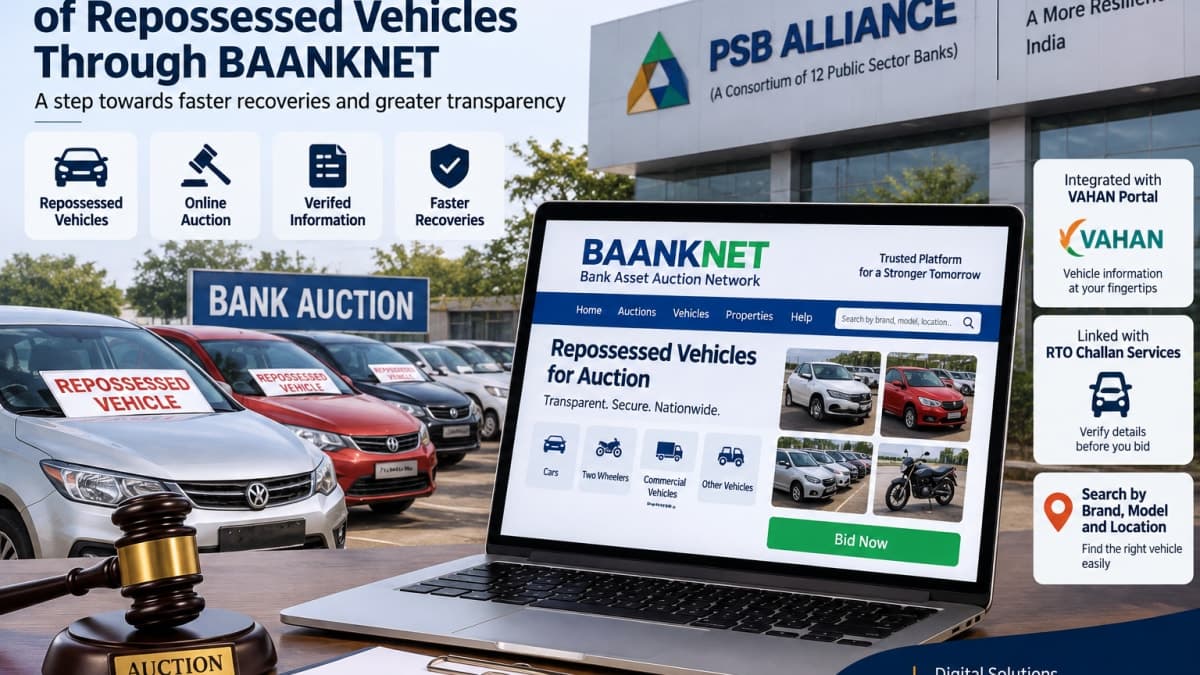
PSB Alliance is examining whether cars and other vehicles taken over by banks can be auctioned through BAANKNET, its existing bank-asset marketplace. The proposal is aimed at making such sales easier to access and potentially quicker to complete, particularly by bringing listings and vehicle information together in one place.
The plan is still being evaluated. Vehicle auctions have not yet been rolled out as a nationwide BAANKNET service.
From Property Auctions to Repossessed Cars
BAANKNET, the Bank Asset Auction Network, is operated by PSB Alliance Pvt Ltd, which is jointly owned by India's 12 public sector banks.
The platform already provides lenders with infrastructure for selling assets connected with recoveries, particularly properties. Its services cover several stages of the auction process, including asset discovery, bidder registration, KYC and payments.
Repossessed vehicles could become the next significant category added to that system.
PSB Alliance chairman Sunil Mehta said the organisation sees scope to make BAANKNET useful for a broader range of assets.
“We are looking to develop BAANKNET as a scalable platform where more products can be onboarded. The auction of cars and other vehicles through this portal is being examined, and we do see this as an opportunity for all banks for faster and more effective auctions of vehicles,” Mehta said.
For lenders, speed matters particularly in vehicle recoveries. Cars and commercial vehicles generally lose value over time, making lengthy disposal processes more costly than they can be for some other secured assets.
VAHAN Link Could Give Buyers More Information
A vehicle auction also requires information that differs substantially from a property sale.
The proposed system is expected to connect BAANKNET with the road transport ministry's VAHAN database and RTO challan services. That could allow prospective bidders to access relevant vehicle information through the auction process rather than having to piece it together from separate sources.
Users are expected to be able to search vehicles using criteria including brand, model and location.
The usefulness of the system for buyers will ultimately depend on how much verified information accompanies each listing. Vehicle condition, documentation, outstanding liabilities and transfer procedures can all influence what a bidder is prepared to pay.
Integrating government vehicle records would address part of that information gap, while giving banks a more standardised way to present assets to a wider market.
BAANKNET Has Already Handled More Than 87,000 Property Auctions
The proposal builds on a platform that is already being used at considerable scale.
More than 87,000 property auctions have been conducted through BAANKNET. Since July 2024, lenders have recovered about ₹34,000 crore through the system against properties worth approximately ₹72,000 crore that were put up for auction.
Those figures give banks an established digital base from which to expand into another category of repossessed assets.
A common marketplace can also address one of the practical limitations of localised auctions: finding enough interested buyers. Making listings searchable nationally could expose repossessed vehicles to individuals, dealers and other potential bidders beyond the immediate area in which an asset is being held.
That does not guarantee a better recovery on every vehicle. Pricing will still depend on factors such as age, condition, demand and the terms attached to a particular auction.
Vehicle Sales Fit a Broader Digital Push
The proposal is part of a wider expansion of shared banking infrastructure being developed through PSB Alliance.
The Department of Financial Services has encouraged the organisation to broaden its services beyond public sector lenders and develop common digital systems that could also reduce technology and operational costs for smaller banks.
The BAANKNET mobile app was launched in February 2026, extending access to verified bank-auction properties through smartphones as well as the web.
PSB Alliance is working on other common infrastructure as well, including a Digital Balance Confirmation Portal, a Digital Supply Chain Finance platform and a common collection platform for retail and MSME loans below ₹5 crore.
The direction is increasingly clear: functions that banks once managed separately are being considered for common digital platforms where scale can reduce duplication.
Why Faster Disposal Matters for Repossessed Vehicles
When a borrower defaults on a secured vehicle loan and the lender eventually takes possession of the asset, repossession is only one part of the recovery process. The bank still needs to sell the vehicle and apply the proceeds against the outstanding debt.
Delays during that stage can be particularly damaging because vehicles depreciate.
A centralised auction platform could shorten the route between repossession and sale by making assets visible to a larger pool of bidders. Standardised listings and access to official vehicle records could also make it easier for prospective buyers to decide which auctions are worth pursuing.
There are still important operational questions to settle. Inspection arrangements, documentation, payment rules, outstanding challans and ownership transfers will all matter if vehicle auctions are introduced at scale.
For that reason, the current proposal should be viewed as an expansion under consideration rather than a service already available across the banking system.
If implemented, however, it would take BAANKNET beyond its established property-auction role and turn it into a broader marketplace for assets that banks need to sell as part of the recovery process.