Snapchat Changes Spotlight Approach to Fully AI-Generated Videos
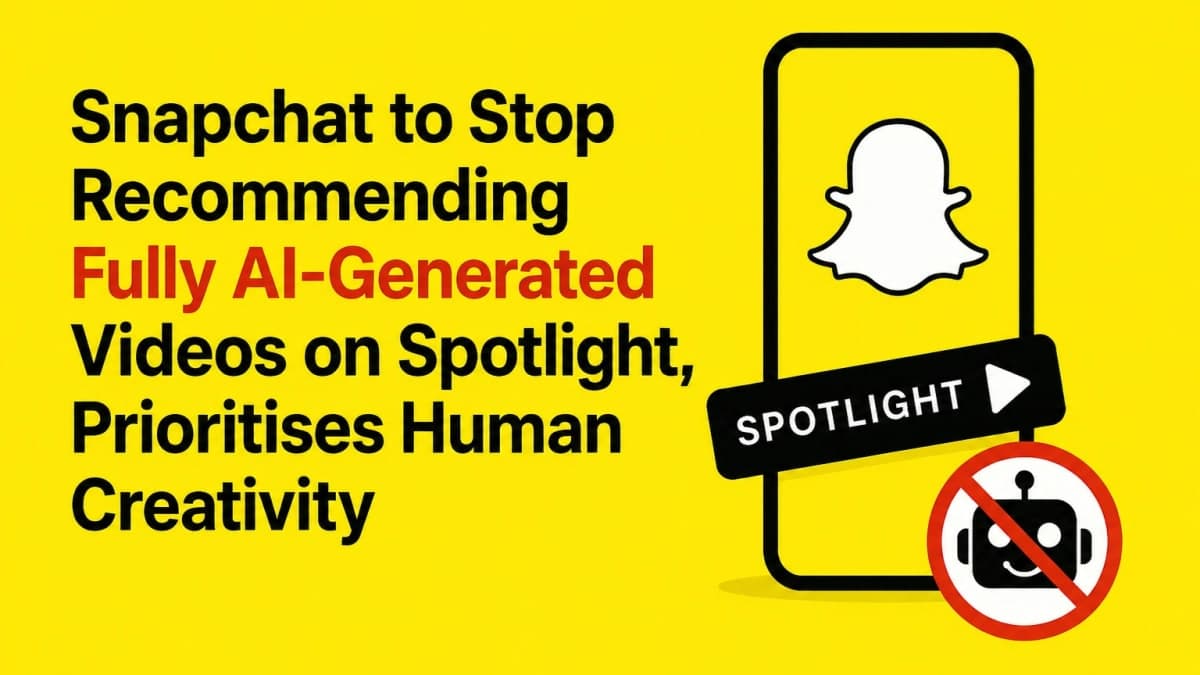
Snapchat is changing how fully artificial intelligence-generated videos are treated on Spotlight as the social media industry grapples with a rapid increase in synthetic content.
Snap’s recommendation guidelines state that its ranking system rewards authentic, human-made material over content created wholly with AI outside Snapchat. This means videos produced entirely by external generative AI tools will face reduced opportunities for algorithmic distribution through Spotlight.
The move does not amount to a blanket ban on artificial intelligence. Instead, it draws a distinction between using AI as a creative tool and allowing entirely machine-generated videos to compete directly with original, human-led content for recommendation.
Snapchat’s own AI-created content can remain eligible for recommendation because the company’s tools include transparency indicators.
Why Snapchat Is Prioritising Human-Made Content
Spotlight is Snapchat’s short-form entertainment feed, where users can discover videos beyond accounts they already follow.
As generative AI tools have become capable of producing increasingly sophisticated images, voices and videos, the cost and effort required to create large volumes of synthetic content have fallen considerably.
That development creates opportunities for creators, but it also presents platforms with a challenge: recommendation systems can become crowded with repetitive or mass-produced material that may offer little original perspective.
Snap has previously emphasised that Spotlight should showcase fresh, personal content created by its community. The company said in April 2026 that it was focusing on elevating original material created using the Snapchat camera, with users expected to encounter fewer synthetic AI videos and widely syndicated posts.
The latest policy direction reinforces that strategy.
AI-Assisted Creation Is Not Being Eliminated
Importantly, Snapchat is not rejecting artificial intelligence as a technology.
The platform itself provides generative AI features, and creators can continue using AI within the broader creative process. The key distinction is whether AI supports human creativity or effectively replaces it altogether.
Under Snapchat’s recommendation guidelines, content generated through Snapchat's own AI tools can still qualify for recommendations because those tools carry transparency indicators.
This creates a hybrid approach: AI can remain part of content creation, while Spotlight’s recommendation system gives greater weight to content demonstrating human involvement and originality.
What the Change Means for Spotlight Creators
For creators seeking wider reach through Spotlight, originality could become increasingly important.
Creators who depend on externally generated AI videos with little or no human contribution may find it harder to receive algorithmic exposure. By contrast, people producing original videos, personal stories, commentary and other human-led content could benefit from Snapchat’s emphasis on authenticity.
The change could also encourage creators to treat generative AI as an editing or production assistant rather than as a complete replacement for the creative process.
That distinction may become increasingly important as platforms determine how AI-assisted work should compete with traditional user-generated content.
Social Platforms Face a Growing AI Content Challenge
Snapchat’s decision comes amid a wider debate over what is sometimes described as “AI slop” — large quantities of repetitive, generic or low-effort material produced with generative AI.
Other major online platforms have also been reassessing how synthetic material should be labelled, recommended or monetised.
The issue presents a difficult balancing act. Generative AI can lower production barriers, provide new creative tools and allow individuals to experiment with formats that previously required significant technical skills.
At the same time, unrestricted mass production can make it easier to flood recommendation systems with synthetic material, potentially making original creators harder to discover.
Why Snapchat’s Spotlight Policy Matters
The significance of Snapchat’s approach extends beyond individual AI videos.
Recommendation algorithms determine which creators receive visibility, audiences and potential commercial opportunities. A decision to favour human-made content therefore influences the incentives surrounding content production.
If platforms consistently provide greater distribution to original human-led material, creators may have less incentive to mass-produce completely automated videos simply to maximise views.
For audiences, the approach could help preserve Spotlight’s identity as a feed centred on personal experiences, spontaneous moments and individual perspectives rather than a stream dominated by automated content.
Balanced Analysis
Snapchat’s approach represents an attempt to distinguish between productive use of artificial intelligence and complete automation of content creation.
Supporters may see the policy as beneficial for creators who invest time and effort in producing original work. It could also reduce repetitive synthetic material and make Spotlight feel more connected to real people and experiences.
However, determining what qualifies as sufficiently “human-made” may become increasingly complicated. Modern creative workflows frequently combine AI-generated visuals, editing tools, scripts, effects and traditional production techniques.
As those boundaries become less clear, platforms will need transparent and consistently applied standards to avoid unfairly penalising legitimate creators who use AI as part of their workflow.
Snapchat’s decision therefore highlights a larger question facing the creator economy: not whether AI will participate in content creation, but how platforms will decide when AI is assisting human creativity and when it is replacing it.