Original News Article
Tata Communications Expands Voice AI Strategy for India's SMB Ecosystem
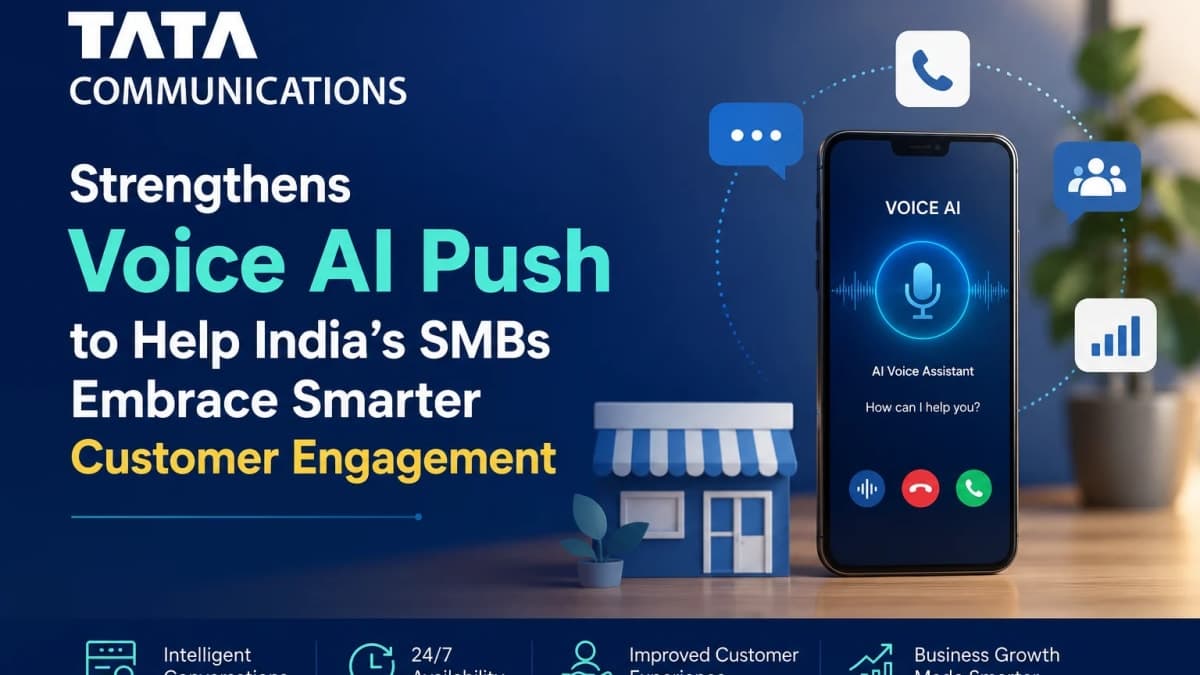
Tata Communications has intensified its focus on Voice AI solutions designed specifically for India's small and medium-sized businesses (SMBs), signaling a stronger commitment to making artificial intelligence more practical and accessible for enterprises beyond large corporations.
The company’s latest move reflects a growing industry trend where businesses are increasingly turning to AI-powered voice technologies to automate customer interactions, improve response times, and reduce operational costs. By targeting the SMB segment, Tata Communications is addressing a market that has historically faced challenges in adopting sophisticated digital communication tools due to budget and technology constraints.
Voice AI platforms are rapidly evolving from simple automated calling systems into intelligent conversational assistants capable of understanding natural language, handling customer queries, routing calls efficiently, and supporting multilingual conversations. These capabilities are becoming increasingly important in India's diverse and highly competitive business landscape, where customer experience often determines long-term success.
For SMBs, adopting Voice AI can streamline routine customer service operations while allowing employees to focus on higher-value tasks. Businesses in sectors such as retail, healthcare, logistics, financial services, hospitality, and e-commerce are expected to benefit from faster customer support, improved lead management, appointment scheduling, and round-the-clock availability.
Growing Demand for AI-Driven Customer Communication
India's digital transformation has accelerated significantly over the past few years, driven by widespread smartphone adoption, cloud infrastructure, and increasing internet penetration. At the same time, customers now expect businesses to provide instant responses across multiple communication channels.
This changing landscape has created strong demand for AI-powered communication platforms capable of handling high volumes of customer interactions without compromising service quality. Voice AI has emerged as one of the fastest-growing segments within enterprise communications because it combines automation with conversational intelligence.
By strengthening its Voice AI offerings, Tata Communications is positioning itself to support businesses seeking scalable communication infrastructure without requiring significant investments in complex technology stacks.
Why the SMB Market Matters
Small and medium-sized businesses contribute significantly to India's economy, employment generation, and innovation ecosystem. However, many still operate with limited technology resources compared to large enterprises.
Affordable AI-powered communication tools can help these businesses compete more effectively by improving customer engagement, reducing manual workloads, and enhancing operational efficiency.
As AI adoption becomes more mainstream, the availability of enterprise-grade Voice AI solutions tailored for SMBs could accelerate digital transformation across thousands of businesses nationwide.
Industry Competition Intensifies
The enterprise AI communication market has become increasingly competitive as technology companies continue investing in conversational AI, generative AI, cloud communications, and intelligent automation.
Businesses today are looking for integrated platforms capable of combining voice, messaging, analytics, and AI into unified customer engagement solutions. Providers that can deliver scalable, secure, and industry-specific offerings are likely to gain an advantage as adoption increases.
Tata Communications' renewed focus on Voice AI reflects the broader shift toward AI-enabled enterprise services, where automation is increasingly viewed as a strategic business capability rather than merely a cost-saving tool.
Balanced Analysis
The expansion of Voice AI solutions for SMBs represents a positive step toward democratizing advanced enterprise technology. Smaller businesses stand to benefit from improved productivity, better customer service, and greater operational flexibility without the need for extensive in-house AI expertise.
However, successful implementation will depend on factors such as affordability, ease of deployment, language support, integration with existing business systems, and data security. Businesses will also need to ensure that AI complements human support rather than replacing meaningful customer interactions where personal assistance remains essential.
As India's AI ecosystem continues to mature, Voice AI is expected to become a core component of digital business operations, particularly for organizations aiming to enhance customer experiences while maintaining operational efficiency.
Why This Matters
Expands AI adoption among India's growing SMB sector.
Makes intelligent customer communication more accessible.
Supports digital transformation across multiple industries.
Highlights rising demand for conversational AI solutions.
Strengthens competition in India's enterprise AI communications market.