The AI Layer Powering India’s Farms: How Artificial Intelligence Is Reshaping Agriculture Across the Country
Artificial intelligence is increasingly becoming a critical technology layer in India's agricultural ecosystem, enabling farmers, agritech companies, and policymakers to make more informed decisions. From crop health monitoring and irrigation planning to pest detection and market intelligence, AI-powered solutions are gradually transforming traditional farming practices into data-driven operations.
India's agriculture sector, which supports the livelihoods of millions and contributes significantly to the national economy, has historically faced challenges such as unpredictable weather, fragmented landholdings, fluctuating market prices, and inefficient resource utilization. AI is now being positioned as one of the technologies capable of addressing many of these structural issues by combining satellite imagery, machine learning, IoT devices, and predictive analytics.
AI Is Bringing Precision Agriculture to Indian Farms
Modern AI systems can process vast amounts of agricultural data to help farmers make timely decisions throughout the crop cycle. These platforms analyze weather conditions, soil quality, crop health, irrigation requirements, and historical farming patterns to recommend optimal actions.
Instead of relying solely on traditional experience, farmers increasingly have access to digital recommendations that can improve productivity while reducing unnecessary use of water, fertilizers, and pesticides.
Precision agriculture also enables more efficient resource management, which is becoming increasingly important as climate variability places greater pressure on farming communities.
Supporting Farmers Beyond the Field
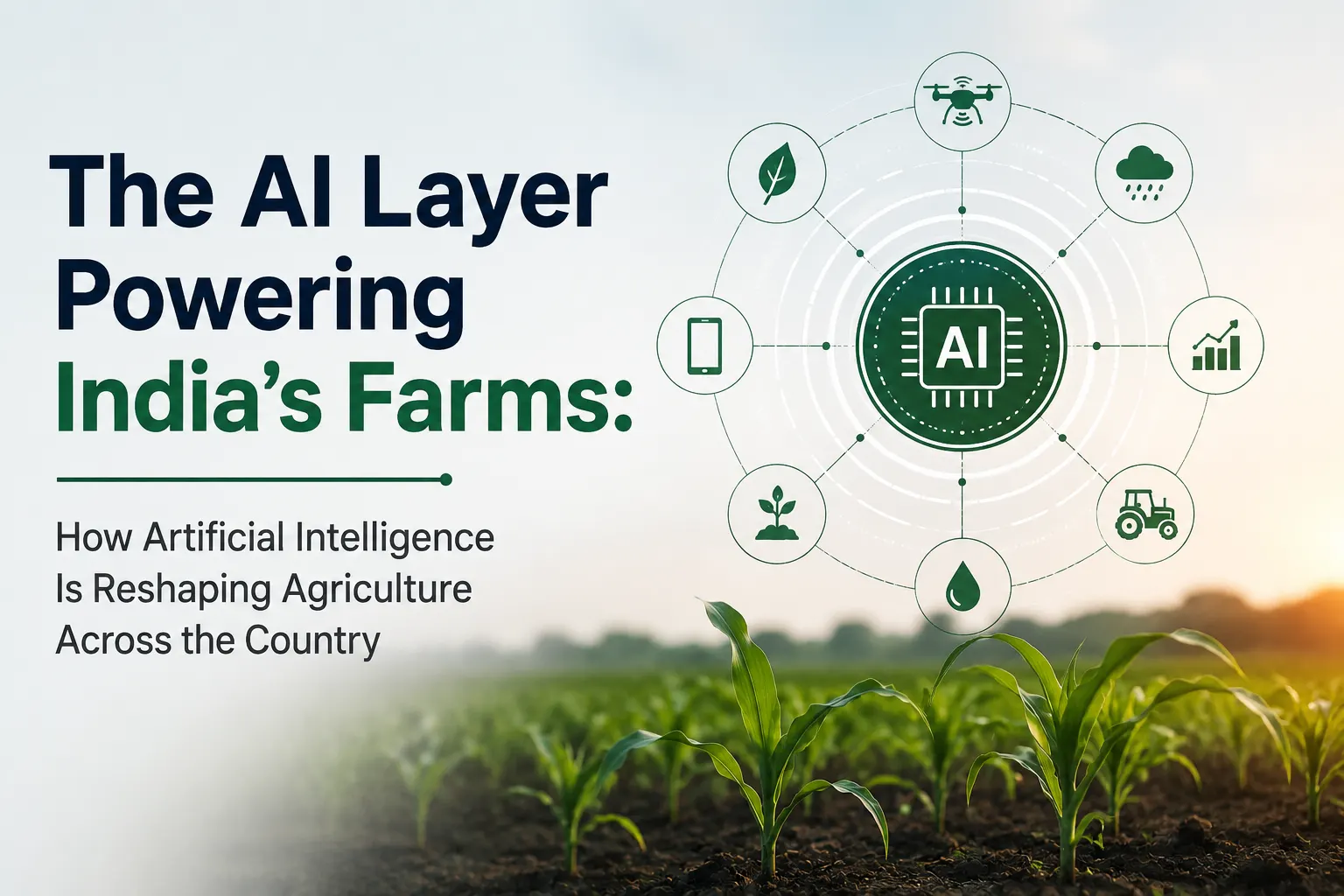
Artificial intelligence is expanding beyond cultivation itself. AI-powered platforms are helping farmers access better market intelligence, estimate crop yields, forecast demand, and improve post-harvest planning.
Digital advisory platforms can provide localized recommendations in regional languages, making agricultural information more accessible to farmers who previously had limited access to expert guidance.
Financial institutions and insurers are also exploring AI-based analytics to improve credit assessment, crop insurance evaluation, and risk management, potentially expanding financial inclusion within the agricultural sector.
Why AI Matters for Indian Agriculture
Agriculture remains one of India's largest employment sectors, making technological innovation particularly significant. Rising input costs, changing rainfall patterns, labor shortages, and increasing demand for food require more efficient farming systems.
AI offers opportunities to improve productivity without proportionally increasing resource consumption. Better forecasting, automated monitoring, and real-time decision support can help farmers respond more effectively to changing conditions.
The technology also complements broader digital initiatives that aim to modernize agricultural infrastructure and improve the efficiency of the food supply chain.
Challenges That Still Need Attention
Despite its promise, widespread AI adoption faces several obstacles.
Many rural regions continue to experience limited internet connectivity, inconsistent digital infrastructure, and affordability constraints. Small and marginal farmers may also require training to effectively use AI-enabled platforms.
Data quality remains another important consideration. AI models perform best when supported by accurate, localized, and continuously updated agricultural data. Privacy, transparency, and equitable access will also become increasingly important as digital agriculture expands.
Bridging these gaps will require collaboration between technology providers, governments, research institutions, and agricultural organizations.
The Road Ahead
The integration of artificial intelligence into Indian agriculture is still evolving, but momentum continues to build. As AI tools become more affordable, accessible, and localized, they are expected to play a larger role in helping farmers increase productivity, reduce operational risks, and improve sustainability.
Rather than replacing traditional agricultural knowledge, AI is increasingly serving as a decision-support layer that complements farmers' experience with data-driven insights. Continued investment in digital infrastructure, education, and innovation could further accelerate the transformation of India's agricultural landscape.
Balanced Analysis
Artificial intelligence presents significant opportunities to improve agricultural productivity, resource efficiency, and farmer decision-making across India. However, technology alone cannot solve structural challenges such as fragmented land ownership, infrastructure gaps, or market volatility. The long-term impact of AI will depend on inclusive implementation, affordable access, reliable digital infrastructure, and effective collaboration between public and private stakeholders. If these conditions are met, AI could become an important catalyst in strengthening India's agricultural resilience and food security.